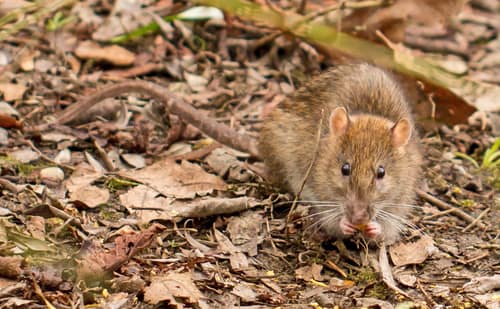
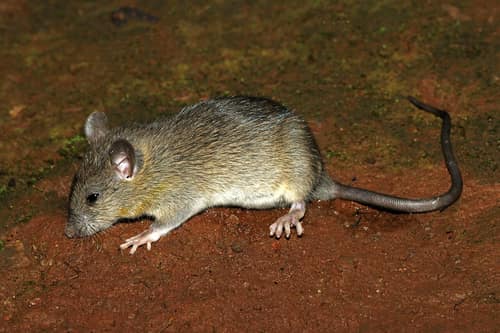
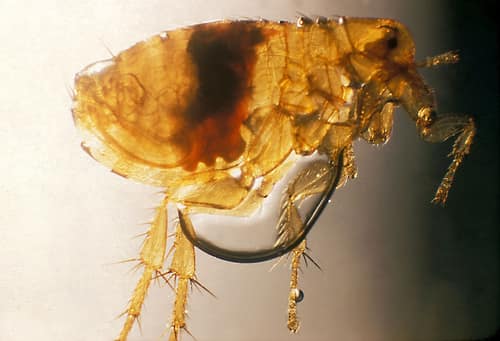
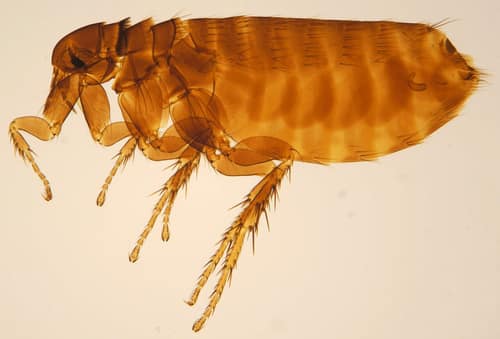
Northern rat fleas are tiny, wingless parasites that spend most of their lives nestled in the fur and burrows of brown rats, black rats, and house mice. Females require a blood meal before laying eggs, which drop into rodent bedding where wormlike larvae feed on dried blood and organic debris. Though they prefer temperate climates and rodent hosts, hungry adults readily bite humans when their primary hosts disappear.
Not EvaluatedConservation statusIUCN Red List categoriesLCNTVUENCREWEXNot Evaluated — not placed on the risk ladderRed List categories, explained →
Key facts
Diet & preyRodent blood, Human blood, Organic nest debris
Predators
Ants
Predatory mites
Pseudoscorpions
ThreatsRodent control programs, insecticides, and host grooming.
HabitatsRodent nests and burrows in urban areas, farms, granaries, and temperate buildings worldwide.
Life spanA few months to over a year, depending on temperature and host availability.
Classification
FamilyCeratophyllidae
SpeciesNosopsyllus fasciatus
Range & activity
Range data is not available yet.
Safe observation
Interaction riskModerate
Low
Moderate
High
Very high
Why interaction risk is moderate
Can transmit plague and murine typhus through bites; avoid handling wild rodents or disturbing their nests.
Why it is dangerous
Bites can transmit Yersinia pestis, the bacterium causing bubonic plague, and Rickettsia typhi, which causes murine typhus. Both infections trigger high fever, severe headache, and chills, and plague can be fatal without prompt antibiotic treatment.
How to recognize a risky encounter
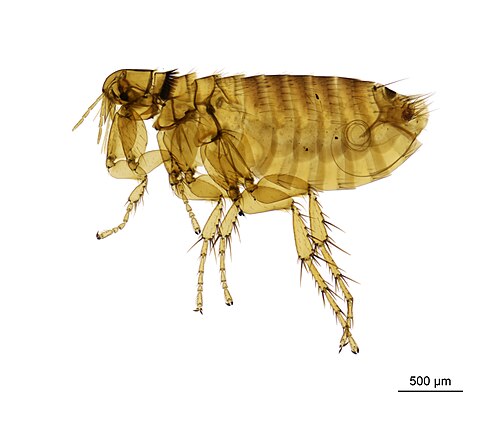
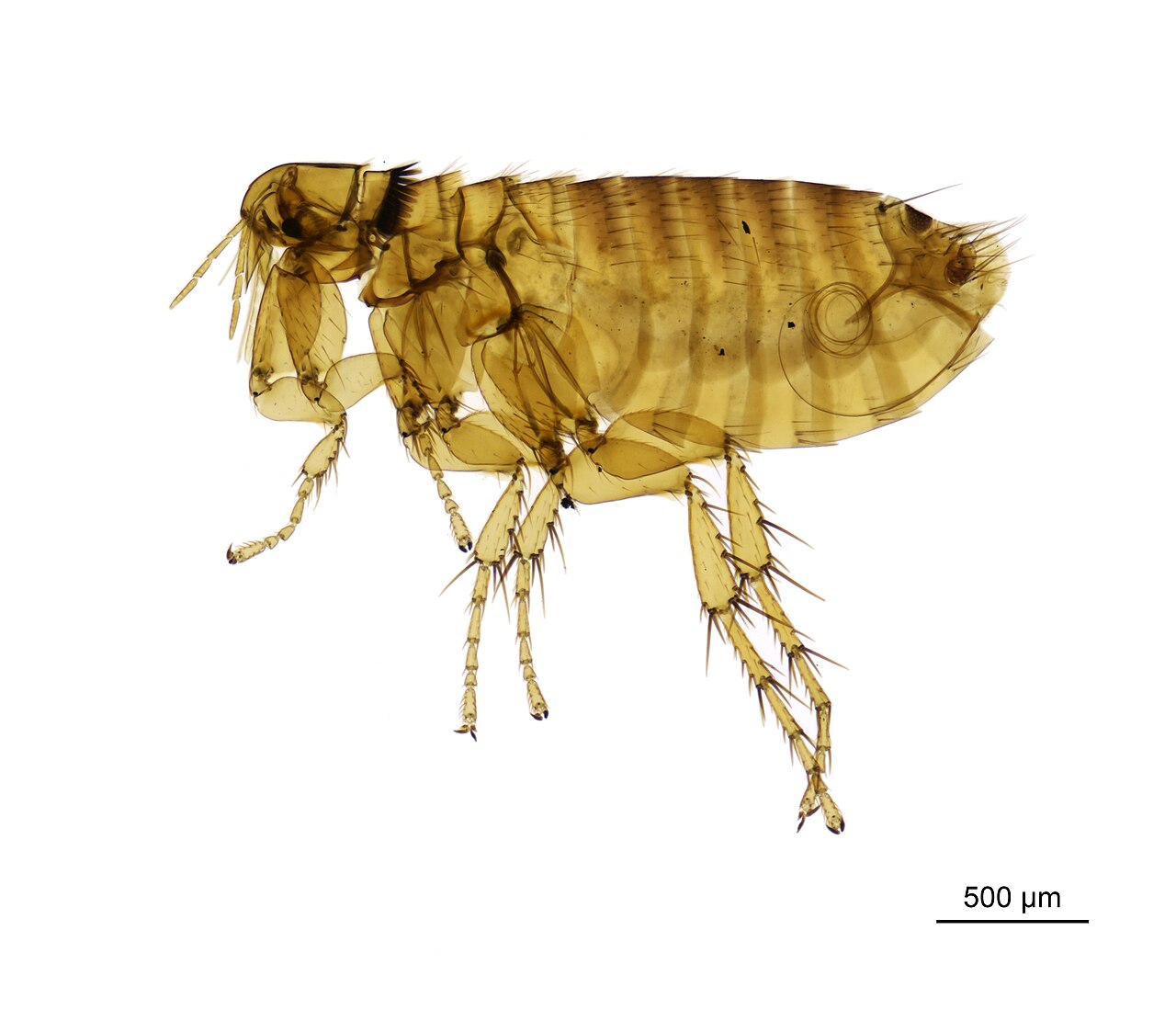
Adults are 2 to 3.5 mm long, laterally flattened, reddish-brown, and wingless, with powerful hind legs built for jumping. Unlike the oriental rat flea, this species bears a distinctive pronotal comb of dark spines behind the head.
What to do
Wear gloves and long sleeves when cleaning old rodent nests or outbuildings, and never handle dead wild rodents with bare hands. Wash bite sites with soap and water and seek medical care if fever or swollen lymph nodes develop.
Responsible observation
Host Control: Managing rats and mice around buildings is the most effective way to prevent indoor flea infestations.
Nest Cleanup: Vacuuming or treating abandoned rodent burrows removes larvae and pupae before adults emerge to seek new hosts.
Bite Prevention: Tuck pants into socks and use an EPA-registered insect repellent when working in crawlspaces or barns.