
Insect · GBIF taxon 1347459
Great Golden Digger Wasp
Sphex ichneumoneusAlso known as Great Golden Sand Digger, Golden Digger Wasp
Great golden digger wasps are solitary thread-waisted wasps easily recognized by their striking golden-furred head and thorax paired with a vibrant orange and black abdomen. Females dig deep underground burrows in sandy soil, paralyzing katydids and grasshoppers with precise stings to provision their larvae. Adults themselves are gentle nectar-feeders often seen visiting late-summer wildflowers in gardens, meadows, and open fields.
Solitary WaspNectar FeederBeneficial Insect
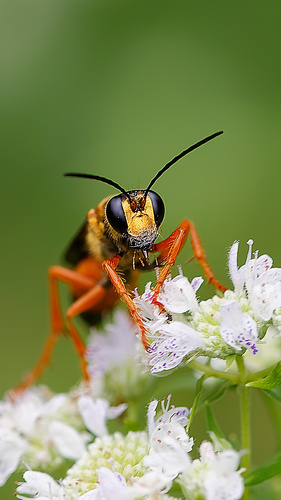
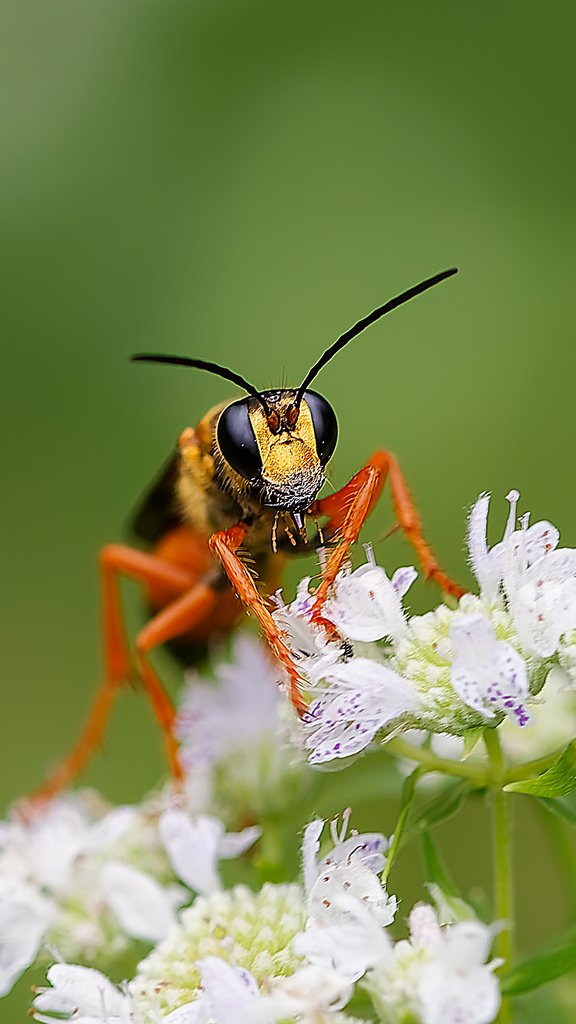
—observations
—countries
—peak records
Not EvaluatedConservation statusIUCN Red List categoriesLCNTVUENCREWEXNot Evaluated — not placed on the risk ladderRed List categories, explained →
Diet & prey
- Katydids
- Grasshoppers
- Crickets
Predators
- Birds
- Robber Flies
- Spiders
ThreatsPesticide use and habitat disruption
HabitatsOpen fields, sandy prairies, meadows, and gardens
Life span1 year
Size / weightNot available
Classification
- OrderHymenoptera
- FamilySphecidae
- GenusSphex
- SpeciesSphex ichneumoneus
Range data is not available yet.
Interaction riskVery high
- Low
- Moderate
- High
- Very high
- Why interaction risk is very high
- Females can sting if handled or stepped on; observe calmly from a small distance.
- Why it is dangerous
- Females carry a venomous sting that causes localized pain and can trigger allergic reactions in sensitive individuals.
- How to recognize a risky encounter
- Look for a large wasp with a dense golden coat on its head and thorax, reddish legs, and a black and orange abdomen.
- What to do
- Maintain a few feet of distance from active nest burrows and never squeeze or swat at the wasp.
Responsible observation
- Burrow Spotting: Watch females clear sand from their burrows without stepping on nest entrances.
- Gardening: Plant late-summer nectar plants like goldenrod to attract foraging adults.
- Safe Proximity: Keep a few feet away; females are non-aggressive unless physically threatened.
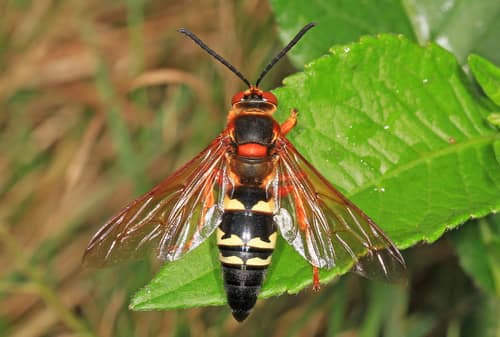
Co-occurring Digger (c) Judy Gallagher, some rights reserved (CC BY-SA), uploaded by Judy Gallagher · cc-by-sa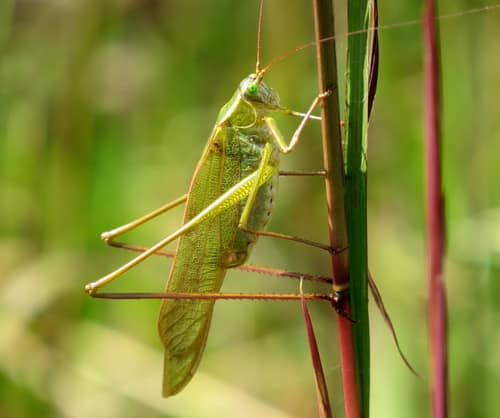
Prey (c) David Hill, some rights reserved (CC BY) · cc-by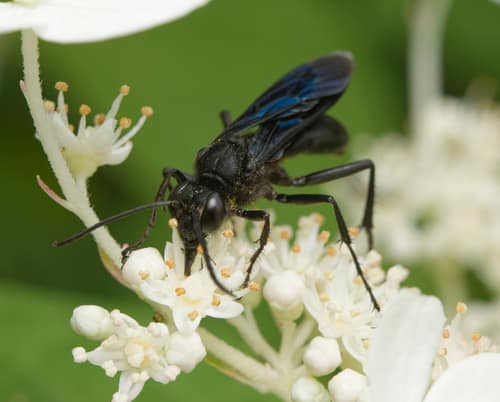
Close Relative (c) Christian Back, some rights reserved (CC BY), uploaded by Christian Back · cc-by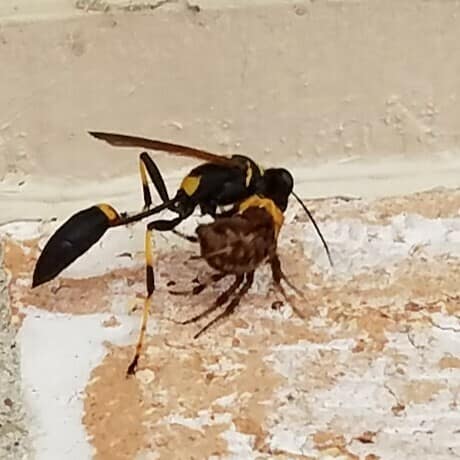
Family Relative (c) dhasdf, some rights reserved (CC BY) · cc-by
Help improve the field guideSomething wrong?
Checking your Fauna account…Report a name, category, or profile issue for review.