
Insect · GBIF taxon 1338940
Eastern Cicada-killer Wasp
Sphecius speciosusAlso known as Cicada Killer, Sand Hornet
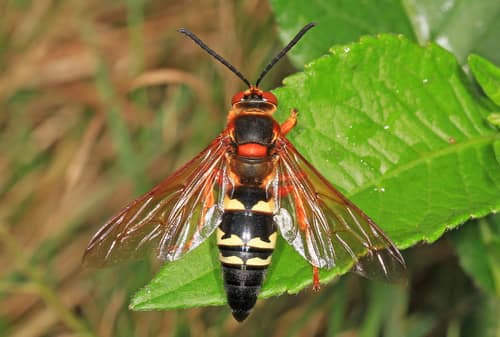
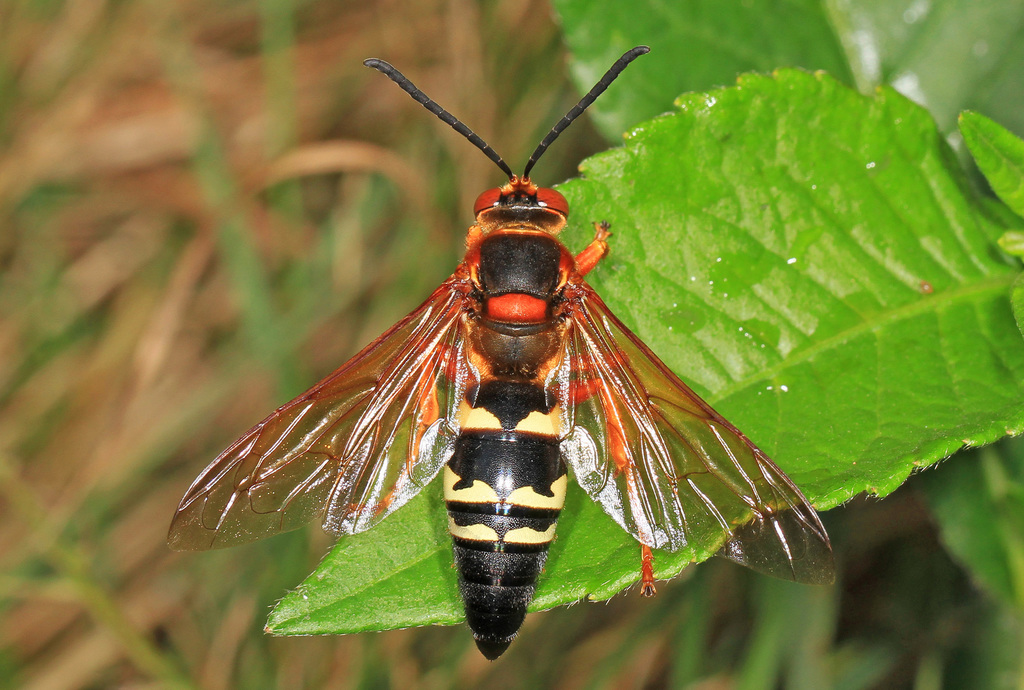
Eastern cicada-killer wasps are massive, solitary digger wasps renowned for their dramatic hunting behavior. Females hunt annual cicadas high in the tree canopy, paralyze them with a sting, and carry them back down to provision underground burrows. Despite their intimidating size, males lack stingers entirely and females rarely sting humans unless forcibly crushed or handled.
SolitaryLarge InsectBurrowing
 1 / 7
1 / 7—observations
—countries
—peak records
Not EvaluatedConservation statusIUCN Red List categoriesLCNTVUENCREWEXNot Evaluated — not placed on the risk ladderRed List categories, explained →
Diet & prey
- Annual Cicadas
- Flower Nectar
- Tree Sap
Predators
- Birds
- Robber Flies
- Armadillos
ThreatsPesticide application, direct persecution by landowners, habitat compaction
HabitatsLawns, flower beds, sandy banks, forest edges, pastures
Life span1–2 months as adults; up to 1 year including overwintering larval stage
Size / weightNot available
Classification
- OrderHymenoptera
- FamilyCrabronidae
- GenusSphecius
- SpeciesSphecius speciosus
Range data is not available yet.
Interaction riskVery high
- Low
- Moderate
- High
- Very high
- Why interaction risk is very high
- Females can sting if handled or stepped on, but males cannot sting; observe nest clusters calmly from a short distance.
- Why it is dangerous
- Injects mild venom designed to paralyze insects, which causes local pain and swelling or potential allergic reactions in sensitive individuals.
- How to recognize a risky encounter
- Distinguished by its huge size, yellow-striped black abdomen, reddish wings, and rusty orange legs.
- What to do
- Maintain a respectful distance near nest mounds; avoid bare feet on infested sandy lawns.
Responsible observation
- Male Buzzing: Male wasps frequently buzz near intruders to defend territory, but they lack stingers and are harmless.
- Lawn Care: Avoid stepping barefoot on sandy nest patches during peak summer activity.
- Ecological Value: Keep nests intact to help control sap-draining cicada populations in suburban trees.
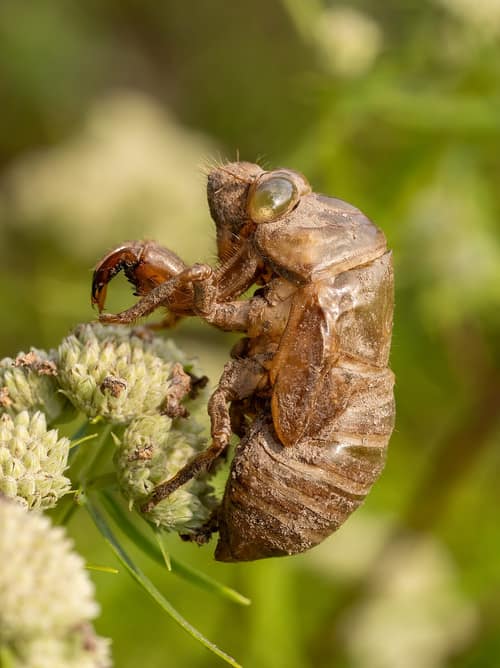
Primary Prey Rhododendrites / CC BY-SA 4.0 · cc-by-sa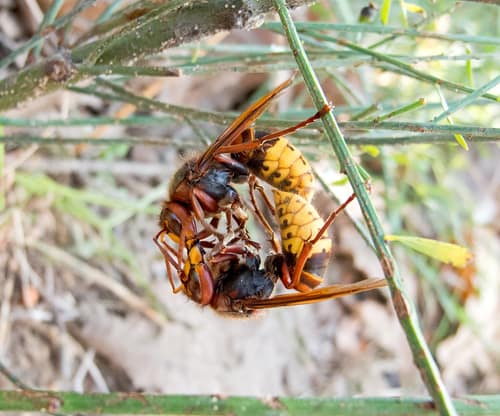
Look-alike (c) katunchik, some rights reserved (CC BY), uploaded by katunchik · cc-by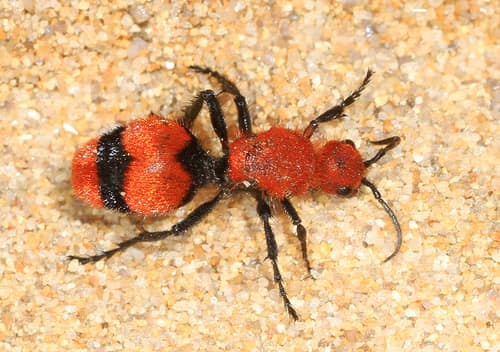
Parasitoid (c) Judy Gallagher, some rights reserved (CC BY-SA), uploaded by Judy Gallagher · cc-by-sa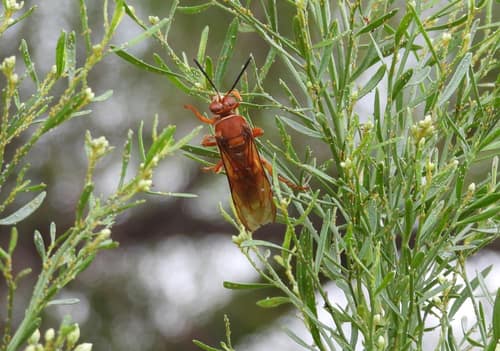
Close Relative (c) Bob Nieman, some rights reserved (CC BY) · cc-by
Help improve the field guideSomething wrong?
Checking your Fauna account…Report a name, category, or profile issue for review.