Also known as Black-waisted Mud-dauber Wasp, Yellow-legged Mud Dauber, Black and Yellow Mud Dauber
Yellow-legged mud-dauber wasps sculpt tubular nests from wet mud under sheltered eaves, rock ledges, and bridges, humming audibly as they shape each cell. Females hunt and paralyze a diverse array of spiders, packing dozens of immobilized arachnids into each earthen chamber to nourish a single developing larva. Unlike social paper wasps and hornets, these solitary builders lack nest-defense aggression and rarely sting humans unless trapped against skin.
Not EvaluatedConservation statusIUCN Red List categoriesLCNTVUENCREWEXNot Evaluated — not placed on the risk ladderRed List categories, explained →
Key facts
Diet & prey
Orb-weaver spiders
Crab spiders
Jumping spiders
Predators
Songbirds
Velvet ants
Praying mantises
ThreatsPesticide exposure, human destruction of nests, and nest parasites
HabitatsMeadows, open woodlands, gardens, and urban eaves near mud sources
Life span1 year (most spent as overwintering larva and pupa; adults live 1 to 2 months)
Size / weightNot available
Classification
OrderHymenoptera
FamilySphecidae
GenusSceliphron
SpeciesSceliphron caementarium
Range & activity
Range data is not available yet.
Safe observation
Interaction riskVery high
Low
Moderate
High
Very high
Why interaction risk is very high
Females can sting defensively if crushed; observe foraging adults and nest-building at a comfortable distance.
Why it is dangerous
Females possess a stinger with venom tuned to immobilize spiders, which produces localized burning pain and mild swelling in humans or potential allergic reactions.
How to recognize a risky encounter
Recognizable by an extraordinarily thin black abdominal waist stalk contrasting with bright yellow legs and yellow spots on the thorax.
What to do
Never pinch or swat at wasps gathering mud or visiting eaves, and leave occupied earthen nests undisturbed.
Responsible observation
Puddle Watching: Visit damp ground or puddle margins in summer to watch females scoop mud balls with their jaws.
Nest Status: Look for exit holes; unperforated mud nests contain growing larvae, while open holes indicate emerged wasps.

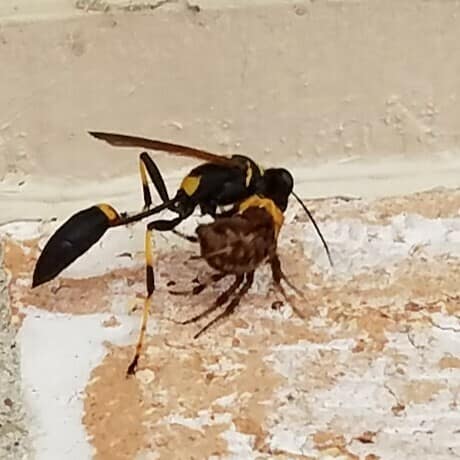
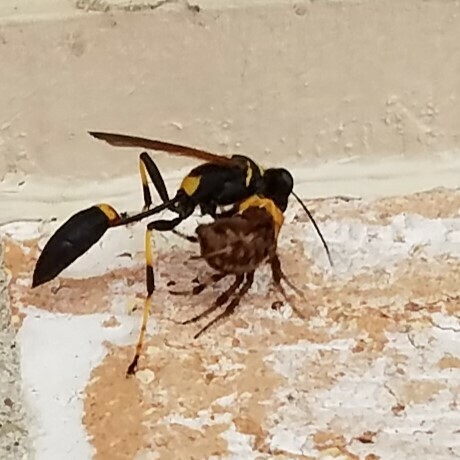
 Image unavailable