
Insect · GBIF taxon 1340416
American Bumblebee
Bombus pensylvanicusAlso known as Pennsylvania Bumblebee
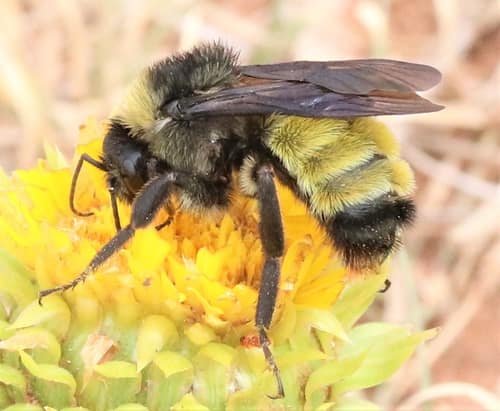
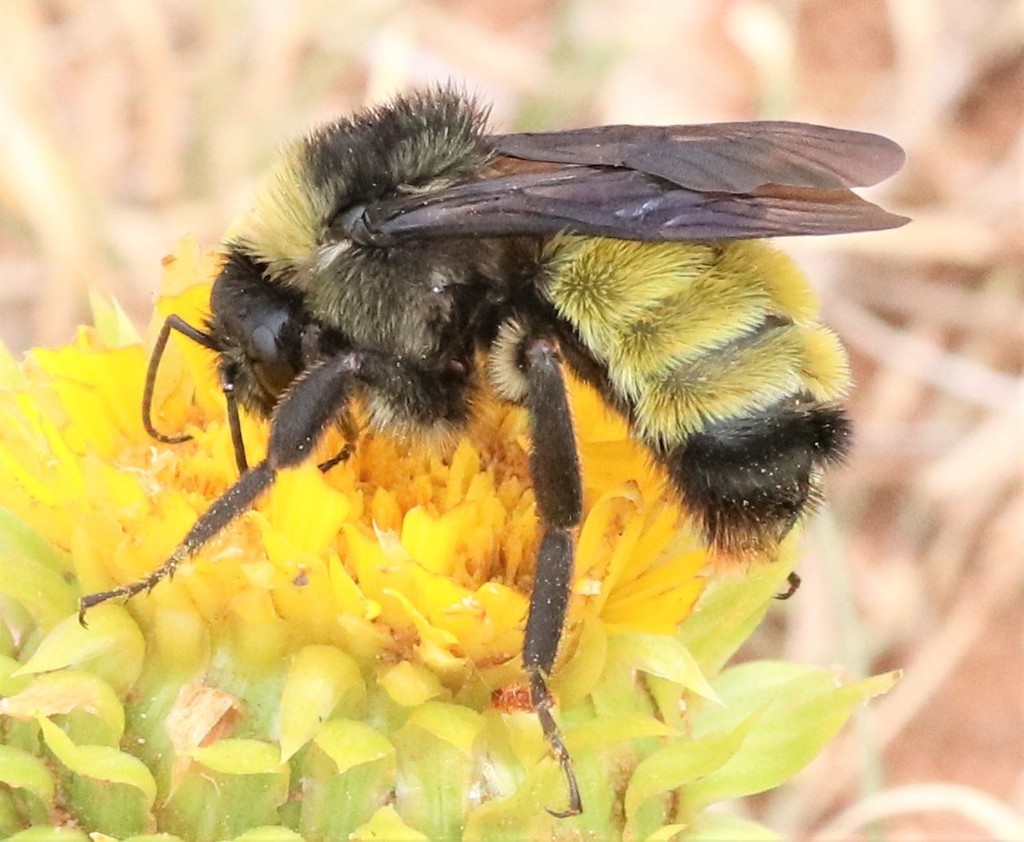
American bumblebees are robust native pollinators essential for fertilizing wildflowers and agricultural crops across prairies, fields, and pastures. Queens emerge in early spring to construct nests in dense grass or abandoned mammal burrows, raising successive broods of worker bees. Their long tongues allow them to efficiently collect nectar and pollen from deep flowers through buzz pollination.
PollinatorSocial InsectNative Bee
 1 / 7
1 / 7—observations
—countries
—peak records
VulnerableConservation statusIUCN Red List categoriesLCNTVUENCREWEXVulnerableRed List categories, explained →
Diet & prey
- Nectar
- Pollen
Predators
- Birds
- Robber flies
- Crab spiders
ThreatsHabitat destruction, pesticide usage, climate change, and pathogen spillover
HabitatsGrasslands, open fields, tallgrass prairies, and agricultural margins
Life span1 year for queens; 2 to 6 weeks for workers and males
Size / weightNot available
Classification
- OrderHymenoptera
- FamilyApidae
- GenusBombus
- SpeciesBombus pensylvanicus
Range data is not available yet.
Interaction riskVery high
- Low
- Moderate
- High
- Very high
- Why interaction risk is very high
- Females can sting defensively if nests are disturbed; observe foraging individuals at a safe distance.
- Why it is dangerous
- Females possess a smooth stinger that injects venom, which can trigger painful swelling or severe allergic reactions in sensitized individuals.
- How to recognize a risky encounter
- Recognize by the large fuzzy body, black head, yellow upper thorax, and dark yellow abdominal band.
- What to do
- Give active nest burrows wide berth and refrain from swatting at foraging bees.
- What to notice
- Look for a heavy bumblebee foraging on native prairie flowers in undisturbed open fields.
- Support conservation
- Avoid using pesticides around feeding grounds and preserve natural grass cover for nesting.
Responsible observation
- Observe Quietly: Watch foraging individuals closely as they feed on blossoms without blocking their flight path.
- Plant Native Flora: Support local colonies by planting goldenrod, clover, and sunflowers in gardens.
- Protect Nesting Cover: Avoid disturbing thick grass clumps and underground rodent holes where queens nest.
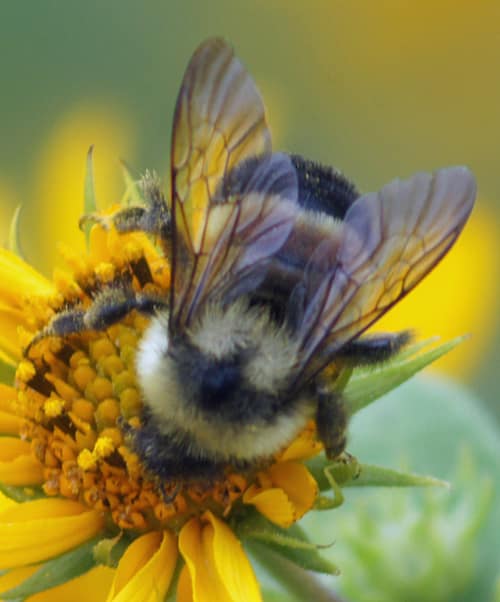
Declining Neighbor (c) psweet, some rights reserved (CC BY-SA), uploaded by psweet · cc-by-sa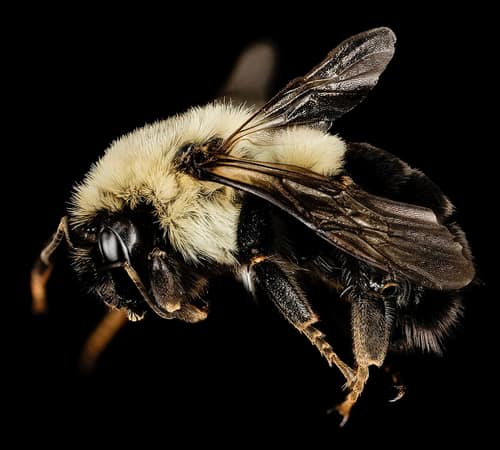
Competitor USGS Bee Inventory and Monitoring Lab from Beltsville, Maryland, USA / Public domain · cc0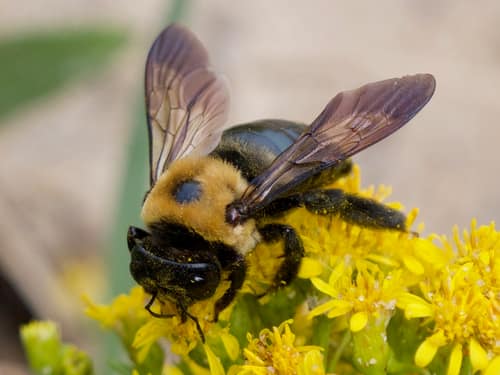
Look-Alike (c) Christopher Eliot, some rights reserved (CC BY), uploaded by Christopher Eliot · cc-by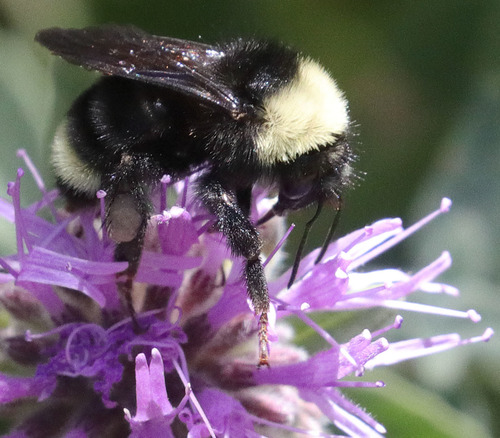
Close Relative (c) Pinnacles National Park, some rights reserved (CC BY), uploaded by Pinnacles National Park · cc-by
Help improve the field guideSomething wrong?
Checking your Fauna account…Report a name, category, or profile issue for review.