
Insect
Eastern Carpenter Bee
Xylocopa virginicaAlso known as Virginia Carpenter Bee
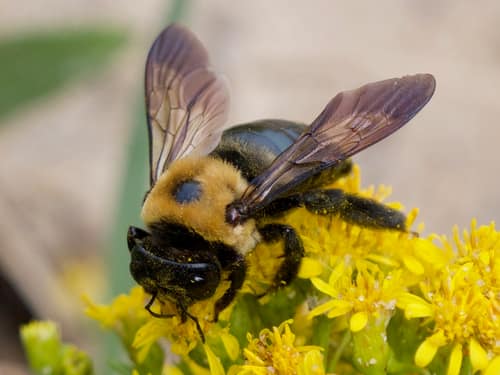
Eastern carpenter bees resemble bumblebees but display a smooth, shiny black abdomen rather than a furry one. Males feature a prominent yellow face spot and aggressively defend nesting territories by hovering near intruders, though they completely lack stings. Females tunnel precise, circular entry holes into unpainted wood to build multi-chambered brood nests for their offspring.
PollinatorSolitary BeeWood-Boring

—observations
—countries
—peak records
Least ConcernConservation statusIUCN Red List categoriesLCNTVUENCREWEXLeast ConcernRed List categories, explained →
Diet & preyFlower nectar, Pollen
Predators
- Woodpeckers
- Spiders
- Predatory wasps
ThreatsPesticide exposure, habitat destruction, and extermination around structures
HabitatsDeciduous forests, woodlands, parks, and suburban gardens with wood structures
Life span1–3 years
Classification
- OrderHymenoptera
- FamilyApidae
- GenusXylocopa
- SpeciesXylocopa virginica
Range data is not available yet.
Interaction riskVery high
- Low
- Moderate
- High
- Very high
- Why interaction risk is very high
- Females can deliver a painful sting if handled, while hovering males lack stings entirely.
- Why it is dangerous
- Females possess a sting that delivers melittin-based venom, causing intense localized pain, swelling, or systemic reactions in allergic individuals.
- How to recognize a risky encounter
- Look for a robust bee with a shiny, hairless black abdomen and a yellow-furred thorax, often seen near clean round holes in wood.
- What to do
- Maintain a calm distance, avoid swatting or trapping females, and let hovering males fly past safely.
Responsible observation
- Identify Male Territory: Males feature a white spot on their face and hover near nest sites, but they cannot sting.
- Protect Wood Structures: Paint or coat exposed softwood surfaces to deter female tunnel excavation.
- Observe Safely: Enjoy watching these robust pollinators visit flowers without grabbing or trapping them.
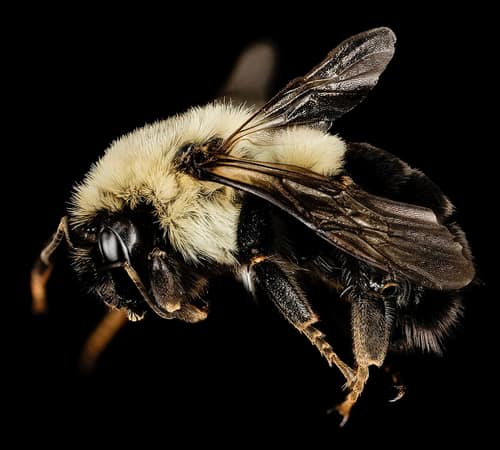
Look-alike USGS Bee Inventory and Monitoring Lab from Beltsville, Maryland, USA / Public domain · cc0
Close Relative Bob Peterson from North Palm Beach, Florida, Planet Earth! / CC BY-SA 2.0 · cc-by-sa
Help improve the field guideSomething wrong?
Checking your Fauna account…Report a name, category, or profile issue for review.