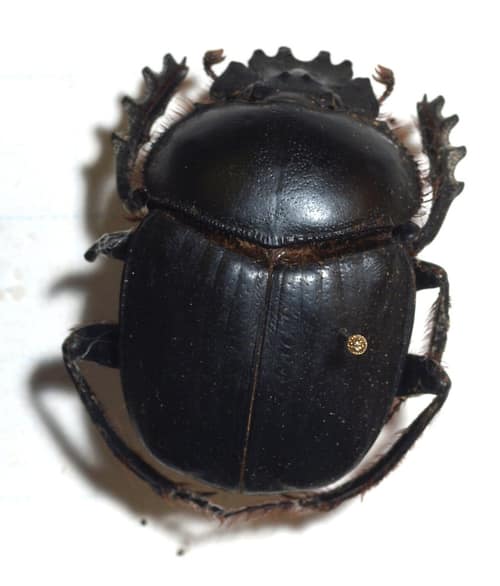
Cape Flightless Dung Beetle
Circellium bacchusAlso known as Addo Flightless Dung Beetle, Flightless Dung Beetle
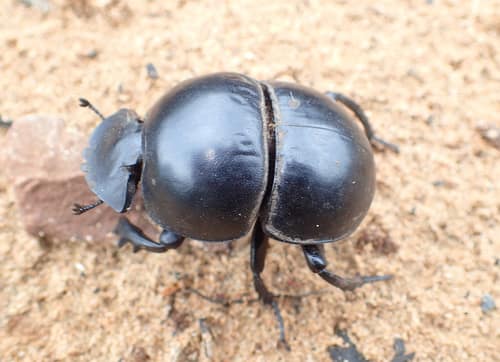
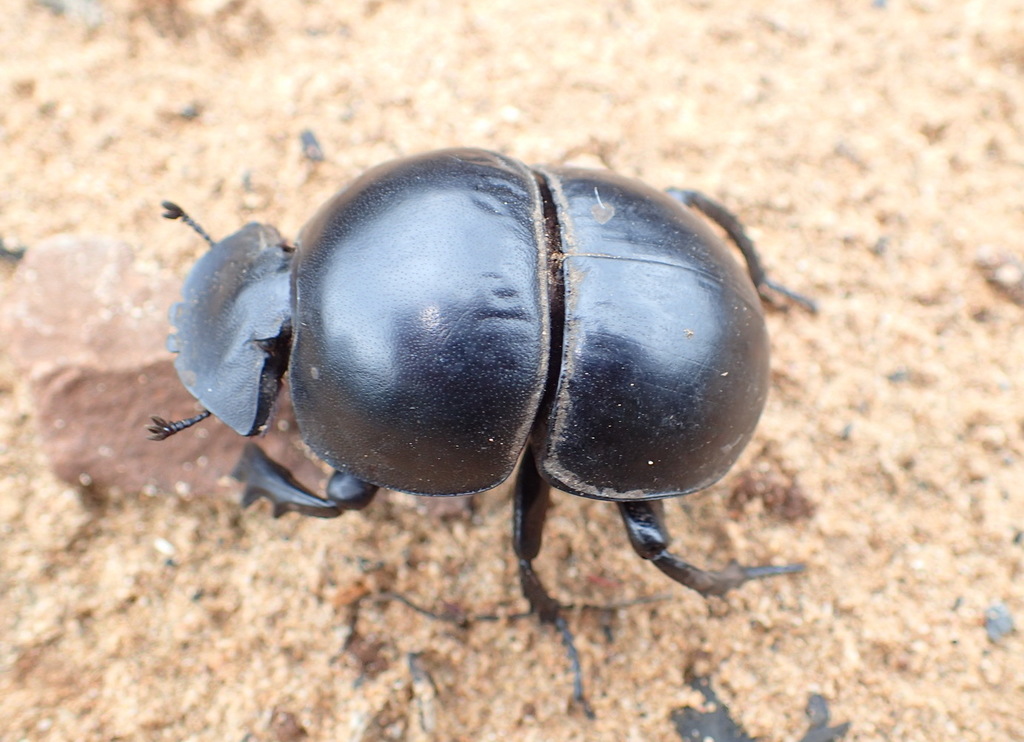
These robust, jet-black scarabs navigate the semi-arid thickets of South Africa on foot, having traded the energy expense of flight for a sealed, moisture-trapping subelytral chamber that prevents dehydration. Pairs often contest nutrient-dense dung dropped by elephants and rhinos, carving out spherical brood balls and pushing them backward over uneven ground with their bowed hind legs. Their relentless tunneling and dung burial aerate compacted soils while cycling critical organic matter back into the arid landscape.

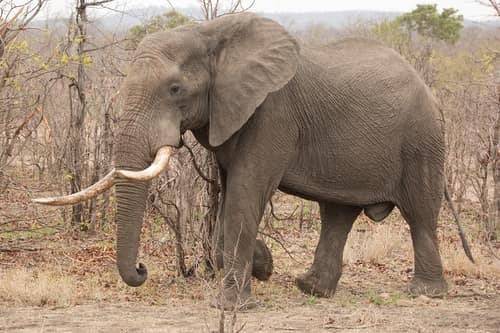
1 / 7- Elephant dung
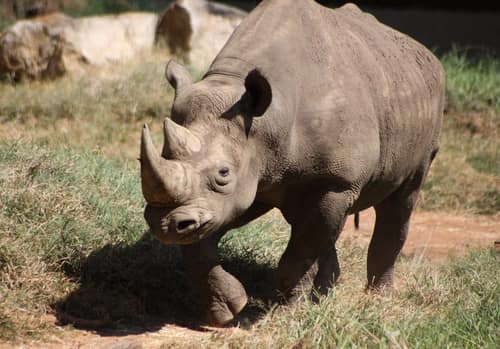
- Rhinoceros dung
- Buffalo dung
- Chacma Baboon
- Black-backed Jackal
- Southern Fiscal
- OrderColeoptera
- FamilyScarabaeidae
- GenusCircellium
- SpeciesCircellium bacchus
- Low
- Moderate
- High
- Very high
- Why interaction risk is low
- Completely harmless to humans; safe to observe at normal distances.
- What to notice
- Look for a large, rotund, matte-black beetle lacking a split wing case, crawling along reserve trails.
- Support conservation
- Stop vehicles when beetles are on tracks and allow them to pass without physical intervention.
- Yield Right of Way: Drive slowly on gravel reserve roads where beetles frequently cross with dung balls.
- Observe Without Touching: Leave rolling pairs undisturbed to avoid disrupting critical reproductive efforts.
Found in Collections
Desert Sands
Cape Flightless Dung Beetle is found in this collection. Identify it in Fauna to fill this slot and continue your progress.
Unlock to track progress
Report a name, category, or profile issue for review.