Great Blue Heron
Ardea herodias
North America’s largest heron, a patient hunter with broad wings and a daggerlike bill.
What to look for
- 01
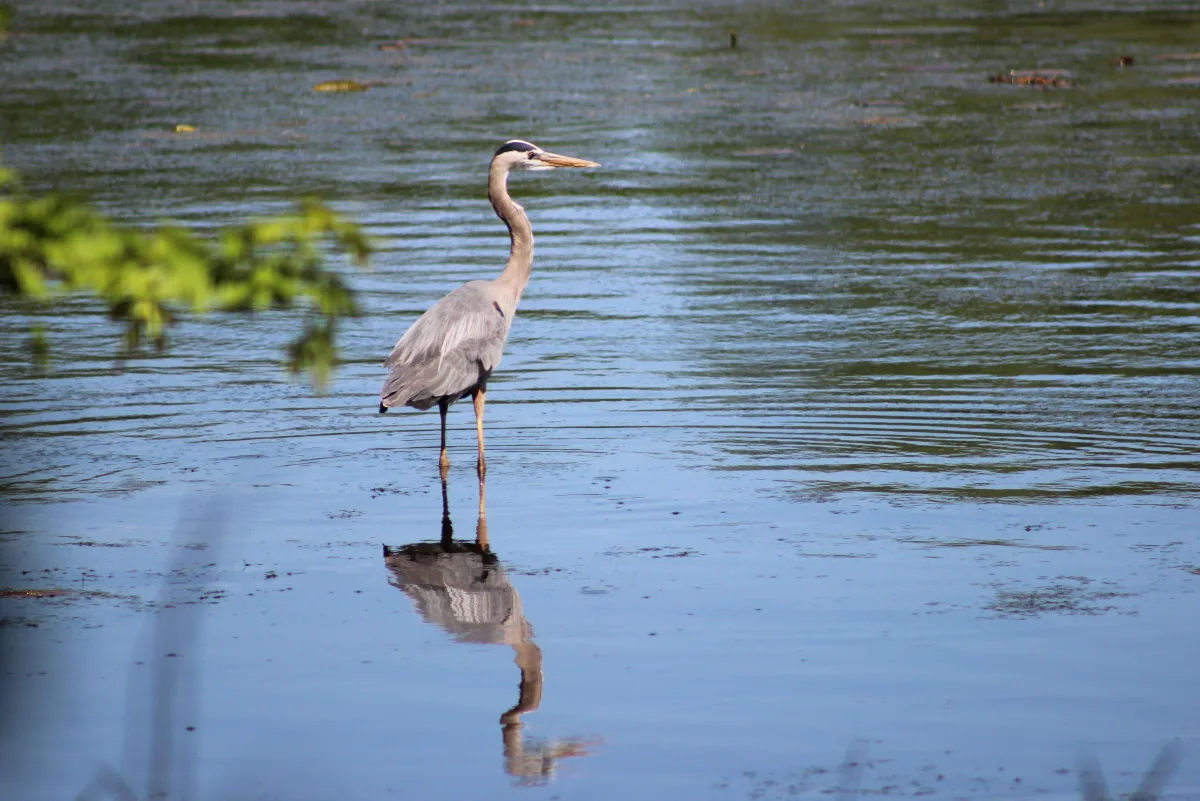
Very large, blue-gray wading bird with long legs
- 02
Long, thick, yellowish bill and a dark stripe above the eye
- 03
Flies with its neck folded into an S and its legs trailing
Where it lives
Fresh and saltwater shorelines, marshes, ponds, rivers, sloughs, open fields, and agricultural land.
How it moves
Often stands statue-still or stalks slowly in shallow water before striking quickly at prey.
Common lookalikes
Sandhill cranes fly with the neck extended. Great egrets share the heron’s shape but are entirely white.
Observe responsibly
Use binoculars and stay back from feeding birds and nesting colonies. Never share exact nest or rookery locations publicly.
Avoid forcing a bird to leave a feeding area or nest; repeated disturbance costs time and energy.
Great blue herons are widespread, but clean wetlands and undisturbed nesting sites remain essential locally.
Get Fauna and identify it in the field.
Where this guide comes from
Sources are linked below. Field marks vary with age, sex, season, region, light, and viewing distance.