Cooper's Hawk
Astur cooperii
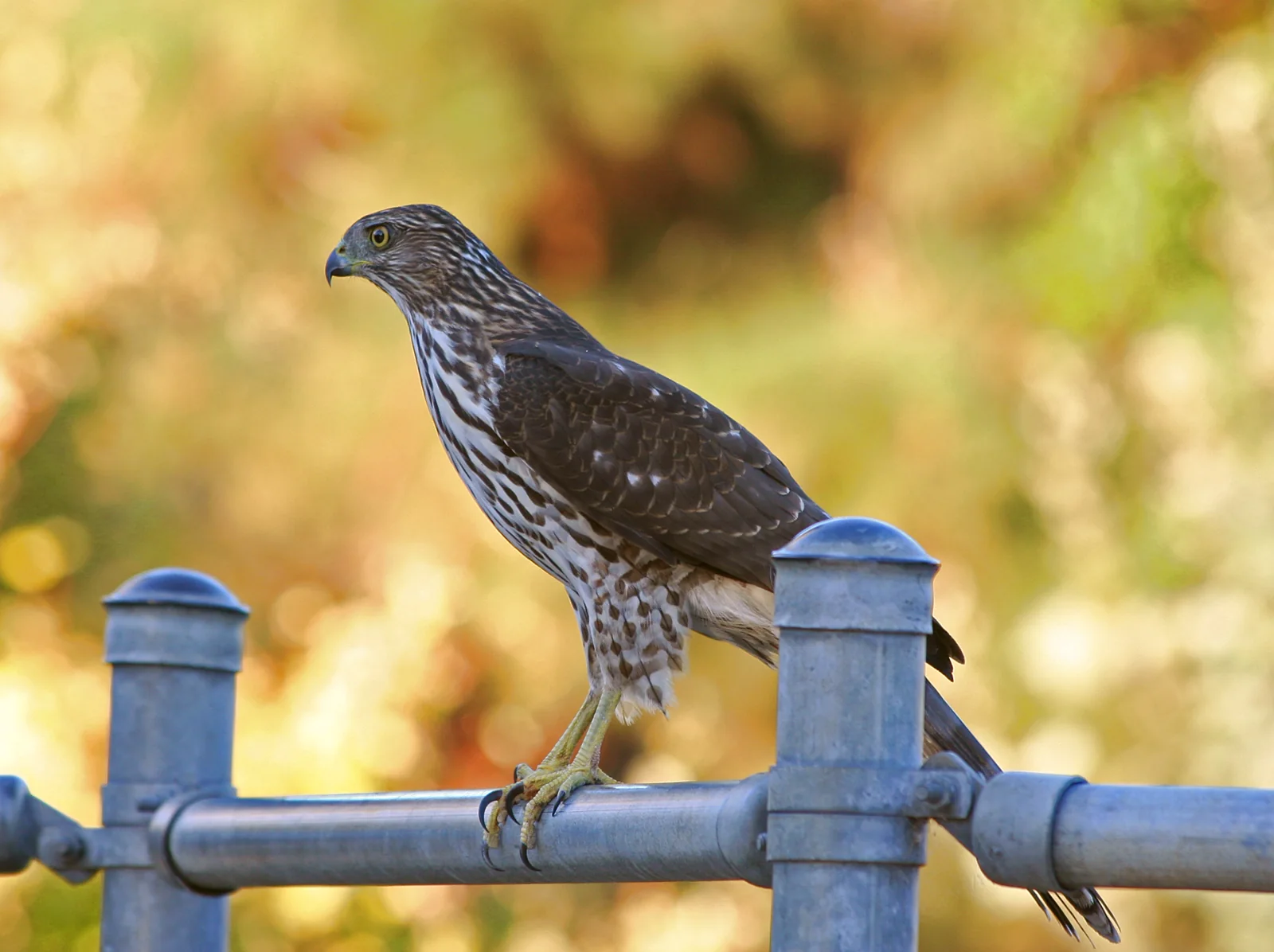
A crow-sized woodland hawk with a large, blocky head that projects well ahead of the wings in flight.
What to look for
- 01
Big, block-shaped head that pushes well past the leading edge of the wings when gliding
- 02
Tail tip rounded, with a broad white terminal band
- 03
Dark cap contrasting against a paler nape, giving a 'capped' look
- 04
Sturdy legs and a body roughly crow-sized
Where it lives
Woodlands, forest edges, leafy suburbs, and city parks across much of North America.
How it moves
Bursts from cover with a few stiff flaps and a long glide, hunting birds around woodland edges and feeders. Increasingly common in towns and suburbs.
Common lookalikes
Sharp-shinned hawks are smaller with a small head that barely projects, a squared tail tip, and a hooded rather than capped head. Sizes overlap — a large female sharp-shinned can approach a small male Cooper's.
Observe responsibly
Watch from a distance and never linger near a nest. If a hawk is hunting a feeder, pausing feeding for a week or two is the usual advice rather than intervening.
No danger to people, though a bird defending a nest may stoop close. Injured raptors should be handled only by a licensed rehabilitator.
Populations recovered strongly after the decline of DDT-era pesticides and the species has adapted well to suburban life.
Get Fauna and identify it in the field.
Where this guide comes from
Sources are linked below. Field marks vary with age, sex, season, region, light, and viewing distance.