Common Raven
Corvus corax
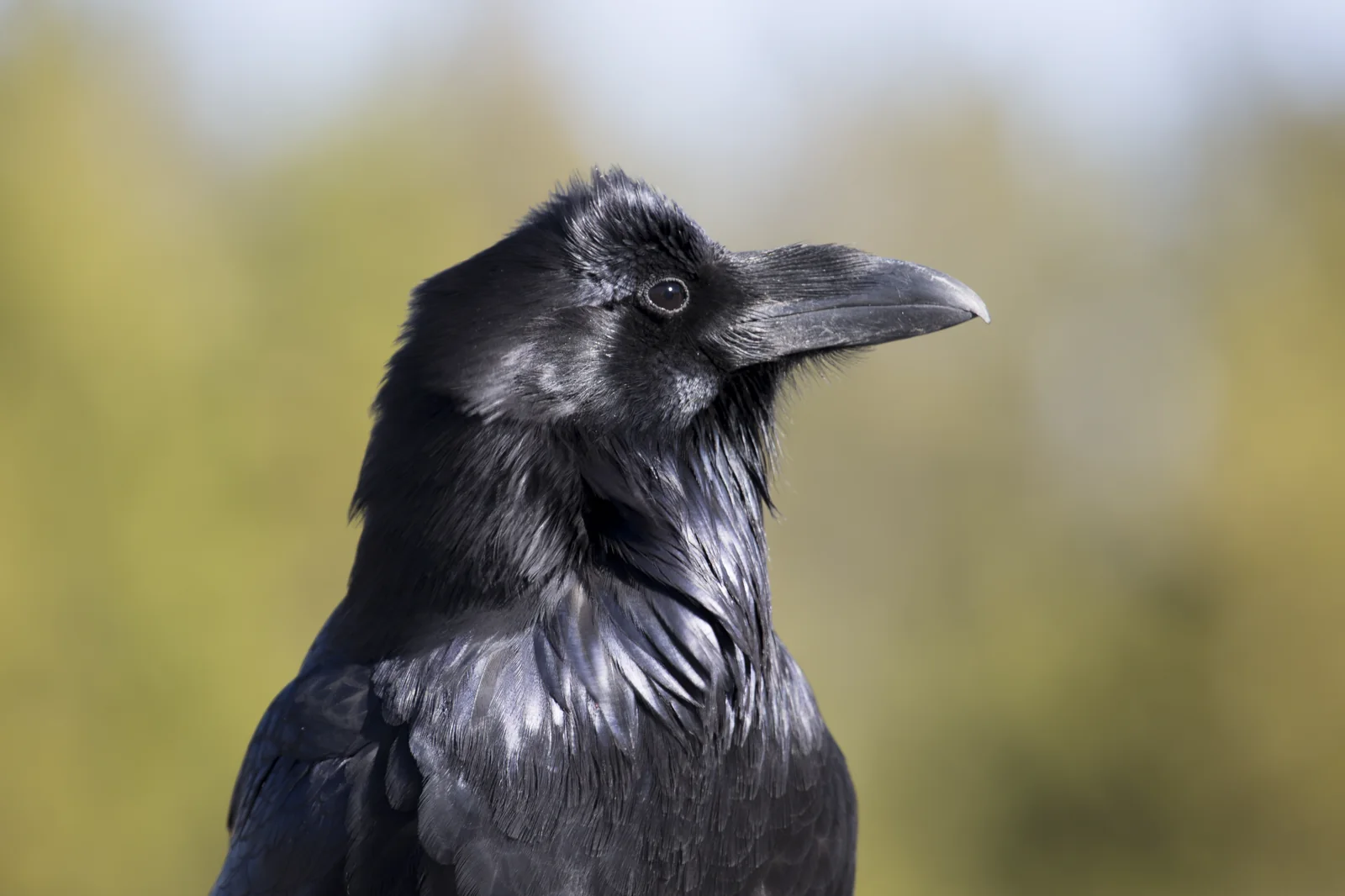
A hawk-sized black corvid with a heavy bill, shaggy throat, and a wedge-shaped tail in flight.
What to look for
- 01
Much larger and bulkier than a crow, approaching a Red-tailed Hawk in size
- 02
Thick, deep bill with bristly feathers over the base and a shaggy 'beard' of throat hackles
- 03
Tail tapers to a central point — a wedge or diamond shape in flight
Where it lives
Forests, mountains, coasts, and deserts, and increasingly cities and towns across its wide range.
How it moves
Soars and glides like a raptor, with rolls and tumbles, and travels in pairs more often than crowds. The call is a deep, hoarse, croaking gronk that carries a long way.
Common lookalikes
American crows are smaller and slimmer, with an even, fan-shaped tail, a smooth throat, and a flat caw instead of a croak.
Observe responsibly
Give nest cliffs and nest trees a wide berth, and keep food packed away — ravens learn quickly around people.
Ravens pose no real danger to people, but never handle a sick or dead bird — report unusual die-offs to local wildlife authorities.
Widespread and intelligent, ravens have recolonized parts of their historic range, though they remain sensitive to persecution in places.
Get Fauna and identify it in the field.
Where this guide comes from
Sources are linked below. Field marks vary with age, sex, season, region, light, and viewing distance.