Ticks: prevention, removal, and what to watch for
Most national guidance says to remove an attached tick promptly. Australia is the important exception: its public-health advice is to kill an adult tick in place with an ether-containing freezing product and not forcibly remove it. Health New Zealand says attached ticks should be removed immediately.
Scope: Named national guidance only: UK, Ireland, continental Europe, Canada, US, Australia, and New Zealand · Last updated
Prevention is the part that travels
Cover exposed skin where practical, avoid brushing through vegetation, use a repellent recommended by the health authority where you are, and check skin and clothing after outdoor activity. Check children carefully; check pets too, but use veterinary advice for treatment or removal from an animal. [1][2]
- Check the warm, hidden places: waistband, armpits, groin, behind the knees, hairline, and behind the ears
- Check promptly after outdoor activity
- Repellent naming trap: icaridin (Canada) and picaridin (Australia) are the same compound under two regional names — not two products
Removal: UK, Ireland, Europe, Canada, and the US
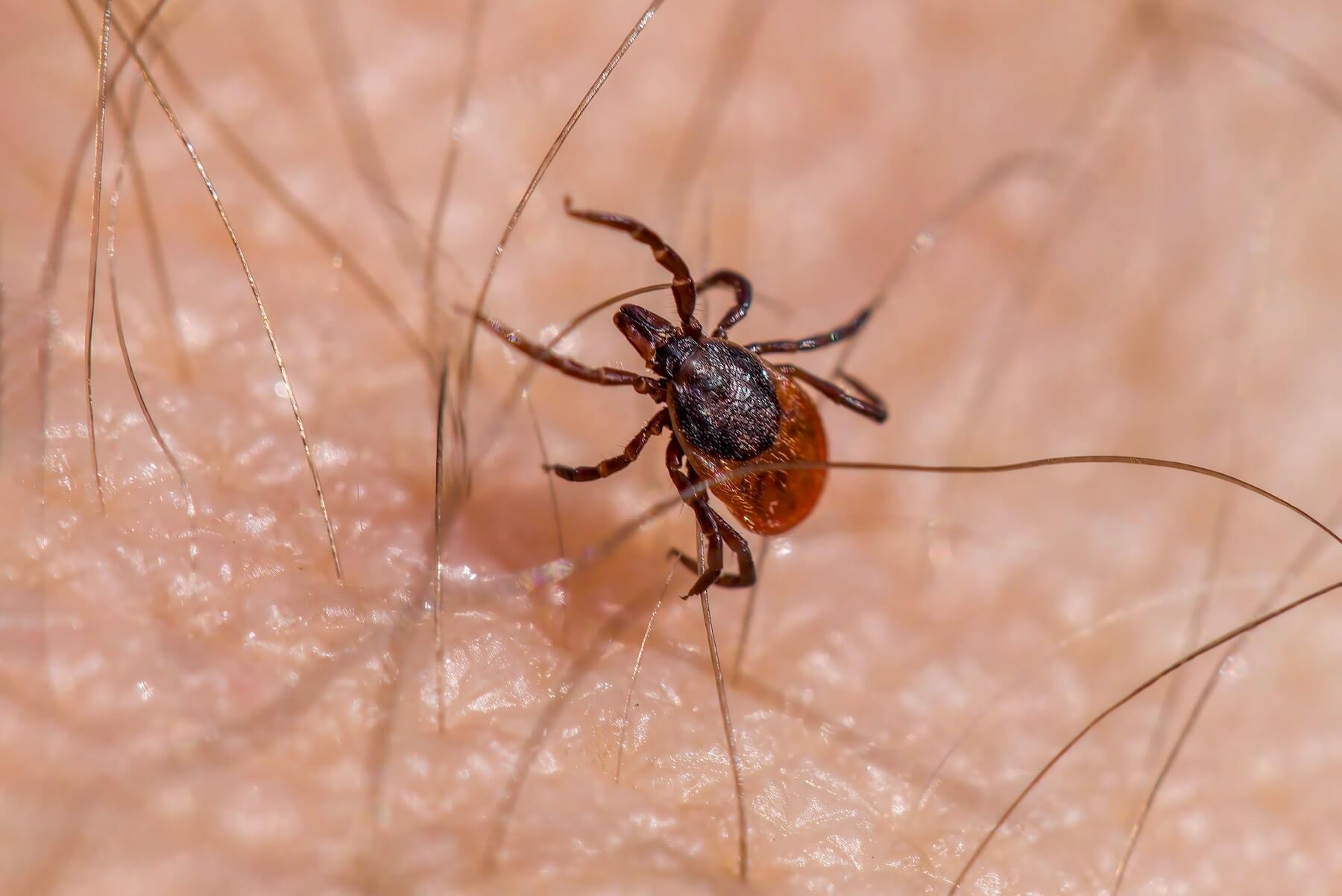
Remove the tick as soon as possible. With clean fine-tipped tweezers or an approved tick-removal tool, grasp it as close to the skin as possible and pull away with slow, steady pressure. Do not twist, jerk, burn, smother, or squeeze the body. Clean the bite and your hands afterwards. If mouthparts remain and do not come out easily, do not dig at the skin; allow it to heal and seek advice if the area becomes infected. [2][3][4][5]
- Fine-tipped tweezers, as close to the skin as you can get
- Steady upward pull — don't squeeze the body, jerk, or twist
- Wash the bite and your hands; note the date
- Do not burn, smother, or coat the tick with grease or petroleum jelly
Removal: Australia
Australian guidance is different because disturbing a tick can trigger a serious allergic reaction. Do not squeeze, agitate, or forcibly remove an adult tick. Kill it in place with a product that rapidly freezes ticks — usually an ether-containing spray — and allow it to drop off. If it cannot be frozen or does not drop off, leave it in place and seek urgent medical help. Anyone with a known tick allergy should follow their allergy action plan and obtain urgent medical care. Call 000 for breathing difficulty, collapse, or anaphylaxis. [6][7]
- Do not grab it, squeeze it, or pull it out
- Freeze it in place and let it fall off by itself
- Can't freeze it? Leave it in and seek urgent medical help
- Follow an allergy action plan if one has been prescribed

Removal: New Zealand
Health New Zealand does not adopt Australia's freeze-and-wait method. It says an attached tick should be removed immediately, then the bite cleaned and disinfected. Keep the removed tick in a sealed container if it can be done safely; it may help with identification. Contact a healthcare provider if flu-like symptoms, infection, or other symptoms follow. [8]
What to watch for afterwards
Seek medical advice after a tick bite if you develop an expanding rash, fever, flu-like illness, headache, joint pain, weakness, or another concerning symptom. A Lyme rash does not occur in every case. Tick-borne encephalitis is endemic in parts of mainland Europe, but it is not absent from Britain: UKHSA reports a small number of locally acquired UK cases since 2019. TBE vaccination is recommended for some people with high exposure risk in endemic areas; ask a travel-health professional rather than treating “Europe” as one risk zone. [1][9][10]
- Expanding circular rash, flu-like illness, fever, headache, or joint pain in the weeks after a bite — get it seen
- No rash is not reassurance; roughly a third of Lyme cases never show one
- Ask a travel-health professional about TBE vaccination for high-risk exposure in endemic areas
- Australia: rapid swelling, breathing difficulty, or collapse after a bite is an emergency
No attachment time proves safety
Transmission risk depends on the tick, pathogen, place, and attachment circumstances. A quoted number such as 24 hours is not an all-clear. Follow the removal method for the country you are in, act promptly, and do not dismiss later symptoms because the tick seemed attached only briefly. [4][5]
Related guides
Get Fauna and identify it in the field.
Where this guide comes from
Source-checked editorial guide. Last updated . This guide teaches identification and field skills; it is not a substitute for expert verification when it matters.
- UK Health Security Agency — Lyme disease: signs and symptoms ↗
- European Centre for Disease Prevention and Control — Tick protection and removal ↗
- Ireland Health Service Executive — Insect and tick-bite treatment ↗
- Public Health Agency of Canada — Tick removal ↗
- US Centers for Disease Control and Prevention — After a tick bite ↗
- healthdirect (Australia) — Tick bites ↗
- ASCIA — Tick allergy guidance ↗
- Health New Zealand — Tick bites ↗
- UK Health Security Agency — Tick-borne encephalitis ↗
- European Centre for Disease Prevention and Control — Tick-borne encephalitis ↗