Reefs and tide pools: what not to touch
The traffic on a shoreline runs both ways, and it is lopsided. You will damage far more animals than could ever damage you — an upturned rock, a lifted anemone, a fin against coral. The small number that hurt back do it through three delivery mechanisms whose first-aid protocols openly contradict each other, which is why one remembered beach remedy is worse than none.
Scope: Mechanism plus worked examples from named guidance only: ANZCOR Guidelines 9.4.5 and 9.4.8, healthdirect Australia, and the NHS. Species present, stinger seasons, and antivenom availability differ by coast; the Australian guidance is the most fully specified and is used here to illustrate the mechanism rather than to describe every ocean. · Last updated
- The traffic runs both ways, and it is lopsided[5][6][7]
- Turning rocks over, and putting them back[6][7]
- Coral is an animal, and it cannot move away from you[5]
- What not to pick up, and why it looks pickable[1][2]
- How the venom got in decides the response[1][2][4]
- Three responses that contradict each other[1][2][3]
The traffic runs both ways, and it is lopsided
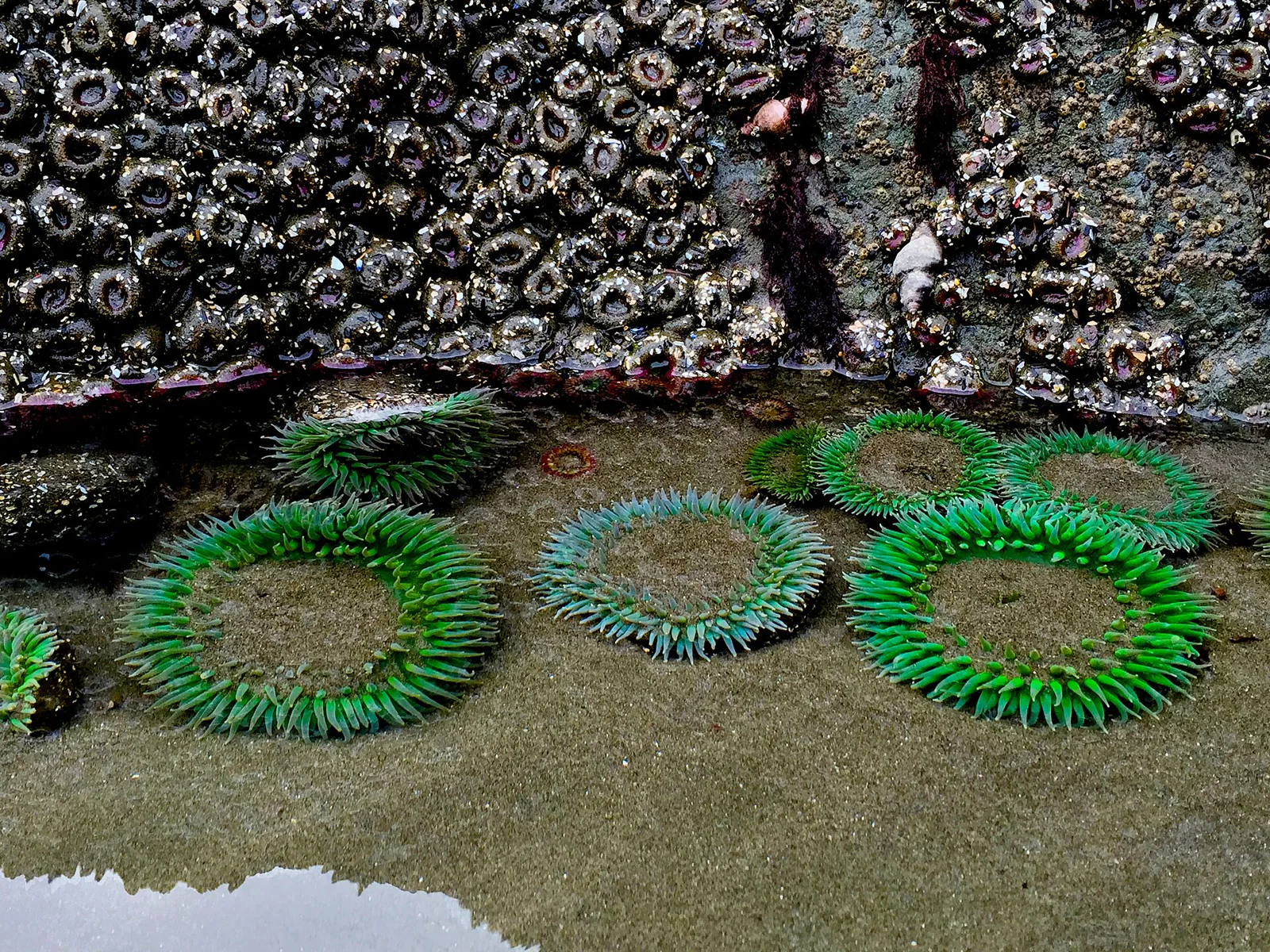
A rock pool is one of the few places where a casual visitor routinely handles wild animals, and the balance of harm is not close. In an afternoon a family can strand a dozen animals under a rock replaced upside down, tear an anemone that cannot reattach, and tip a bucket back into the wrong zone of the shore — while the chance of anyone being hurt in return is small. The codes written by the people who look after these shores reduce to one instruction: leave wildlife and the environment as you found it, and give animals space and time. Read the rest of this guide with that asymmetry in mind. The venom matters, and it is the smaller half of the problem. [5][6][7]
- You are, overwhelmingly, the more dangerous animal on the shore
- Leave wildlife and the environment as you found it
- Photograph rather than collect — an image takes nothing away
- Most of the damage is accidental and invisible to the person causing it
Turning rocks over, and putting them back
The underside of a stone is a habitat with an orientation: the animals there are shade-adapted, moisture-dependent, and often fixed in place. Turn the rock and leave it inverted and you have not merely disturbed them, you have put their ceiling on the floor and exposed them to sun, gulls, and drying out until the tide returns. The seashore code is explicit that everything goes back where it was found, and that a bucket holds one animal at a time — a viewing vessel for a minute or two, not a collection. Nothing attached to rock should be prised off at all: limpets and anemones are damaged by removal and may not survive it, and seaweed cannot reattach once torn away. [6][7]
- Replace every rock exactly as it lay, same way up, same place
- Never prise off limpets, anemones, or seaweed — the damage is often fatal
- One animal in a bucket at a time, briefly, then back where it came from
- Return animals to the same zone of the shore, not the nearest pool
- Walk on bare rock and sand where you can; the weed underfoot is alive
Coral is an animal, and it cannot move away from you
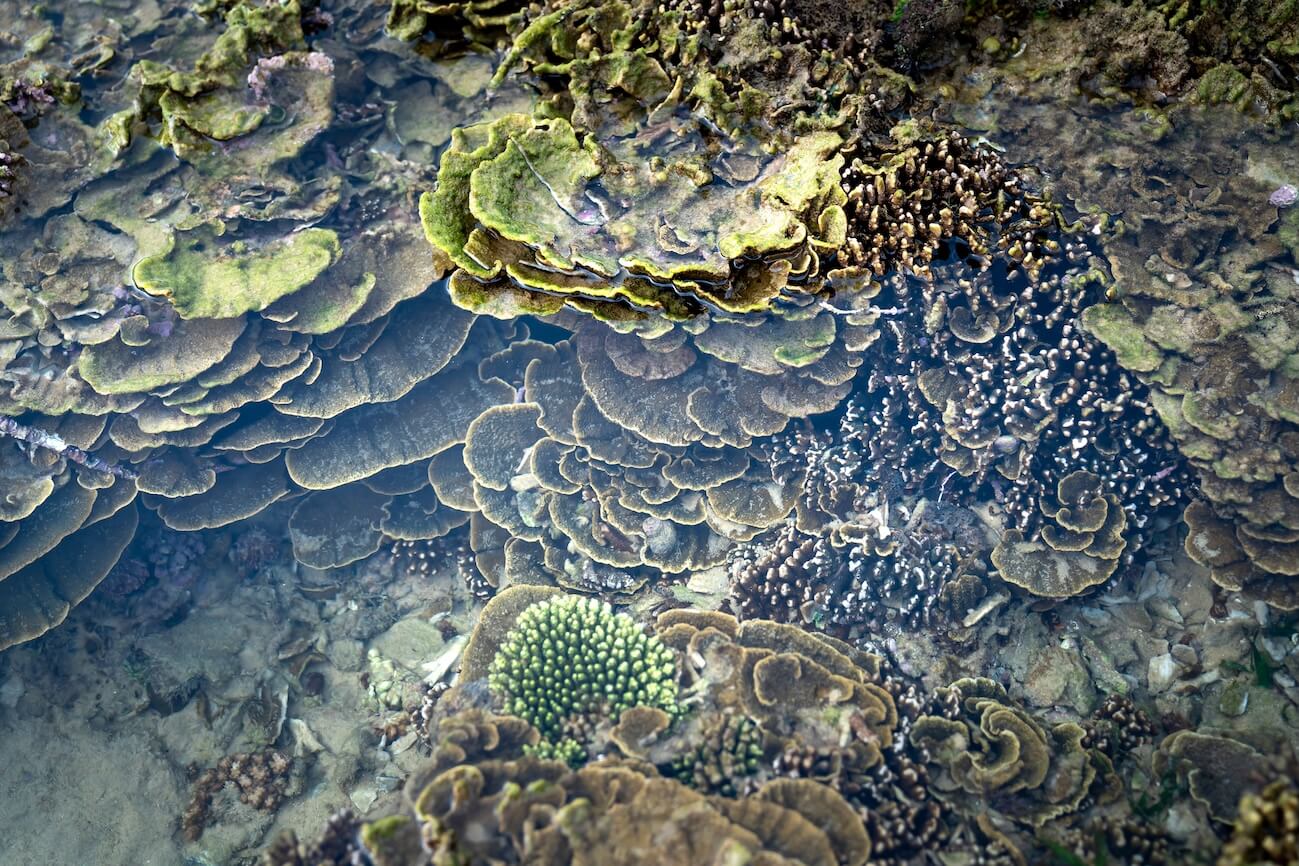
Reef damage is the clearest case of harm invisible to the person doing it, because coral looks like rock and behaves like architecture. It is neither. NOAA's guidance is blunt — coral reefs are alive, so do not touch them — and the ways people break them are mostly incidental: a steadying hand, a trailing fin, a dropped anchor, a snorkeller standing up to adjust a mask. Even stirred-up sediment can smother coral. Reef structures take decades or longer to build, which is the argument against taking a piece home as much as against leaning on one. Sunscreen counts too: NOAA advises choosing formulations whose chemicals do not harm marine life. [5]
- Never stand, kneel, or steady yourself on coral — float, and adjust gear on your back
- Fins and dangling gear cause most contact damage; keep them clear and clipped
- Anchor in sand well away from coral and seagrass
- Stirred sediment smothers coral even without contact
- Choose a sunscreen that does not harm marine life, and leave coral on the reef
What not to pick up, and why it looks pickable
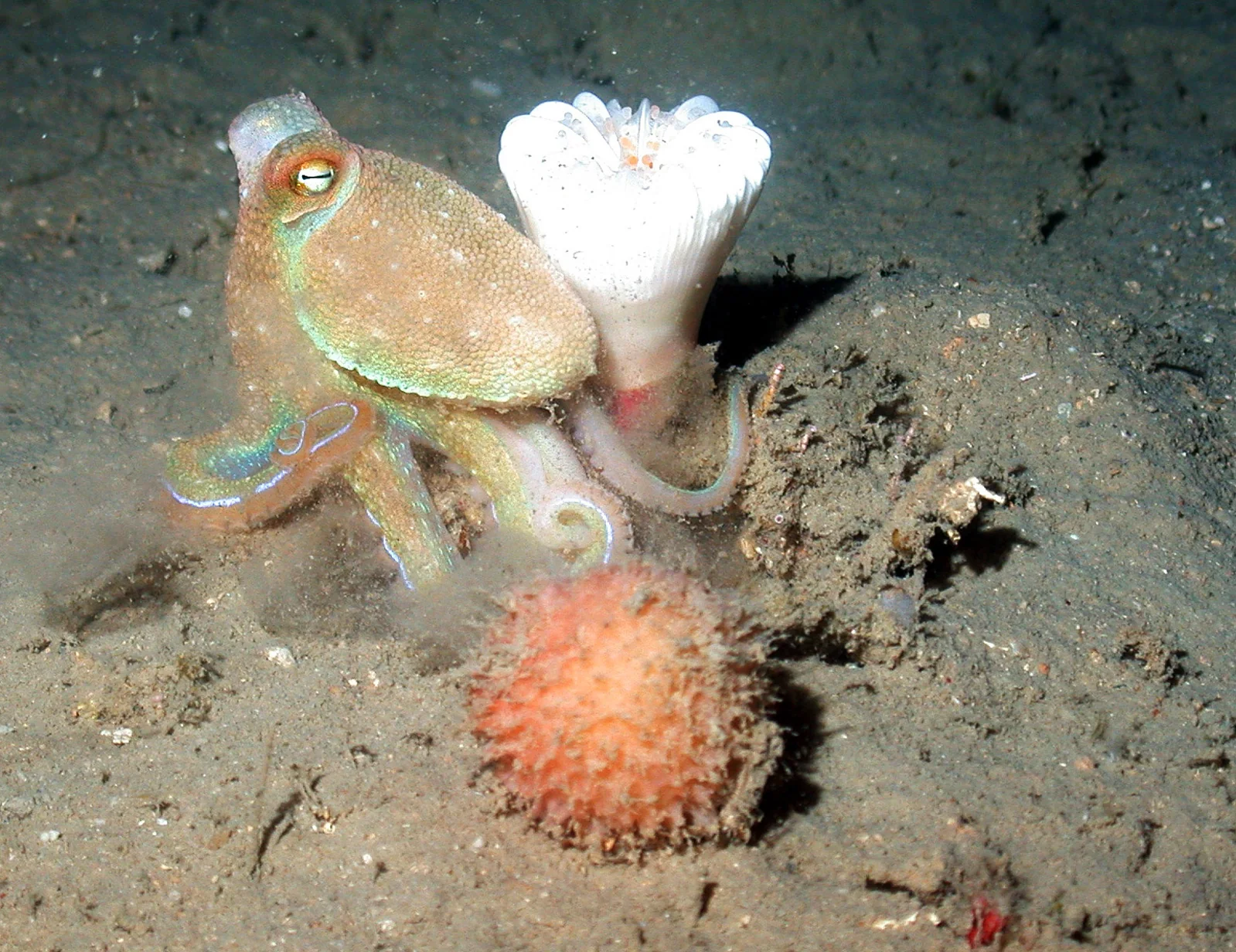
The short list of animals that hurt back correlates almost perfectly with the list of things that look inert or collectable. Blue-ringed octopuses live in tidal pools across Australian coastal waters and are small, quiet, and easy to lift; the blue rings flare only when the animal is already alarmed, so they are a warning rather than an identification aid. Cone shells are conical, patterned, and exactly what someone beachcombing wants to pocket — the snail inside fires a harpoon-like tooth. Stonefish look like rocks and lie among rocks, so they are trodden on rather than swum into. None of them pursues anyone. Every one is a handling or footfall injury. [1][2]
- Do not pick up shells, live or apparently empty
- Do not put hands into crevices or under ledges you cannot see into
- Stiff-soled footwear on reef flats and rocky shallows
- Blue rings mean the animal is already alarmed, not that it is safely identified
How the venom got in decides the response
This is the split that makes marine first aid confusing until you see it. Jellyfish deliver venom through nematocysts — microscopic stinging capsules, many still on the skin unfired after the animal has drifted off, so the first job is stopping the rest discharging. Blue-ringed octopuses and cone shells inject a neurotoxin that travels by lymph, the same problem an elapid snakebite presents and the same answer. Fish spines deliver a venom that responds to heat. Three delivery routes, three protocols, and treatments that actively contradict each other between categories. [1][2][4]
- Nematocysts: unfired cells still on the skin — do not rub, do not rinse with fresh water
- Injected neurotoxin: lymphatic spread — pressure immobilisation and an ambulance
- Spine venom: responds to heat — hot-water immersion
- Work out the mechanism before reaching for a remedy
Three responses that contradict each other
Tropical Australian guidance says to douse a potentially lethal jellyfish sting — box jellyfish or Irukandji — with household vinegar for 30 seconds, and says explicitly not to apply vinegar to a bluebottle, which takes hot water at 43–45°C instead. Both are jellyfish; the advice is opposite. A blue-ringed octopus or cone shell envenomation instead needs a broad pressure bandage and a splint, exactly as for an elapid snakebite, because that retards the lymph flow carrying the venom — and it is a breathing emergency, so someone stays with the person ready to resuscitate. Stonefish, other fish spines, and the weever fish buried in temperate sand take hot water, no hotter than a second person can comfortably tolerate, for up to 30 minutes. [1][2][3]
- Box jellyfish and Irukandji: vinegar for 30 seconds, then an ambulance
- Bluebottle: no vinegar — hot water at 43–45°C for up to 30 minutes
- UK jellyfish and weever: hot water as tolerated for at least 30 minutes; rinse with seawater, never fresh
- Blue-ring or cone shell: pressure bandage, splint, ambulance, watch the breathing
- Irukandji symptoms can be delayed 20–40 minutes; feeling fine early proves nothing
Get Fauna and identify it in the field.
Where this guide comes from
Source-checked editorial guide. Last updated . This guide teaches identification and field skills; it is not a substitute for expert verification when it matters.
- ANZCOR Guideline 9.4.5 — First Aid Management of Marine Envenomation ↗
- healthdirect Australia — Sea creature bites and stings ↗
- NHS — Jellyfish and other sea creature stings ↗
- ANZCOR Guideline 9.4.8 — Envenomation: Pressure Immobilisation Technique ↗
- NOAA National Ocean Service — What can I do to protect coral reefs? ↗
- The Wildlife Trusts — Rockpool wildlife and the seashore code ↗
- Cornwall Wildlife Trust — Marine and Coastal Code ↗