
Bird · GBIF taxon 9770031
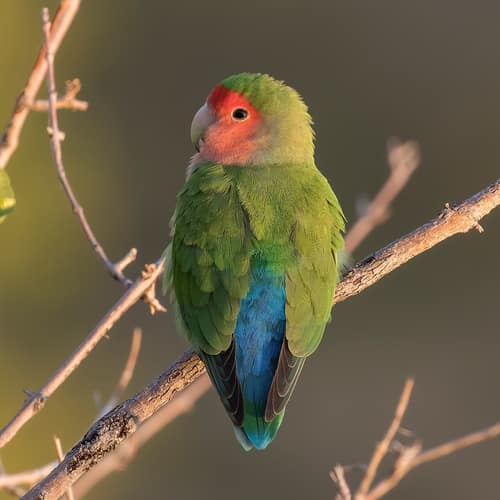
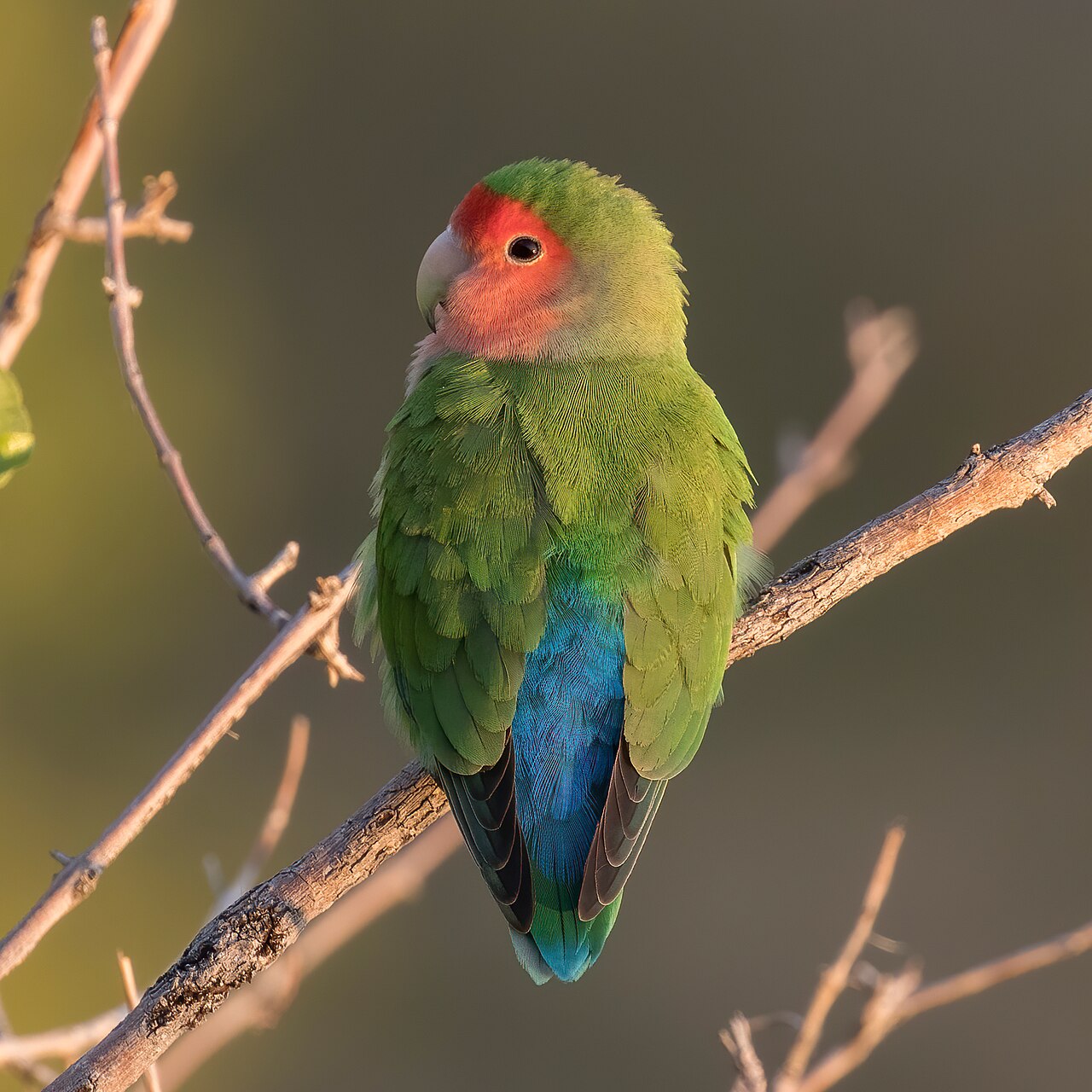
Rosy-faced Lovebird
Agapornis roseicollisAlso known as Peach-faced Lovebird, Rosy-collared Lovebird
Rosy-faced lovebirds form tight-knit pairs and noisy flocks across dry southwestern African savannas, roosting together in dense tree canopies or rock crevices. Females harvest nest material by stripping long ribbons of bark and leaf stems, tucking them into their lower back feathers to transport back to the nest. Highly reliant on surface water, large groups gather around desert waterholes throughout the heat of the day to drink and bathe.
SocialVocalColorful
—observations
—countries
—peak records
Least ConcernConservation statusIUCN Red List categoriesLCNTVUENCREWEXLeast ConcernRed List categories, explained →
Diet & prey
- Grass seeds
- Sunflower seeds
- Ficus berries
Predators
- Lanner Falcon
- Verreaux's Eagle-Owl
- Boomslang
ThreatsLocal habitat loss, trapping for the pet trade
HabitatsSavanna woodland, dry scrubland, riverine belts
Life span10–15 years
Classification
- OrderPsittaciformes
- FamilyPsittacidae
- GenusAgapornis
- SpeciesAgapornis roseicollis
Range data is not available yet.
Interaction riskLow
- Low
- Moderate
- High
- Very high
- Why interaction risk is low
- Capable of delivering a sharp, painful bite with its strong hooked beak if cornered.
Responsible observation
- Listen for Chattering: Locate active flocks by listening for their constant high-pitched, metallic contact calls.
- Watch Water Sources: Scan desert waterholes around midday when flocks descend to drink and bathe.
- Observe Nests Distance: Keep a respectful distance from rock crevices or weaver nests where lovebirds raise young.
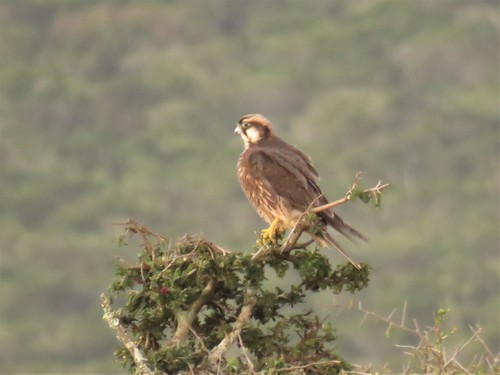
Predator (c) Christiaan Viljoen, some rights reserved (CC BY), uploaded by Christiaan Viljoen · cc-by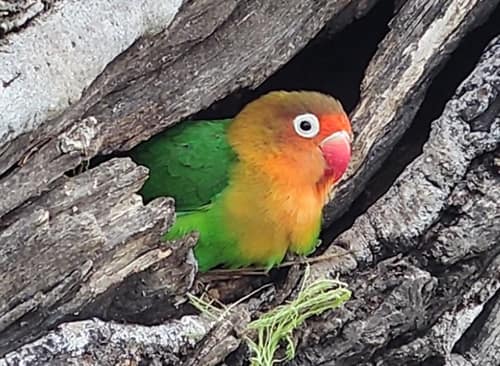
Close Relative (c) Donald Hampton, some rights reserved (CC BY-SA), uploaded by Donald Hampton · cc-by-sa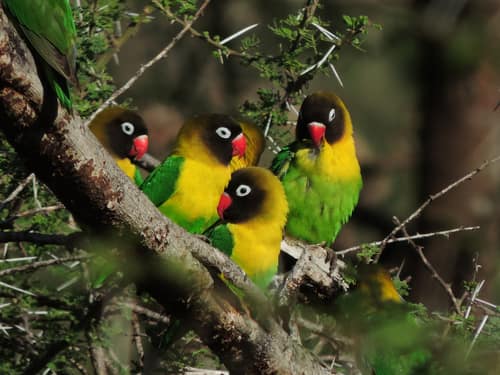
Close Relative (c) Donald Hampton, some rights reserved (CC BY-SA), uploaded by Donald Hampton · cc-by-sa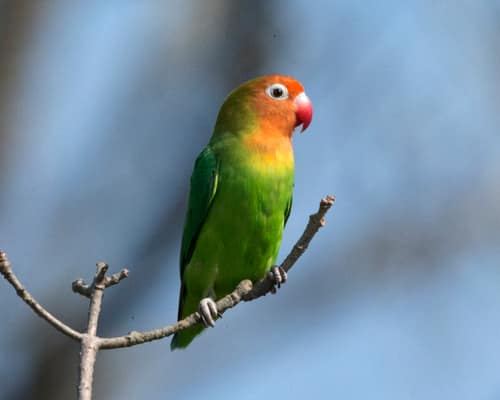
Close Relative (c) Lip Kee, some rights reserved (CC BY-SA) · cc-by-sa
Help improve the field guideSomething wrong?
Checking your Fauna account…Report a name, category, or profile issue for review.