
Plant
Weeping Bottlebrush
Callistemon viminalis viminalisAlso known as Creek Bottlebrush, Weeping Callistemon
Weeping bottlebrush drapes graceful, pendulous branches along eastern Australian watercourses, bursting into vibrant crimson blooms every spring and summer. Dense spikes of long red stamens resemble household bottle brushes, secreting copious nectar that attracts honeyeaters and lorikeets. Beyond its native riverbanks, this resilient tree thrives in coastal gardens and urban parks around the globe.
FloweringEvergreenAttracts Birds
—observations
—countries
—peak records
Least ConcernConservation statusIUCN Red List categoriesLCNTVUENCREWEXLeast ConcernRed List categories, explained →
Diet & preyAutotrophic (Photosynthesis)
Predators
- Sawfly Larvae
- Scale Insects
- Brush-tailed Possums
ThreatsHabitat Degradation, Invasive Weeds, Myrtle Rust
HabitatsRiparian Zones, Watercourses, Coastal Woodlands
Life span50–100 years
Classification
- FamilyMyrtaceae
- SpeciesCallistemon viminalis viminalis
Range data is not available yet.
Interaction riskLow
- Low
- Moderate
- High
- Very high
- Why interaction risk is low
- Safe to observe at a normal distance.
Responsible observation
- Bird Watching: Visit flowering trees early in the morning to observe native honeyeaters feeding on nectar.
- Pruning Care: Lightly prune after flowering to maintain a dense shape and encourage abundant future blooms.
- Planting Location: Position in full sun and well-draining soil for optimal flowering performance.
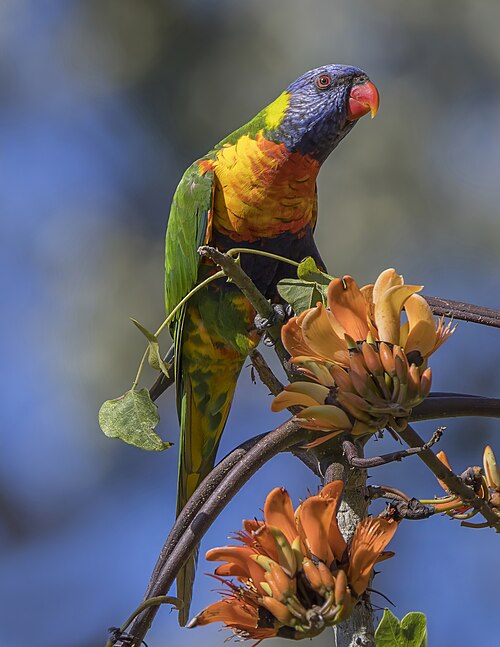
Pollinator Charles J. Sharp / CC BY-SA 4.0 · cc-by-sa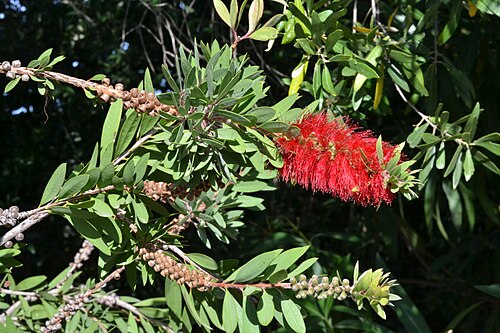
Close Relative DirkHoffmann / CC BY-SA 3.0 · cc-by-sa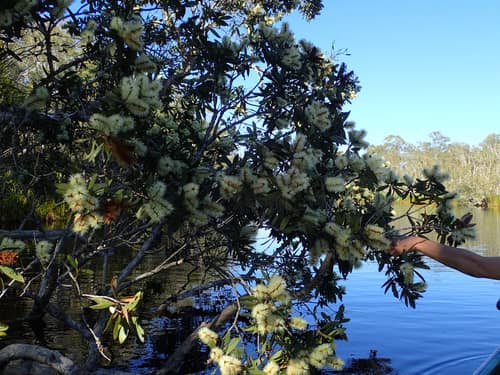
Family Kin (c) Julien Renoult, some rights reserved (CC BY), uploaded by Julien Renoult · cc-by
Help improve the field guideSomething wrong?
Checking your Fauna account…Report a name, category, or profile issue for review.