
Plant
Melaleuca Citrina
Callistemon citrinusAlso known as Crimson Bottlebrush, Lemon Bottlebrush, Red Bottlebrush
Crimson bottlebrush produces dense cylindrical flower spikes tipped with brilliant red stamens that resemble traditional bottle washers. Crushed leaves release a distinct citrus fragrance owing to volatile aromatic oils, which also contain the natural pre-emergent herbicide leptospermone. Across damp coastal heathlands and rocky creek margins, its woody seed capsules remain tightly clustered along stems for years until heat from bushfires triggers seed release.
Bird-PollinatedEvergreenAromatic Foliage
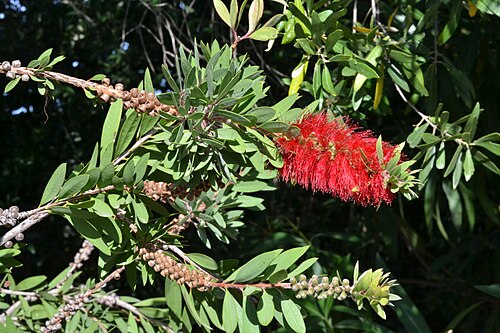
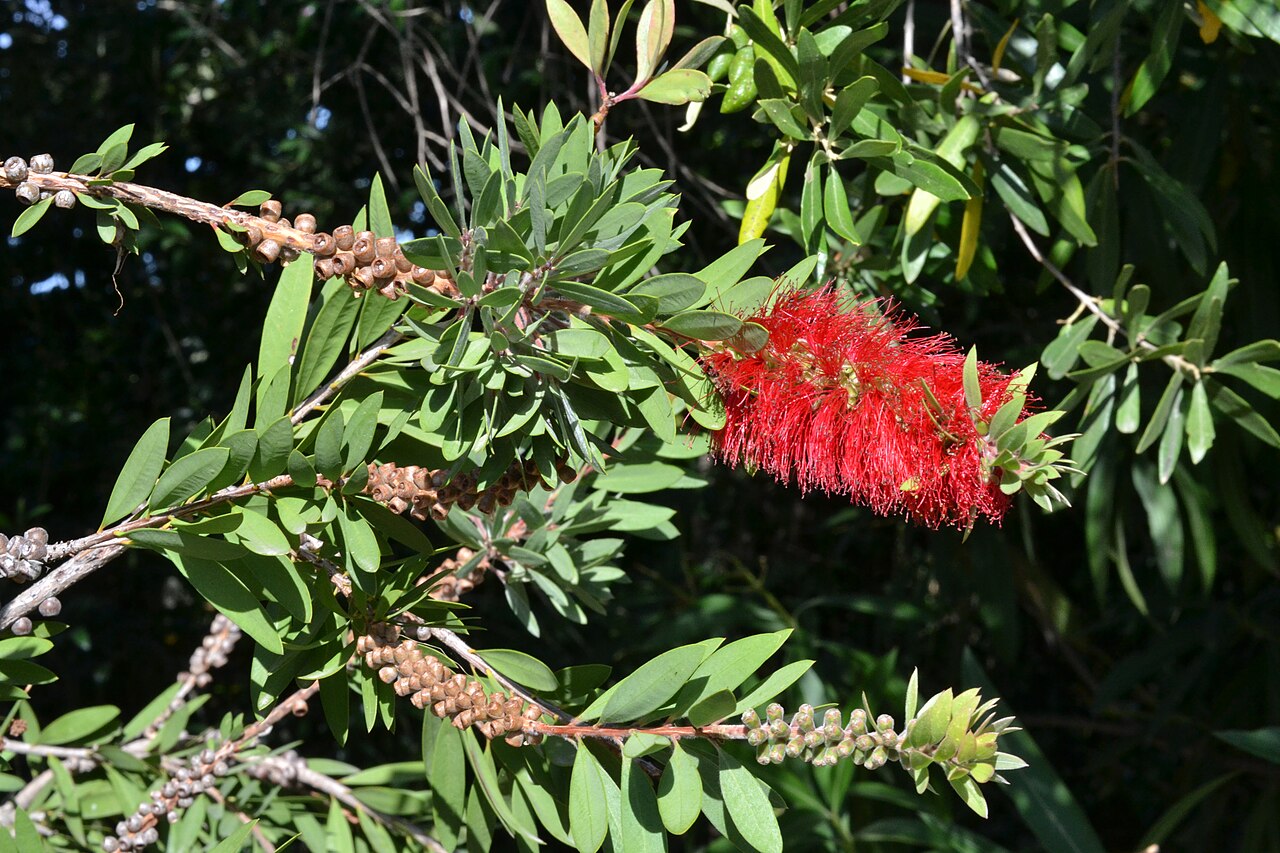
—observations
—countries
—peak records
Least ConcernConservation statusIUCN Red List categoriesLCNTVUENCREWEXLeast ConcernRed List categories, explained →
Diet & preyPhotoautotrophic
Predators
- Bottlebrush sawfly larvae
- Scale insects
ThreatsHabitat clearing and altered fire frequencies
HabitatsRiparian zones, coastal heathlands, and swampy depressions
Life span30–50 years
Classification
- FamilyMyrtaceae
- SpeciesCallistemon citrinus
Range data is not available yet.
Interaction riskLow
- Low
- Moderate
- High
- Very high
- Why interaction risk is low
- Safe to observe at a normal distance.
Responsible observation
- Foliage Aroma: Gently rub a mature leaf between your fingers to release the crisp lemon scent.
- Bird Watching: Monitor blooming bushes at dawn when honeyeaters arrive in numbers to forage.
- Seed Pods: Inspect woody stems beneath the flowers to spot clusters of long-lasting woody capsules.
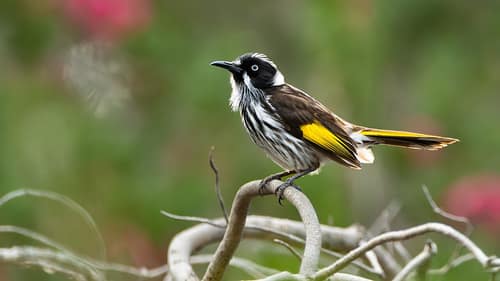
Pollinator Photo by: Paulweberphoto - paulweberphoto.com / CC BY 4.0 · cc-by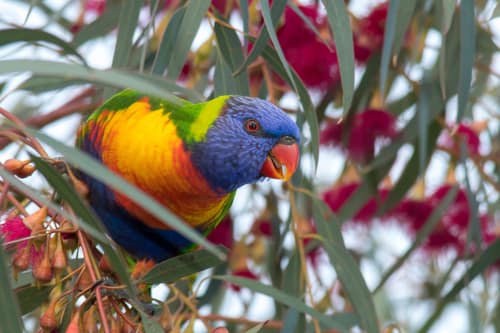
Pollinator (c) Andrew Allen, some rights reserved (CC BY), uploaded by Andrew Allen · cc-by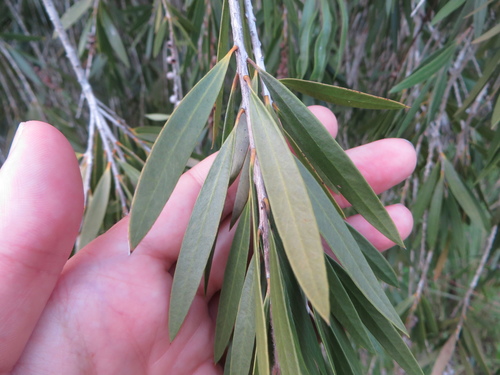
Close Relative (c) Ben Machado, some rights reserved (CC BY), uploaded by Ben Machado · cc-by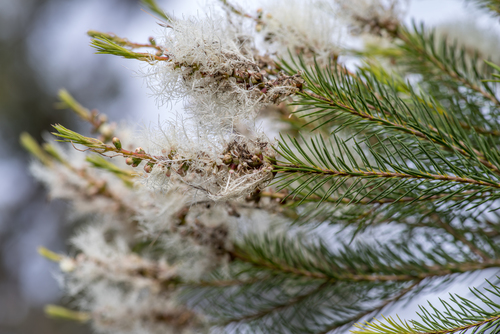
Close Relative (c) Bruce Cathie, some rights reserved (CC BY), uploaded by Bruce Cathie · cc-by
Help improve the field guideSomething wrong?
Checking your Fauna account…Report a name, category, or profile issue for review.