
Bird · GBIF taxon 9479809
Brown Thrasher
Toxostoma rufumAlso known as Brown Thrush, Fox-Colored Thrush
Brown Thrashers spend their days foraging energetically in leaf litter, using their heavy, decurved bills to sweep debris aside in search of insects, nuts, and berries. Males boast one of the largest vocal repertoires of any North American bird, singing loud, rich phrases that are characteristically repeated twice in succession from high treetops. Though conspicuous while singing, they remain secretive during nesting, slipping silently through dense thorny thickets.
SongbirdSecretiveState Bird
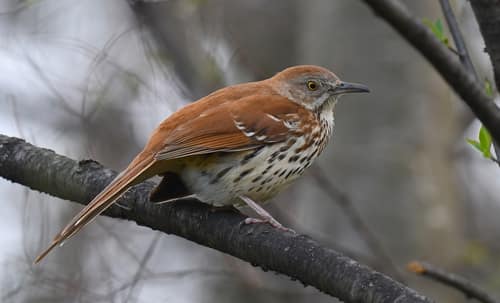
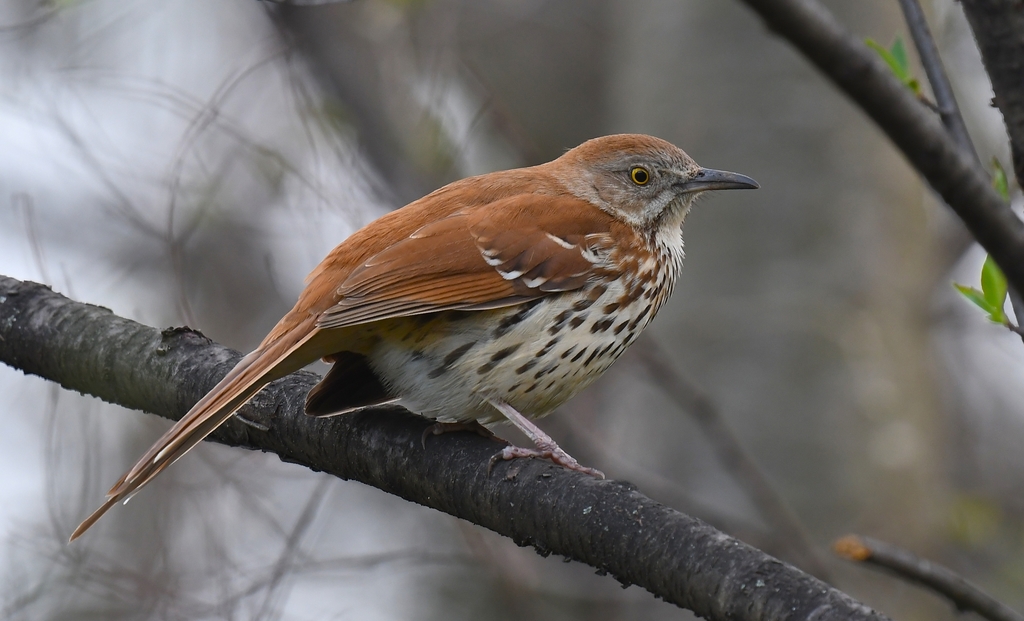
—observations
—countries
—peak records
Least ConcernConservation statusIUCN Red List categoriesLCNTVUENCREWEXLeast ConcernRed List categories, explained →
Diet & prey
- Beetles
- Caterpillars
- Berries
Predators
- Domestic Cat
- Cooper's Hawk
- Black Rat Snake
ThreatsHabitat loss, domestic cat predation, building glass collisions
HabitatsDense thickets, forest edges, overgrown fields, suburban shrubbery
Life span8–12 years in the wild
Classification
- OrderPasseriformes
- FamilyMimidae
- GenusToxostoma
- SpeciesToxostoma rufum
Range data is not available yet.
Interaction riskLow
- Low
- Moderate
- High
- Very high
- Why interaction risk is low
- Safe to observe at a normal distance.
Responsible observation
- Listen for Paired Phrasing: Identify their song by listening for distinct musical phrases repeated twice in sequence.
- Scan Low Cover: Watch brush piles and leaf litter where they sweep their bill side to side to uncover food.
- Keep Distance in Spring: Give dense nesting hedges a wide berth so breeding pairs are not disturbed.
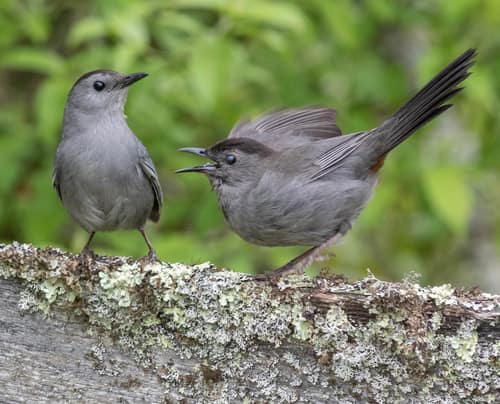
Frequent Companion (c) kirk gardner, some rights reserved (CC BY), uploaded by kirk gardner · cc-by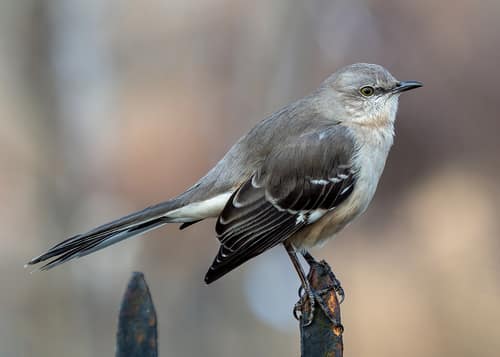
Family Relative Rhododendrites / CC BY-SA 4.0 · cc-by-sa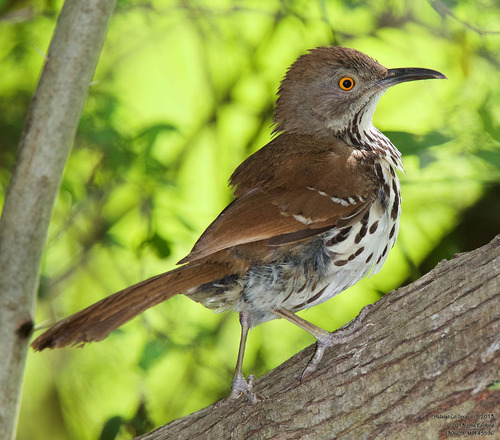
Close Relative (c) John Rosford, some rights reserved (CC BY) · cc-by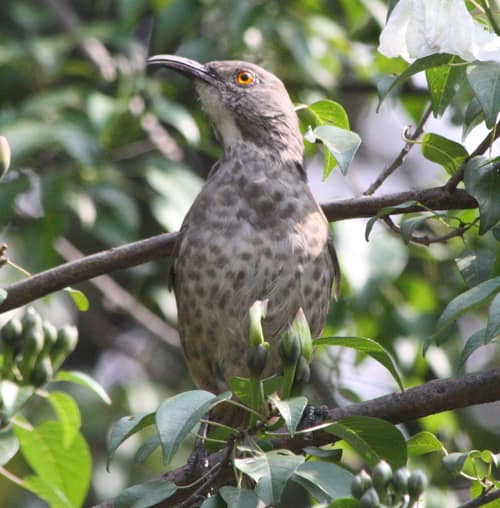
Genus Relative no rights reserved · cc0
Help improve the field guideSomething wrong?
Checking your Fauna account…Report a name, category, or profile issue for review.