
Fungus
Old-man-of-the-woods
Strobilomyces strobilaceusAlso known as Black Bolete, Woolly Bolete
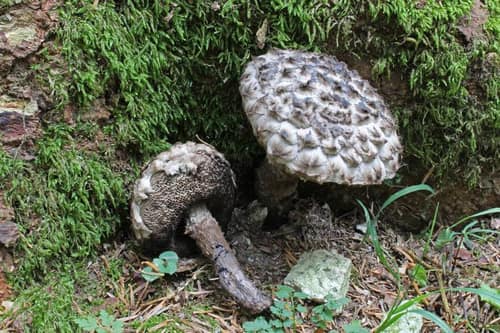
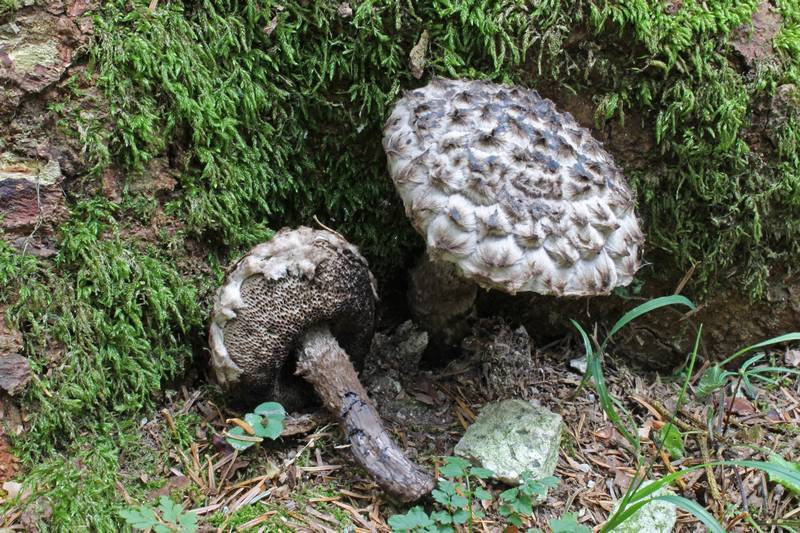
Old-man-of-the-woods is an instantly recognizable bolete characterized by its dark, woolly cap covered in prominent gray to black scales. Beneath the cap, the whitish pore surface bruises red when cut or touched before slowly turning deep brownish black. This mycorrhizal fungus forms vital underground partnerships with deciduous and coniferous trees, fruiting from summer into late autumn across northern temperate woodlands.
FungusMycorrhizalForest Floor
—observations
—countries
—peak records
Least ConcernConservation statusIUCN Red List categoriesLCNTVUENCREWEXLeast ConcernRed List categories, explained →
Diet & preyMycorrhizal (Symbiotic)
Predators
- Slugs
- Fungus gnats
- Squirrels
ThreatsForest fragmentation and clearcutting
HabitatsDeciduous and coniferous forests, often near oak or beech
Life spanFruiting body lasts 1–2 weeks; mycelium lives indefinitely
Classification
- OrderBoletales
- FamilyBoletaceae
- GenusStrobilomyces
- SpeciesStrobilomyces strobilaceus
Range data is not available yet.
Interaction riskLow
- Low
- Moderate
- High
- Very high
- Why interaction risk is low
- Many wild mushrooms have toxic look-alikes; never eat wild fungi based on app identification alone.
Responsible observation
- Observe color changes: Cut or press the pore surface to watch it shift from pale red to dark black.
- Look for veil remnants: Examine the upper stem for a persistent woolly ring left behind by the expanding cap.
- Note the tree hosts: Search around the roots of mature oaks, beeches, and pines where mycelium connects.
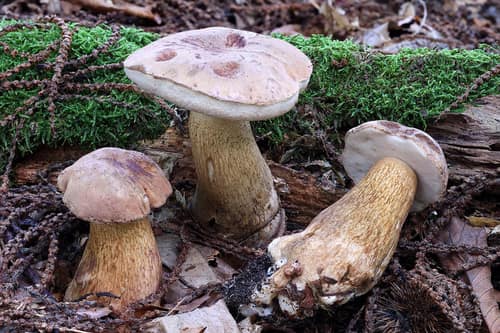
Co-occurring Bolete (c) Daniel Ghyselinck, some rights reserved (CC BY), uploaded by Daniel Ghyselinck · cc-by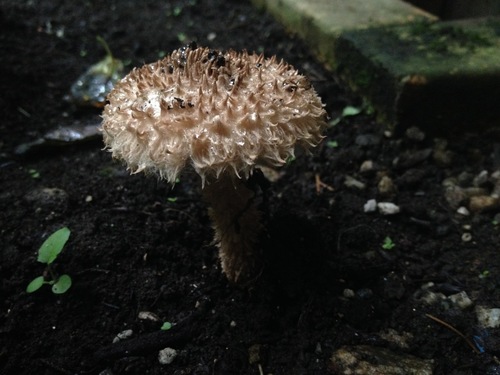
Close Relative (c) Yasuo Kida, some rights reserved (CC BY) · cc-by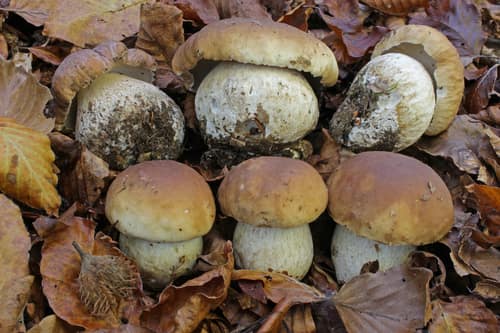
Family Member (c) Davide Puddu, some rights reserved (CC BY), uploaded by Davide Puddu · cc-by
Keep collecting in Fauna
Found in Collections
Species set Pro
Fungi Forager
Old-man-of-the-woods is found in this collection. Identify it in Fauna to fill this slot and continue your progress.
Unlock to track progress
Help improve the field guideSomething wrong?
Checking your Fauna account…Report a name, category, or profile issue for review.