Also known as European Black Nightshade, Blackberry Nightshade, Hound's Berry, Garden Nightshade
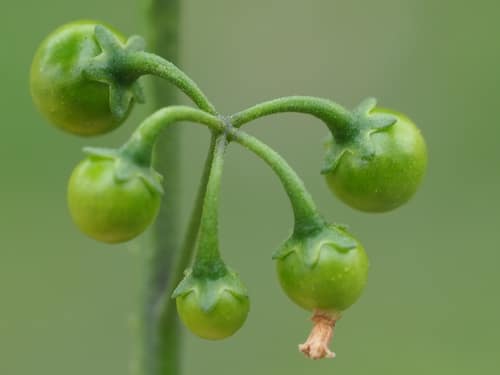
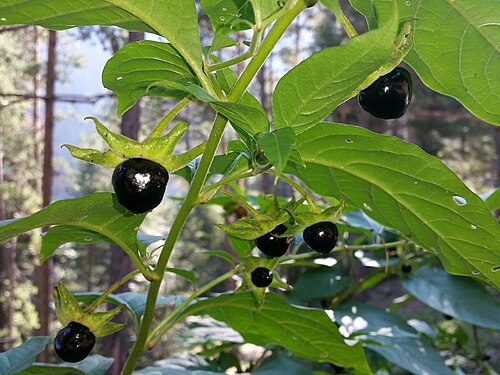
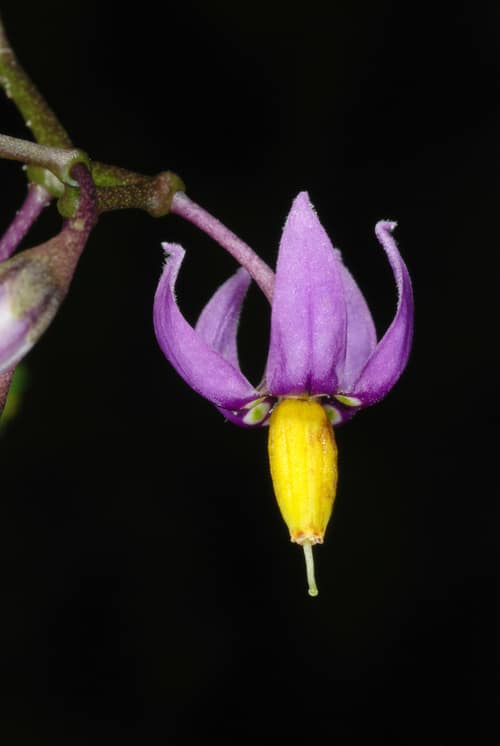
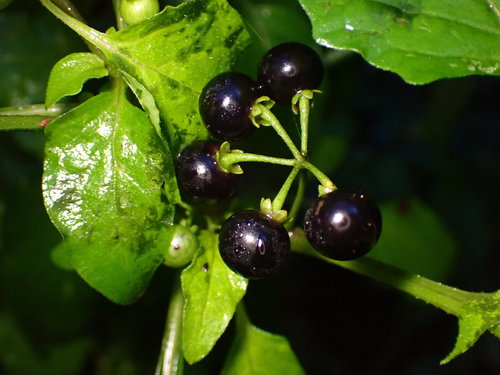
Black nightshade thrives as an adaptable colonizer across disturbed ground, waste places, and cultivated borders worldwide. Clusters of petite, star-shaped white blossoms with prominent yellow central beaks bloom continuously from summer through autumn, eventually giving way to pendulous globes that mature from green to dull purplish-black. Often confused with its notoriously lethal relative belladonna, this annual herb supports numerous specialist leaf beetles and serves as an important autumnal forage source for seed-dispersing songbirds.
ThreatsHerbicides, aggressive cultivation, and mechanical clearing
HabitatsAgricultural fields, roadsides, gardens, wastelands, and disturbed soils
Life span1 year (annual)
Classification
OrderSolanales
FamilySolanaceae
GenusSolanum
SpeciesSolanum nigrum
Range & activity
Range data is not available yet.
Safe observation
Interaction riskHigh
Low
Moderate
High
Very high
Why interaction risk is high
Contains toxic glycoalkaloids and has deadly look-alikes; never eat wild berries based on app identification alone.
Why it is dangerous
Unripe green fruit and foliage contain solanine and related steroidal glycoalkaloids that trigger intense stomach pain, vomiting, and cardiac distress.
How to recognize a risky encounter
Recognized by drooping clusters of small white five-petaled flowers with protruding yellow cones, yielding spherical green berries that ripen to black.
What to do
Wear garden gloves when clearing heavy infestations, wash skin afterward, and keep pets away from fruiting branches.
Responsible observation
Identification: Note the drooping umbel clusters of white petals surrounding bright yellow stamens.
Pet safety: Remove plants growing in dog runs or livestock pastures to prevent accidental grazing.
Garden management: Hand-pull before autumn berries ripen to prevent persistent seed banking in soil.