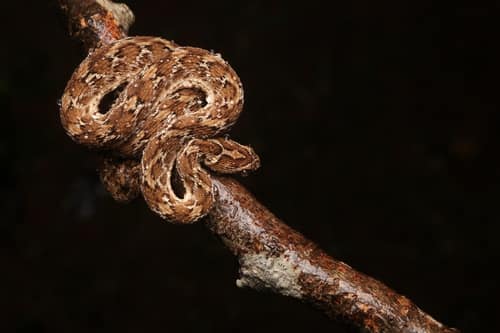
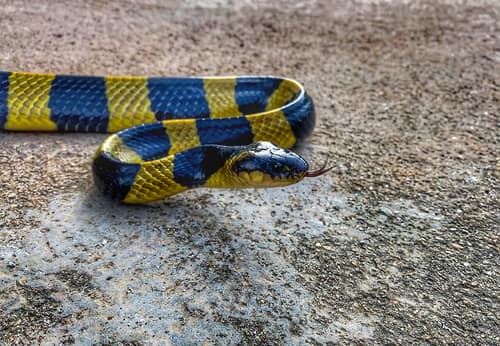
Common kraits are nocturnal hunters known for their sluggish docility during the day and active nocturnal hunting routines. They feed predominantly on other snakes, trailing scent marks through leaf litter and frequently entering human dwellings in search of shelter or prey. Their bites are notoriously painless yet deliver a potent neurotoxin, making them one of the most medically significant snakes in South Asia.
HabitatsGrasslands, agricultural fields, scrub forests, human settlements
Life span10–15 years
Size / weightNot available
Classification
FamilyElapidae
SpeciesBungarus caeruleus
Range & activity
Range data is not available yet.
Safe observation
Interaction riskVery high
Low
Moderate
High
Very high
Why interaction risk is very high
Potent neurotoxic venom causes fatal paralysis; maintain a safe distance and never handle.
Why it is dangerous
Injects potent presynaptic and postsynaptic neurotoxins that induce progressive muscle paralysis and respiratory failure, often from an unnoticed painless bite.
How to recognize a risky encounter
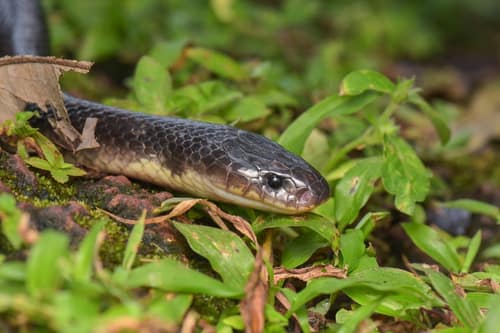
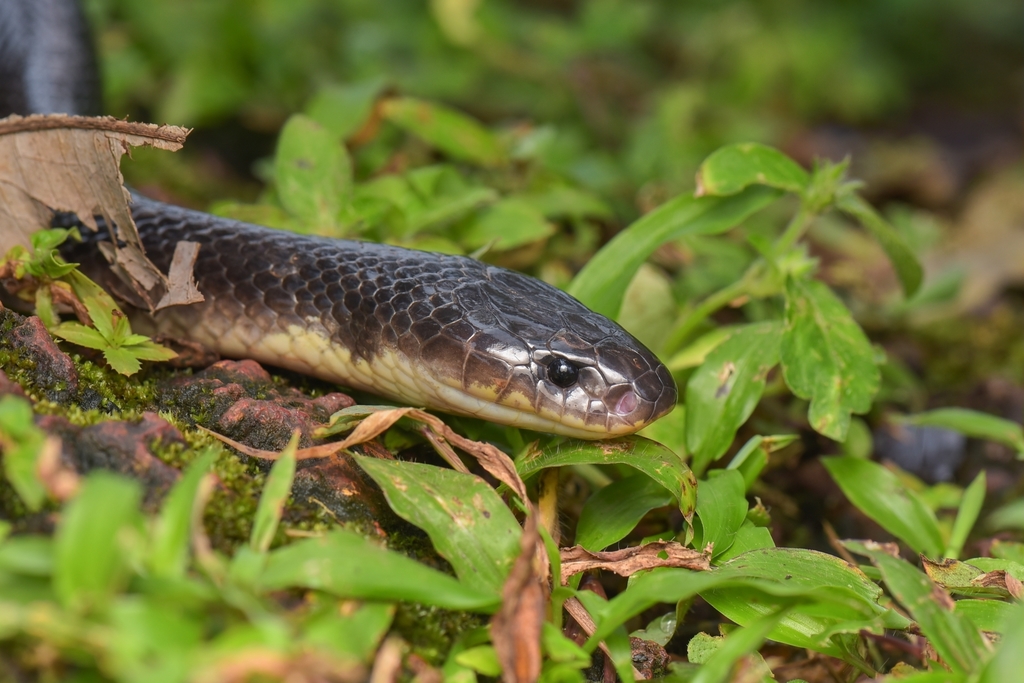
Look for a glossy black or dark bluish-black body with narrow white crossbands along the back and a row of enlarged hexagonal scales down the spine.
What to do
Avoid walking barefoot outdoors after dark and never attempt to corner, pick up, or harass this snake.
What to notice
Recognize the distinct glossy blue-black scales with fine paired white crosslines along the upper body.
Support conservation
Encourage peaceful coexistence by contacting trained snake handlers rather than harming the animal.
Responsible observation
Nighttime Vigilance: Use a flashlight and wear sturdy footwear when walking outdoors after dusk.
Bed Protection: Sleep under tightly tucked mosquito nets in ground-level dwellings to prevent encounters.
Safe Clearance: Keep a wide distance if spotted and contact professional snake rescuers for assistance.