
Species
Triceratops
Ceratops horridusTriceratops roamed the subtropical floodplains of ancient Laramidia, wielding three facial horns and a thick, solid bony frill. Specialized dental batteries packed with hundreds of continuously replaced teeth allowed it to shear through tough, fibrous cycads, palms, and ferns. Puncture marks on fossil frills show that these colossal herbivores engaged in intense intra-species horn-locking disputes and actively defended against apex predators.
HerbivorousPrehistoric
—observations
—countries
—peak records
ExtinctConservation statusIUCN Red List categoriesLCNTVUENCREWEXExtinctRed List categories, explained →
Diet & preyCycads, Ferns, Palms
Predators
- Tyrannosaurus rex
ThreatsCretaceous–Paleogene extinction event, predation by apex theropods
HabitatsLate Cretaceous floodplains, coastal lowlands, and open woodlands
Life spanEstimated 25–40 years
Classification
- FamilyCeratopsidae
- SpeciesCeratops horridus
Range data is not available yet.
Interaction riskLow
- Low
- Moderate
- High
- Very high
- Why interaction risk is low
- Extinct prehistoric species; safe to observe as fossil skeletons in museum collections.
Responsible observation
- Fossil Viewing: Observe mounted skeletons from behind museum guardrails to protect fragile displays.
- Bone Identification: Look for the solid, windowless neck frill to distinguish it from related ceratopsids.
- Field Discovery: Leave genuine fossil finds untouched in bedrock and contact professional paleontologists.
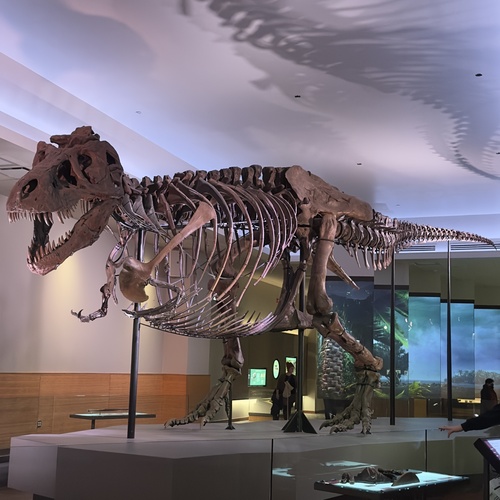
Predator no rights reserved, uploaded by wilderbombyx · cc0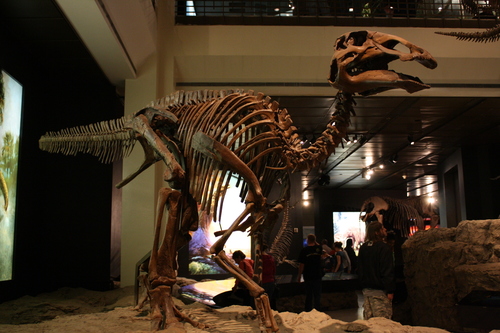
Competitor (c) The_Wookies, some rights reserved (CC BY) · cc-by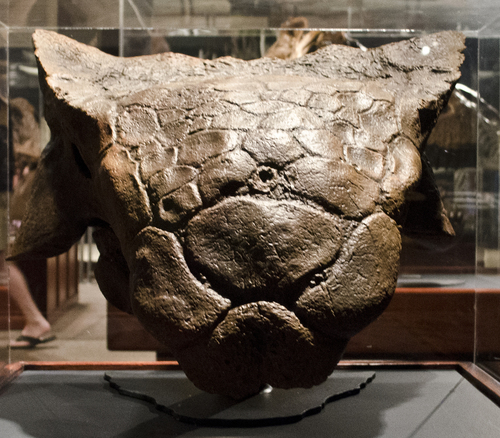
Frequent Companion (c) Tim Evanson, some rights reserved (CC BY-SA) · cc-by-sa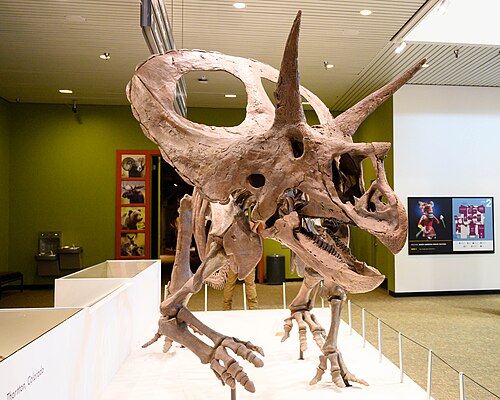
Close Relative David Wipf / CC BY 2.0 · cc-by
Help improve the field guideSomething wrong?
Checking your Fauna account…Report a name, category, or profile issue for review.