
Bird
Vermilion Flycatcher
Pyrocephalus obscurusAlso known as Dark Vermilion Flycatcher, Pacific Vermilion Flycatcher, Churrinche
Vermilion flycatchers perch on exposed fence posts and outer twigs, sallying out to snap up flying insects before returning to the same lookout. Males dazzle with brilliant scarlet crowns and underparts contrasted against dark brown wings, while females feature subtle peach or yellow washes on their bellies. During breeding season, males perform fluttering display flights high in the air while singing a crisp, twittering song.
ColorfulInsectivoreSongbird
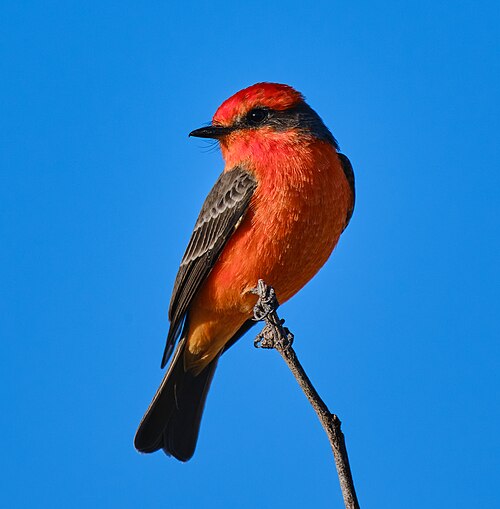
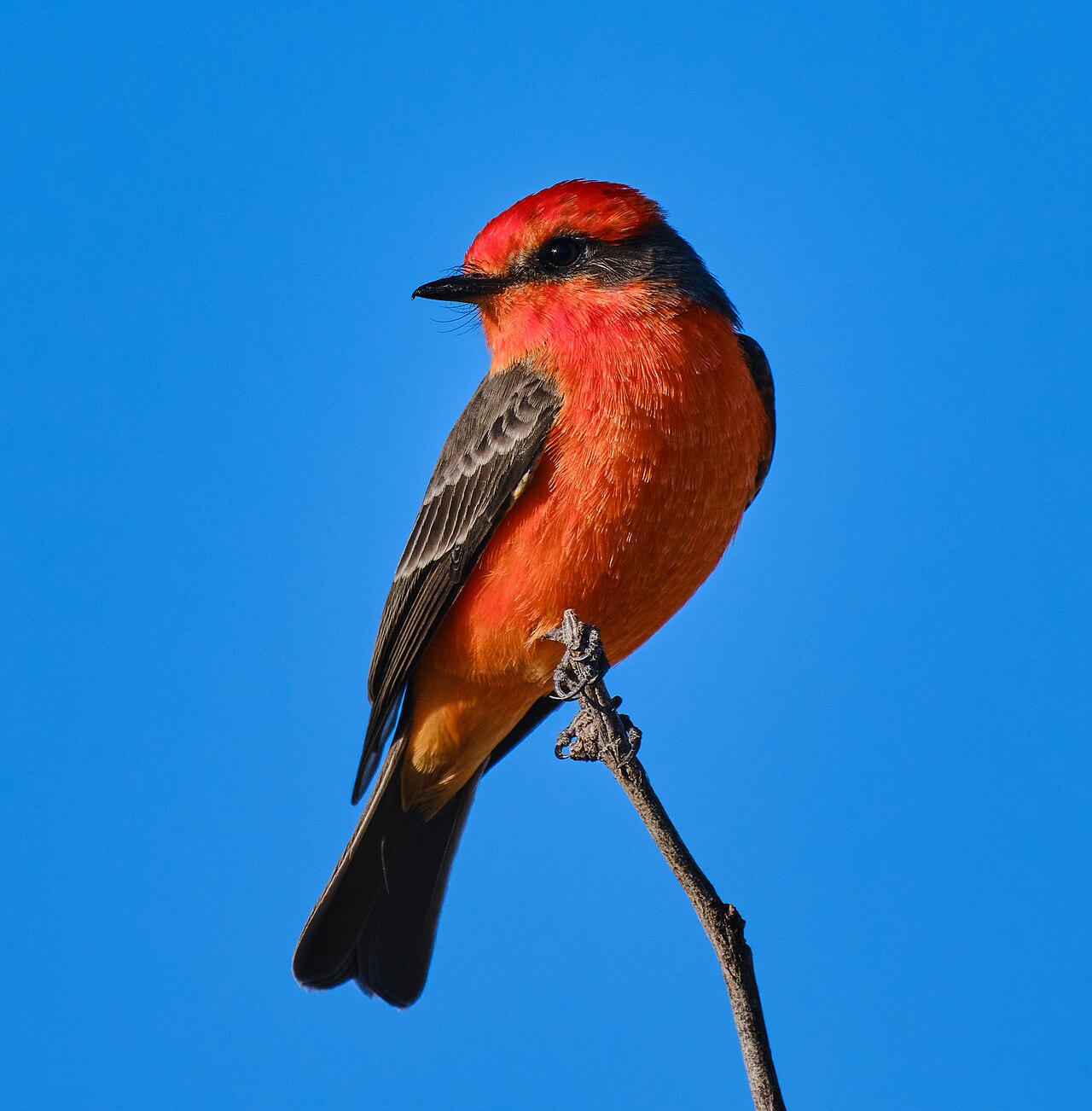
—observations
—countries
—peak records
Least ConcernConservation statusIUCN Red List categoriesLCNTVUENCREWEXLeast ConcernRed List categories, explained →
Diet & preyFlies, Beetles, Bees
Predators
- Domestic cats
- Hawks
- Owls
ThreatsHabitat loss, pesticide use reducing insect prey availability
HabitatsRiparian woodlands, arid scrublands, agricultural fields, suburban parks
Life span5–8 years
Classification
- OrderPasseriformes
- FamilyTyrannidae
- GenusPyrocephalus
- SpeciesPyrocephalus obscurus
Range data is not available yet.
Interaction riskLow
- Low
- Moderate
- High
- Very high
- Why interaction risk is low
- Safe to observe at a normal distance.
Responsible observation
- Observation: Look for males perched high on fence lines or bare branches in sunny, open areas near water.
- Listening: Listen for their twittering display flight song delivered while hovering high above their territory.
- Photography: Keep a respectful distance from active nests, as breeding pairs are sensitive to disturbance.
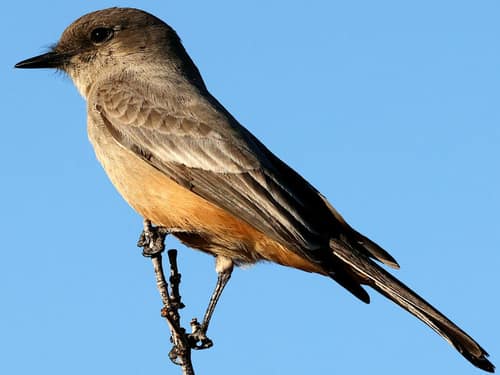
Female Lookalike (c) Peter Chen 2.0, some rights reserved (CC BY) · cc-by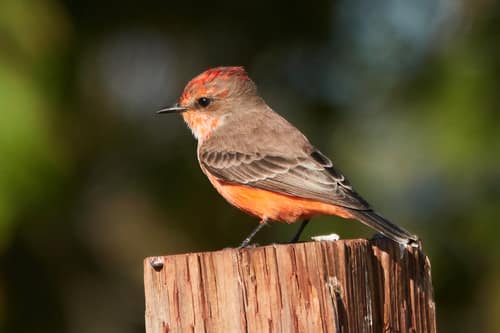
Close Relative (c) Ken-ichi Ueda, some rights reserved (CC BY), uploaded by Ken-ichi Ueda · cc-by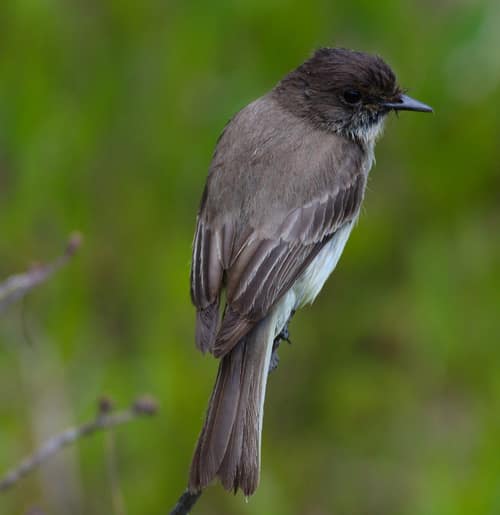
Family Relative no rights reserved, uploaded by Mark Connolly · cc0
Help improve the field guideSomething wrong?
Checking your Fauna account…Report a name, category, or profile issue for review.