
Reptile · GBIF taxon 8909697
Saharan Horned Viper
Cerastes cerastesAlso known as Desert Horned Viper, Horned Viper, North African Horned Viper
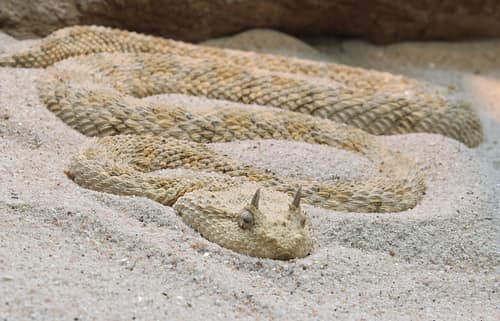
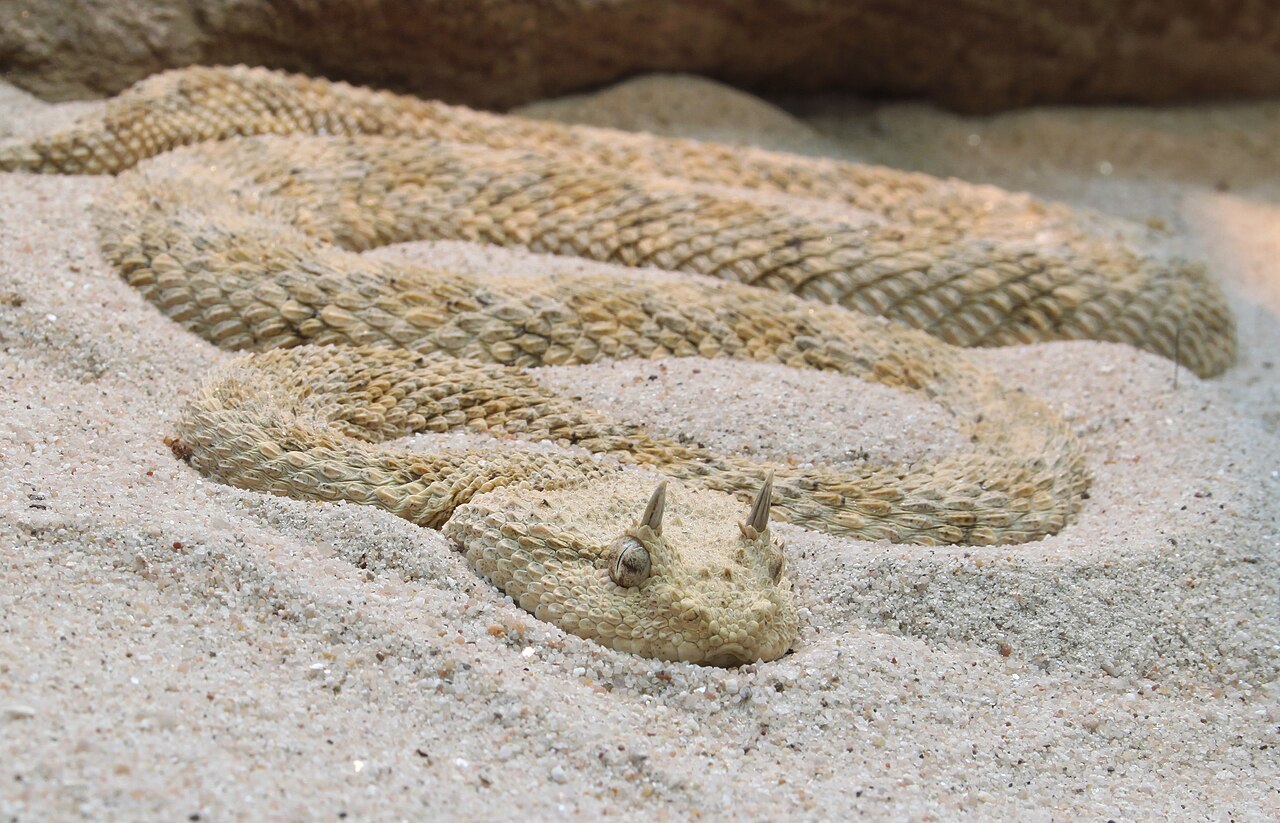
Saharan horned vipers are nocturnal desert specialists famous for sidewinding effortlessly across loose sand dunes. They submerge their bodies into sand, exposing only their eyes and horn-like supraocular scales to ambush unwary lizards and small rodents. When threatened, they rub their keeled lateral scales together to produce a loud raspy warning sound.
VenomousNocturnalReptile
—observations
—countries
—peak records
Least ConcernConservation statusIUCN Red List categoriesLCNTVUENCREWEXLeast ConcernRed List categories, explained →
Diet & prey
- Lizards
- Jerboas
- Small birds
Predators
- Monitor lizards
- Raptors
- Desert hedgehogs
ThreatsHabitat degradation, direct persecution, collection for pet trade
HabitatsSandy deserts, dunes, rocky plateaus
Life span10–18 years
Size / weightNot available
Classification
- FamilyViperidae
- SpeciesCerastes cerastes
Range data is not available yet.
Interaction riskVery high
- Low
- Moderate
- High
- Very high
- Why interaction risk is very high
- Possesses potent cytotoxic venom; maintain a safe distance and never attempt to touch or handle.
- Why it is dangerous
- Injects cytotoxic venom that breaks down blood cells and tissue, causing intense pain, severe swelling, and potential tissue necrosis.
- How to recognize a risky encounter
- Look for a pale tan body with dark dorsal spots, a broad triangular head, and prominent vertical horn scales above each eye.
- What to do
- Maintain a safe distance of several meters, step carefully in sand dune habitats, and never attempt to touch or corner the snake.
Responsible observation
- Observation: Scan loose sand dunes at night with a light to spot glowing eyes or sand-buried outlines.
- Safety: Give a wide berth when walking through sandy desert areas, as they camouflage extremely well.
- Footwear: Wear high-topped leather boots when exploring desert environments after dark.
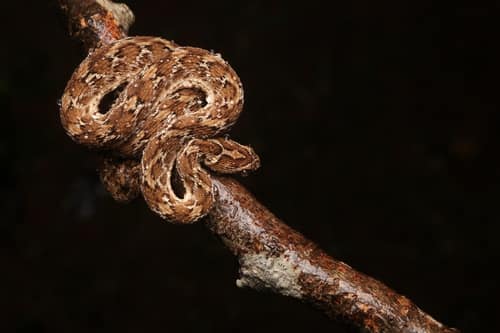
Competitor (c) @dineshphotography7797, some rights reserved (CC BY) · cc-by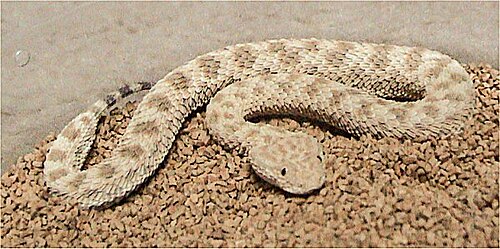
Close Relative Wikimedia Commons / CC BY-SA 2.5 · cc-by-sa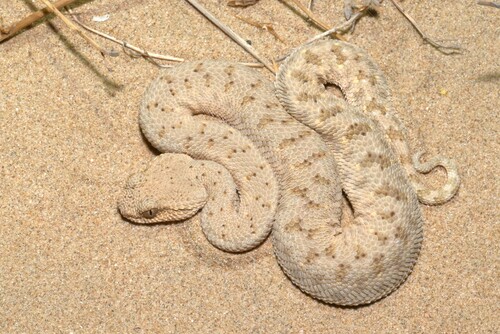
Close Relative no rights reserved, uploaded by Marius Burger · cc0
Help improve the field guideSomething wrong?
Checking your Fauna account…Report a name, category, or profile issue for review.