
Species
Triceratops prorsus
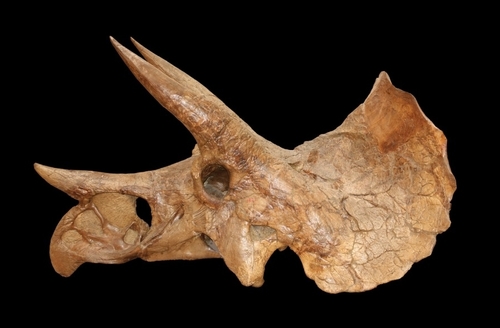
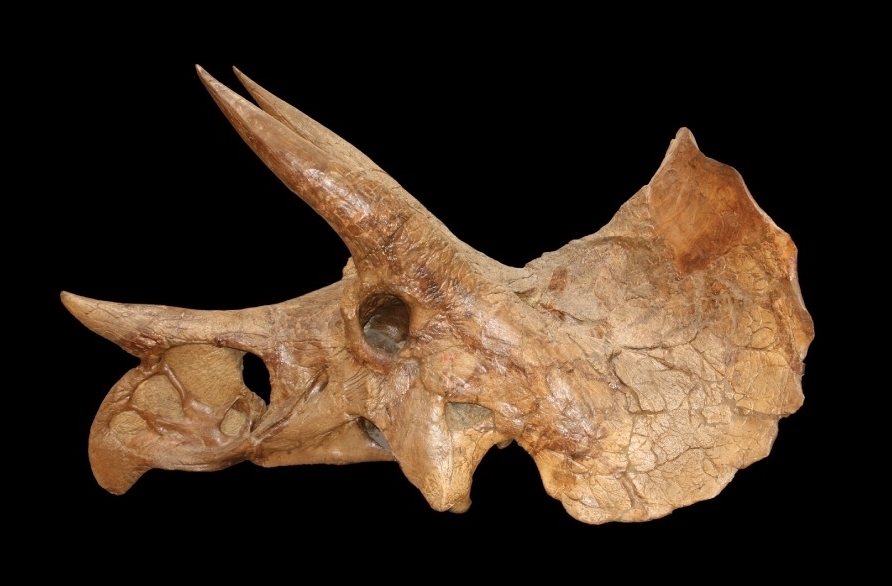
Triceratops prorsusTriceratops prorsus thrived as one of the very last non-avian dinosaurs, roaming the coastal lowlands of ancient North America right up to the end-Cretaceous extinction. Distinct from its earlier congener by possessing a taller, forward-curving nasal horn and shorter brow horns, this massive quadruped used powerful shearing jaw batteries to slice through tough cycads and palms. Its solid bone frill anchored colossal jaw muscles while shielding the neck and signaling rivals during territorial bouts.
PrehistoricHerbivore
—observations
—countries
—peak records
ExtinctConservation statusIUCN Red List categoriesLCNTVUENCREWEXExtinctRed List categories, explained →
Diet & preyPalms, Cycads, Ferns
Predators
- Tyrannosaurus rex
ThreatsCretaceous-Paleogene extinction event; predation by apex theropods
HabitatsSubtropical floodplains, coastal lowlands, and open woodlands
Life spanEstimated 25–40 years
Classification
- FamilyCeratopsidae
- SpeciesTriceratops prorsus
Range data is not available yet.
Interaction riskLow
- Low
- Moderate
- High
- Very high
- Why interaction risk is low
- Extinct species; safe to observe as museum fossil specimens and casts.
Responsible observation
- Museum Viewing: Examine the skull from the side to observe the characteristic forward-curved nasal horn.
- Fossil Etiquette: Avoid touching mounted fossil skeletons unless signage explicitly permits tactile exploration.
- Stratigraphic Clues: Look for this species labeled from the upper layers of the Hell Creek Formation.
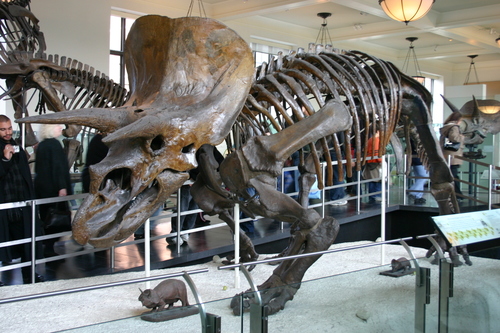
Same Genus (c) Ryan Somma, some rights reserved (CC BY-SA) · cc-by-sa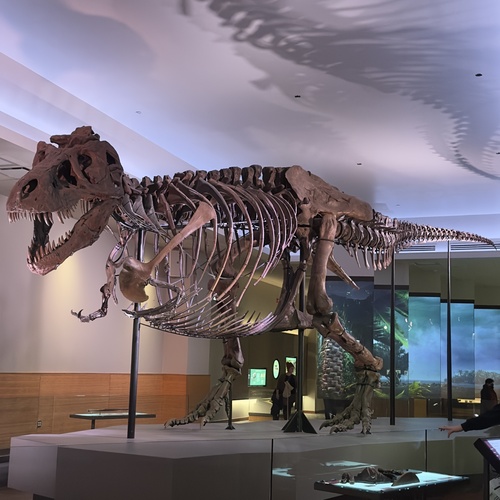
Predator no rights reserved, uploaded by wilderbombyx · cc0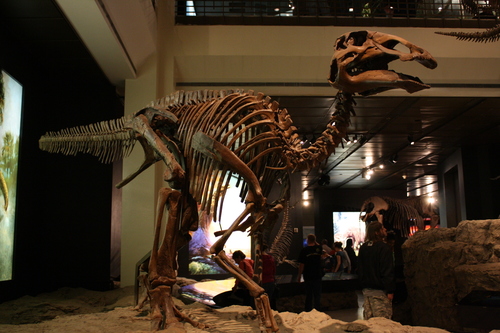
Frequent Companion (c) The_Wookies, some rights reserved (CC BY) · cc-by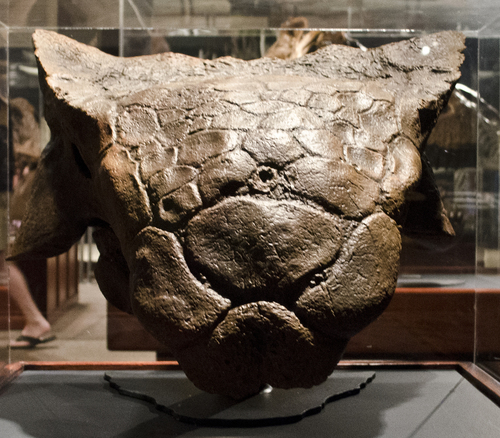
Competitor (c) Tim Evanson, some rights reserved (CC BY-SA) · cc-by-sa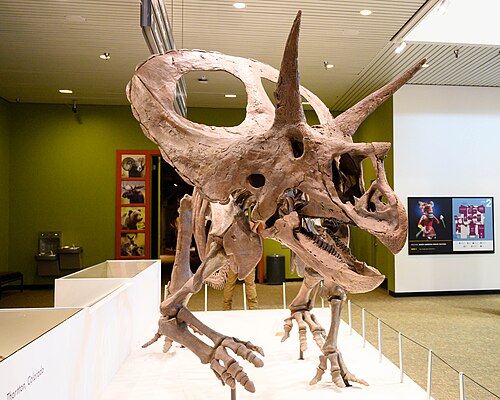
Close Relative David Wipf / CC BY 2.0 · cc-by
Help improve the field guideSomething wrong?
Checking your Fauna account…Report a name, category, or profile issue for review.