
Invertebrate
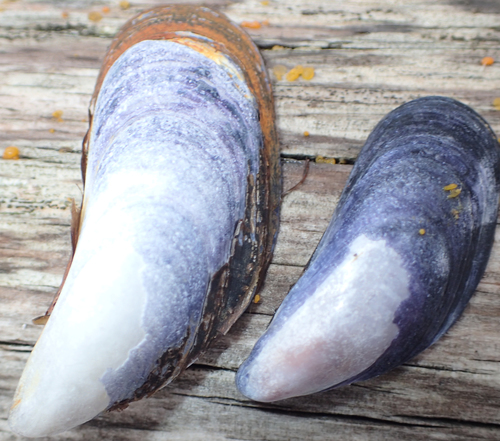
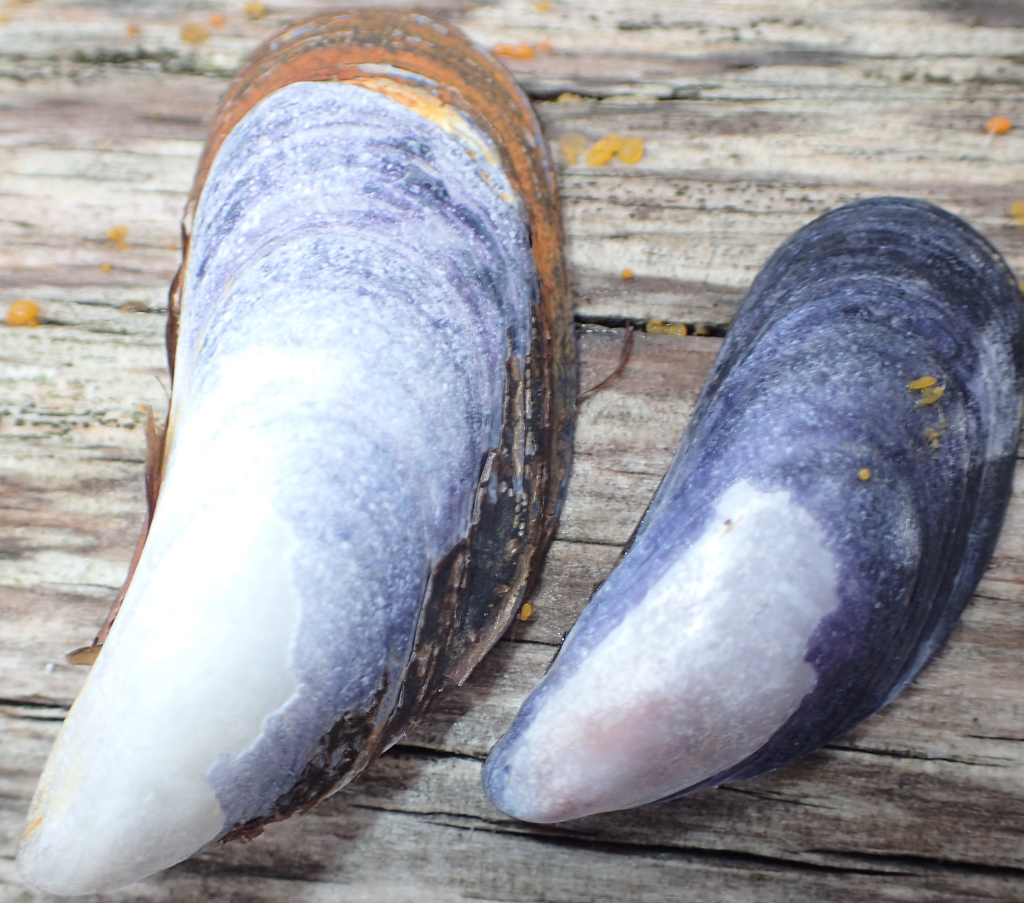
Blue Mussel
Mytilus edulisAlso known as Common Mussel
Blue mussels form dense, carpeting beds along rocky coastlines, anchoring themselves to hard surfaces using tough protein fibers called byssal threads. They continuously pump seawater through their gills to filter out microscopic algae, playing a critical role in clearing and conditioning coastal waters. During low tide, their tightly sealed shells trap moisture inside, allowing them to withstand hours of exposure to air.
MarineBivalveFilter Feeder
—observations
—countries
—peak records
Not EvaluatedConservation statusIUCN Red List categoriesLCNTVUENCREWEXNot Evaluated — not placed on the risk ladderRed List categories, explained →
Diet & preyPhytoplankton, Microalgae, Organic Detritus
Predators
- Sea Stars
- Shorebirds
- Crabs
ThreatsOcean acidification, habitat destruction, and water pollution
HabitatsIntertidal zones, estuaries, and rocky shores
Life span12–24 years
Classification
- OrderMytilida
- FamilyMytilidae
- GenusMytilus
- SpeciesMytilus edulis
Range data is not available yet.
Interaction riskLow
- Low
- Moderate
- High
- Very high
- Why interaction risk is low
- Safe to observe at a normal distance.
Responsible observation
- Observing Beds: Walk carefully across rocky intertidal zones to avoid stepping on dense shell clusters.
- Tide Pool Spotting: Look for fine byssal threads attaching individual shells securely to rock faces.
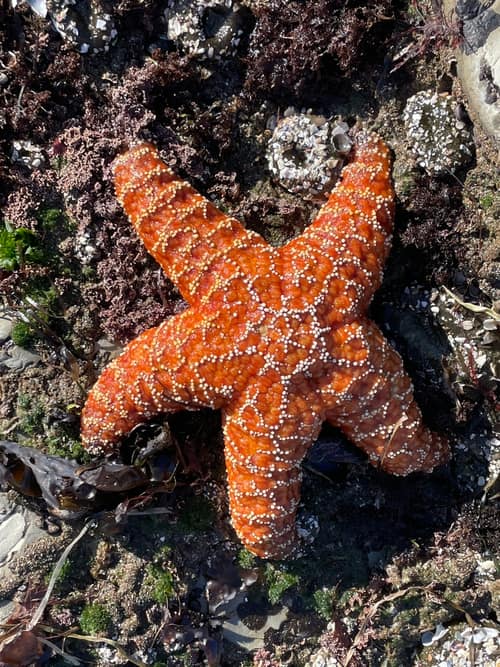
Predator no rights reserved · cc0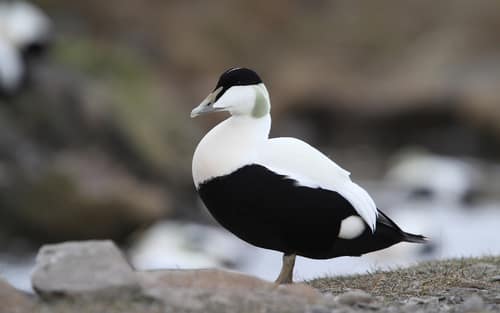
Predator (c) Christoph Moning, some rights reserved (CC BY), uploaded by Christoph Moning · cc-by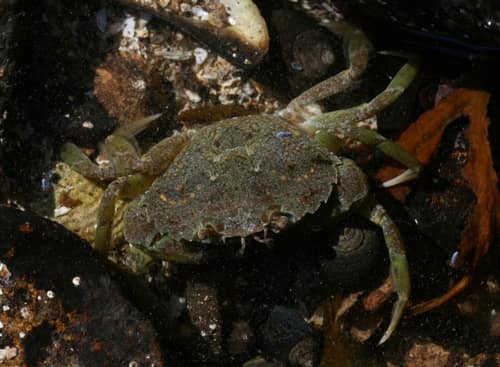
Predator (c) Sandy Rae, some rights reserved (CC BY) · cc-by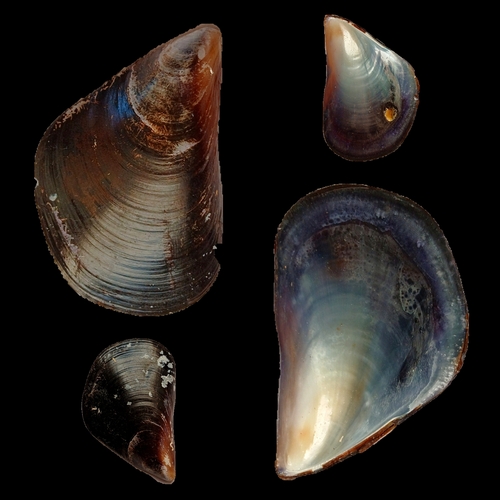
Close Relative (c) Fotios Christodoulou, some rights reserved (CC BY) · cc-by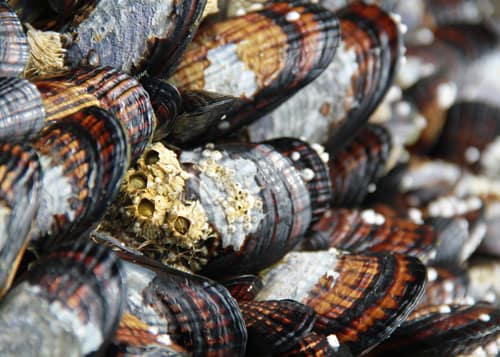
Close Relative (c) Oregon Department of Fish & Wildlife, some rights reserved (CC BY-SA) · cc-by-sa
Help improve the field guideSomething wrong?
Checking your Fauna account…Report a name, category, or profile issue for review.