
Invertebrate
Ochre Sea Star
Pisaster ochraceusAlso known as Purple Sea Star, Ochre Starfish, Pacific Sea Star
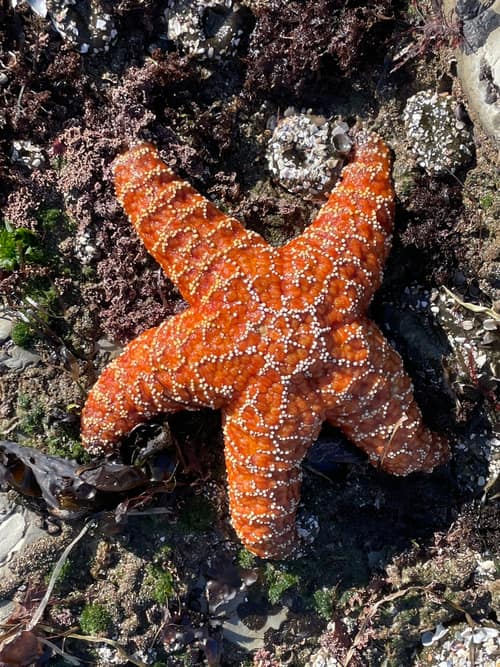
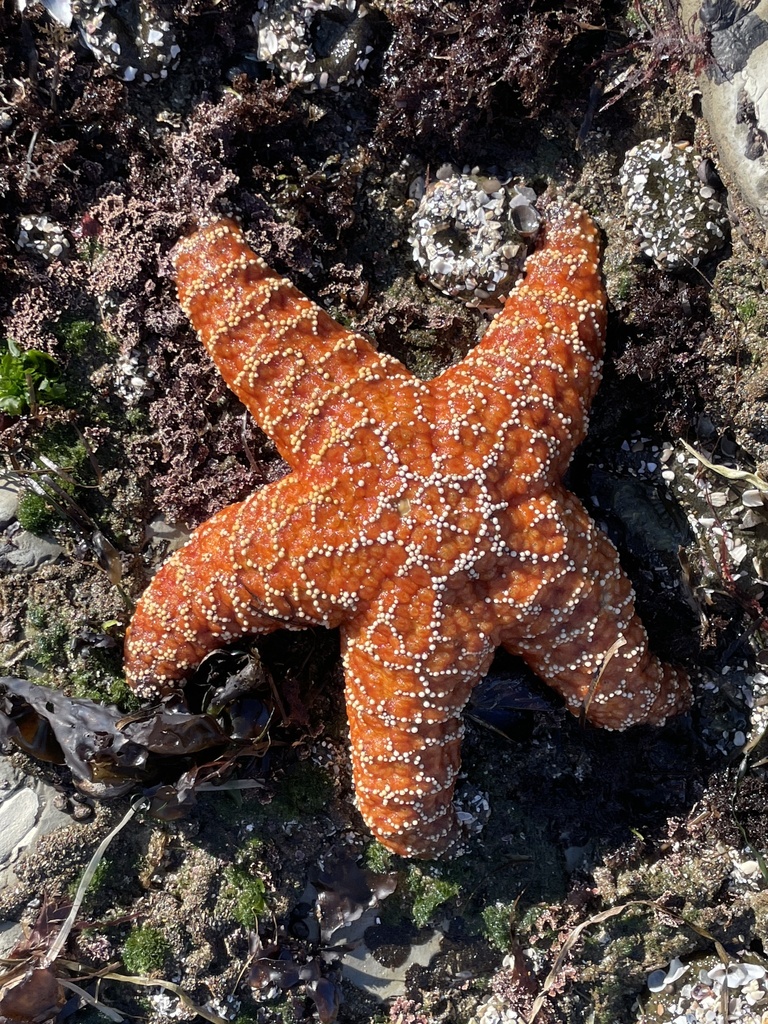
Ochre sea stars dominate rocky intertidal shores along the Pacific Coast of North America, anchoring firmly to wave-swept rocks using hundreds of specialized tube feet. Colors range dramatically from vivid purple and orange to deep yellow-brown, with tough, calcareous spines forming a central pentagonal pattern on their upper surface. As an iconic keystone predator, their relentless feeding on California mussels prevents any single prey species from completely monopolizing tidal rock space.
Keystone SpeciesMarineIntertidal
—observations
—countries
—peak records
Not EvaluatedConservation statusIUCN Red List categoriesLCNTVUENCREWEXNot Evaluated — not placed on the risk ladderRed List categories, explained →
Diet & preyCalifornia Mussels, Acorn Barnacles, Limpets
Predators
- Sea Otters
- Gulls
- Sunflower Sea Stars
ThreatsSea star wasting syndrome, rising ocean temperatures
HabitatsRocky intertidal and shallow subtidal zones
Life spanUp to 20 years
Classification
- OrderForcipulatida
- FamilyAsteriidae
- GenusPisaster
- SpeciesPisaster ochraceus
Range data is not available yet.
Interaction riskLow
- Low
- Moderate
- High
- Very high
- Why interaction risk is low
- Safe to observe at a normal distance.
- What to notice
- Recognizable by five thick, rigid arms with tough, spiny skin in vibrant purple, orange, or yellow-brown shades.
- Support conservation
- Observe without prying them off rocks, ensuring tube feet remain safely attached to withstand wave action.
Responsible observation
- Tidepool Etiquette: Watch your step on slippery rocks to avoid crushing stars attached below the waterline.
- Avoid Detaching: Never pull a sea star from its rock, as doing so tears its delicate hydraulic tube feet.
- Gentle Contact: Touch lightly with wet fingers while leaving the animal anchored in its natural spot.
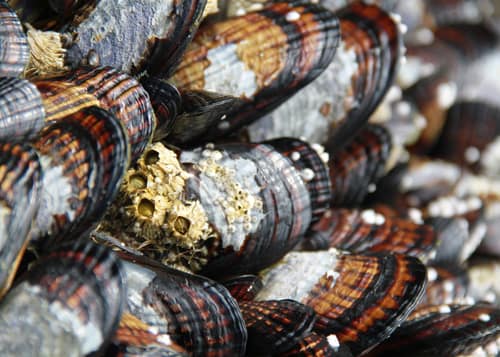
Primary Prey (c) Oregon Department of Fish & Wildlife, some rights reserved (CC BY-SA) · cc-by-sa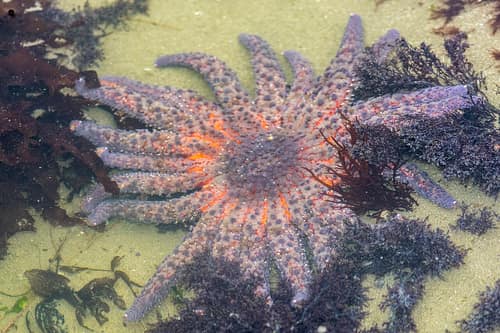
Competitor Jerry Kirkhart from Los Osos, Calif. / CC BY 2.0 · cc-by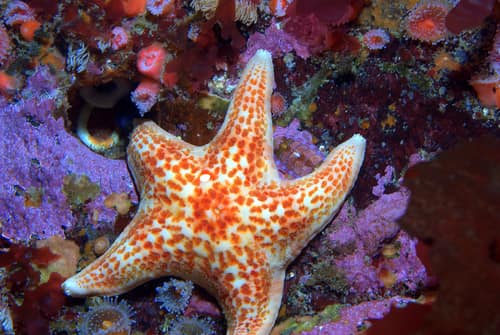
Co-occurring Species "Leather Star" by Ed Bierman is licensed under CC BY 2.0. To view a copy of this license, visit https://creativecommons.org/licenses/by/2.0/. · cc-by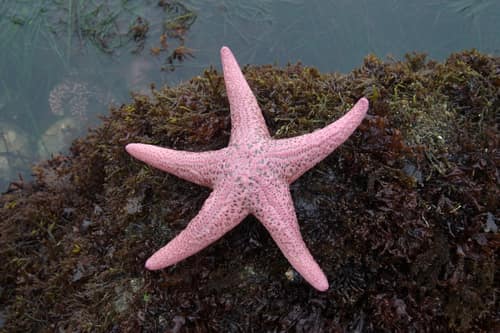
Close Relative (c) Jerry Kirkhart, some rights reserved (CC BY) · cc-by
Keep collecting in Fauna
Found in Collections
Species set Pro
Shore Life
Ochre Sea Star is found in this collection. Identify it in Fauna to fill this slot and continue your progress.
Unlock to track progress
Help improve the field guideSomething wrong?
Checking your Fauna account…Report a name, category, or profile issue for review.