Also known as Coyote Tobacco, Wild Tobacco, Punche
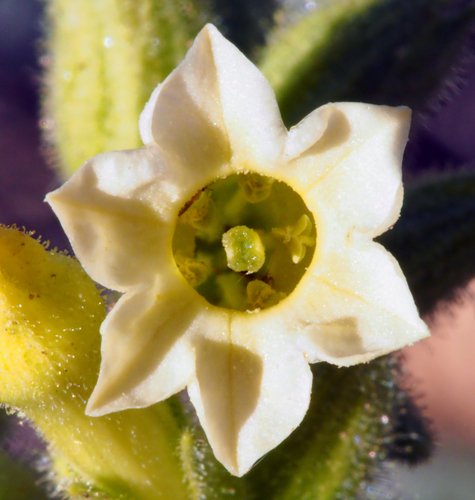
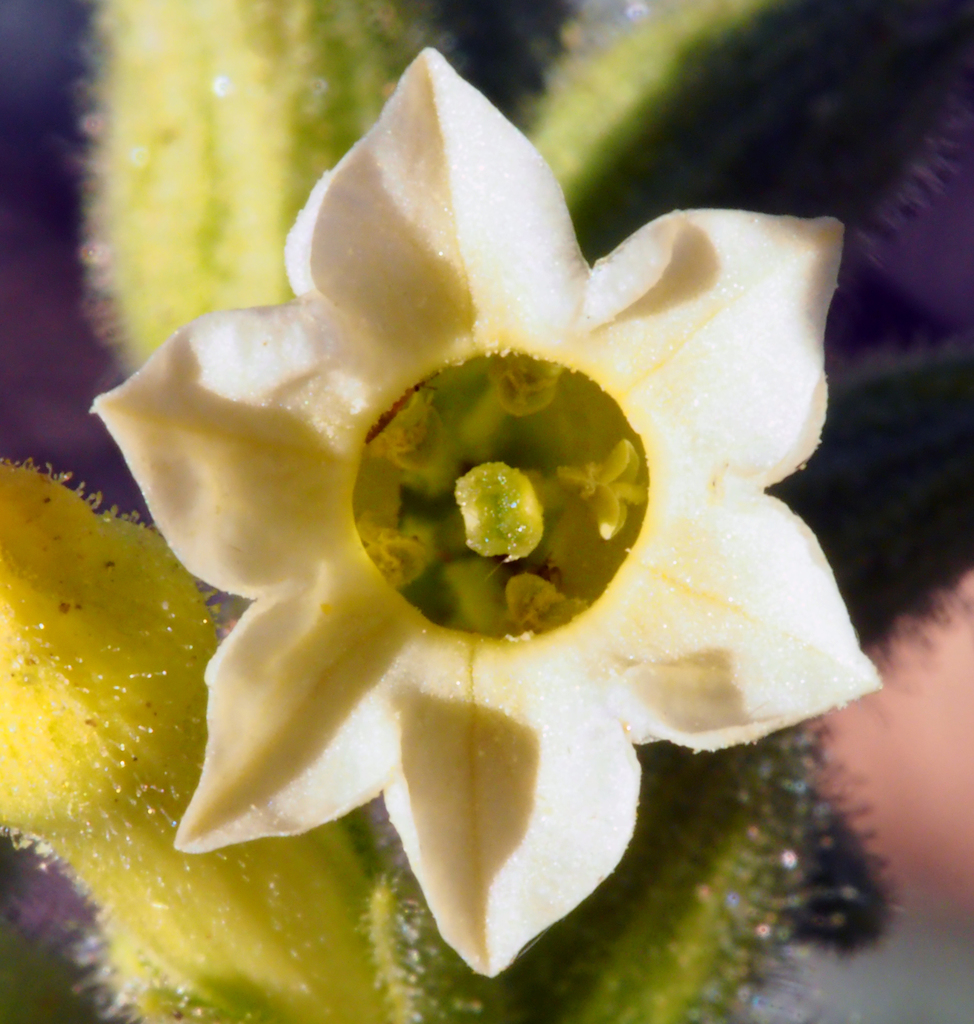
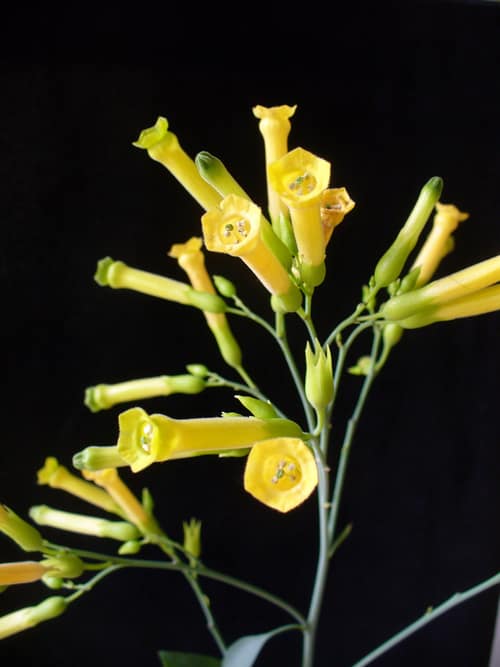
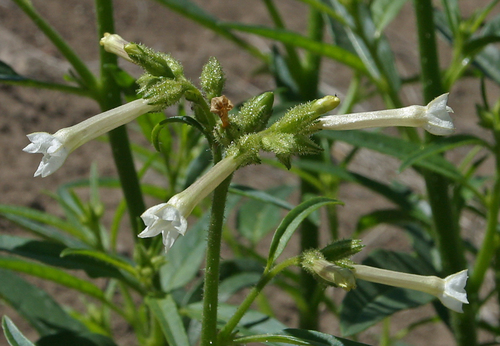
Desert tobacco thrives along gravelly washes, canyon bottoms, and rocky desert slopes across the American Southwest and Northern Mexico. Its pale cream to greenish-white tubular flowers open widest at dusk, releasing a sweet fragrance that attracts nocturnal hawkmoth pollinators. Sticky glandular hairs coat the stems and leaves, physically trapping small insects and helping deter browsing herbivores.
Not EvaluatedConservation statusIUCN Red List categoriesLCNTVUENCREWEXNot Evaluated — not placed on the risk ladderRed List categories, explained →
Key facts
Diet & prey
Autotrophic (Photosynthetic)
Predators
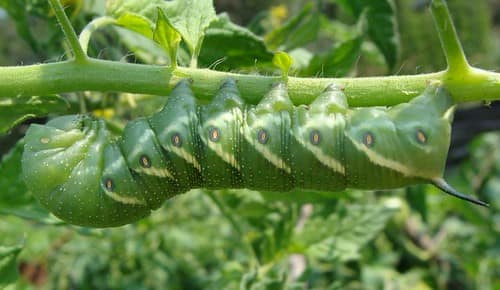
Tobacco Hornworm
Tomato Hornworm
Flea Beetles
ThreatsHabitat loss from development, competition from invasive grasses, and off-road vehicle disturbance
HabitatsDesert washes, arroyos, canyon bottoms, and rocky hillsides
Life span1–3 years (annual to short-lived perennial)
Classification
OrderSolanales
FamilySolanaceae
GenusNicotiana
SpeciesNicotiana obtusifolia
Range & activity
Range data is not available yet.
Safe observation
Interaction riskHigh
Low
Moderate
High
Very high
Why interaction risk is high
Contains toxic nicotine alkaloids; never ingest and keep away from pets and livestock.
Why it is dangerous
Contains toxic pyridine alkaloids including nicotine and anabasine, which can cause severe vomiting, irregular heartbeats, and respiratory distress if ingested.
How to recognize a risky encounter
Recognizable by its sticky, glandular foliage and tubular, five-lobed greenish-white flowers nodding from desert wash vegetation.
What to do
Examine plants without picking or chewing foliage, and supervise pets closely in desert washes.
Responsible observation
Dusk observation: Visit blooming patches at twilight to catch the flowers opening and observe visiting hawkmoths.
Hygiene reminder: Wash hands promptly after handling because the foliage leaves a sticky, bitter alkaloid residue.