
Bird
Hemprich's Hornbill
Lophoceros hemprichiiHemprich's hornbills frequent rugged rocky gorges and dry riverine valleys across the Horn of Africa, often seen gliding across deep canyons in pairs or small family parties. Unlike many woodland-dwelling relatives, they favor cliff crevices alongside tree hollows as nest chambers, where females seal themselves in during incubation to raise their brood. Their high-pitched, piping vocalizations carry easily across open chasms, serving to maintain territory and bond pairs.
Arid-AdaptedCliff NesterOmnivore
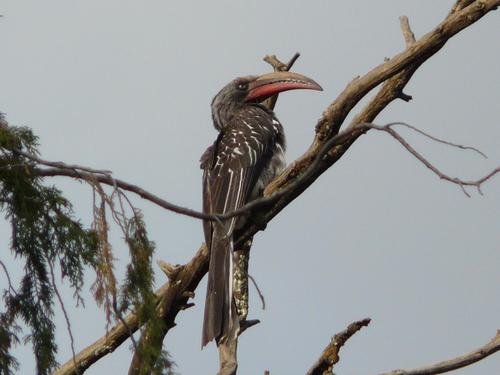
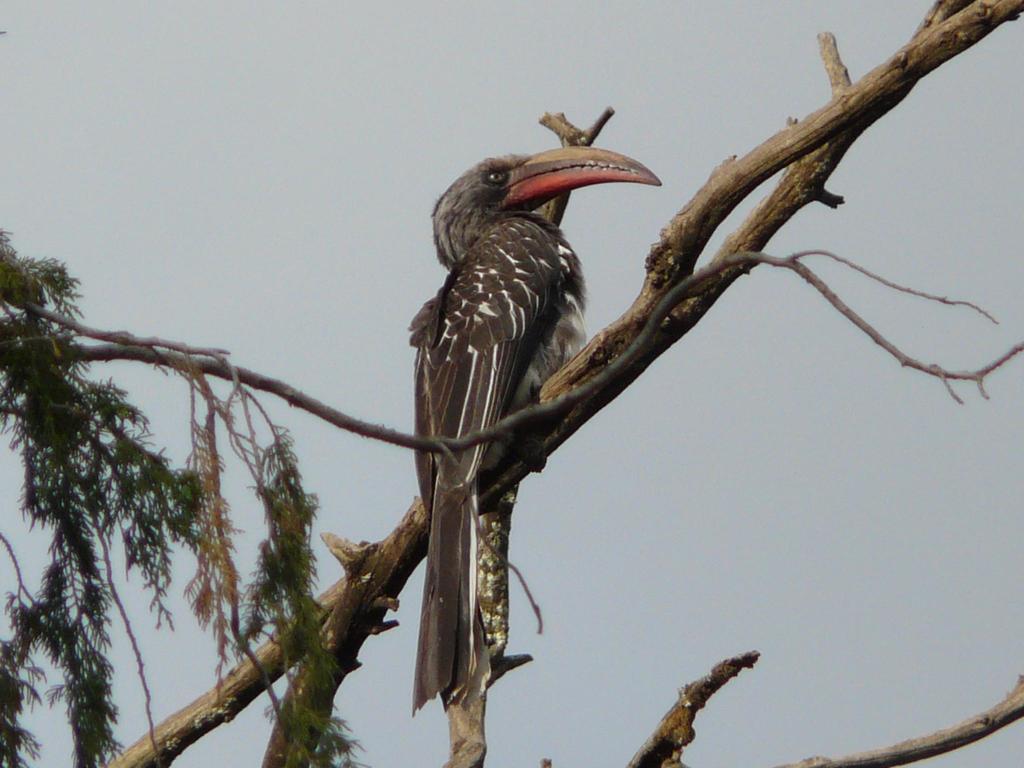
—observations
—countries
—peak records
Least ConcernConservation statusIUCN Red List categoriesLCNTVUENCREWEXLeast ConcernRed List categories, explained →
Diet & preyGrasshoppers, Skinks, Ficus fruits
Predators
- Verreaux's eagle
- Martial eagle
- Boomslang
ThreatsLocalized habitat degradation and loss of nesting cavities
HabitatsRocky canyons, cliff faces, arid acacia scrub, and riverine woodlands
Life span10–15 years
Classification
- OrderBucerotiformes
- FamilyBucerotidae
- GenusLophoceros
- SpeciesLophoceros hemprichii
Range data is not available yet.
Interaction riskLow
- Low
- Moderate
- High
- Very high
- Why interaction risk is low
- Safe to observe at a normal distance.
Responsible observation
- Echoing Calls: Listen for high-pitched, whistling territorial calls echoing off canyon walls during early morning.
- Cliff Scanning: Check rocky ledges and ravine trees with binoculars where birds perch to spot prey on the ground below.
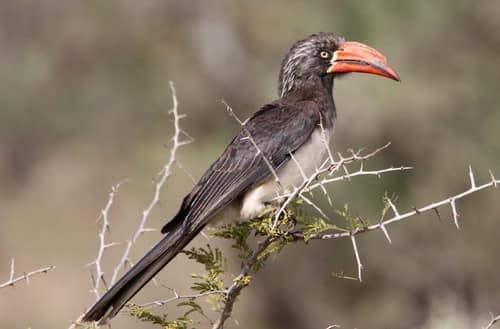
Close Relative (c) Derek Keats, some rights reserved (CC BY) · cc-by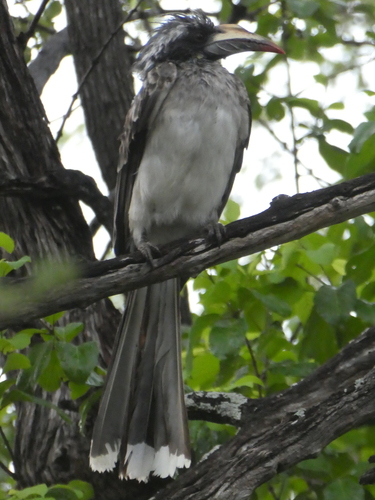
Close Relative (c) datadan, some rights reserved (CC BY) · cc-by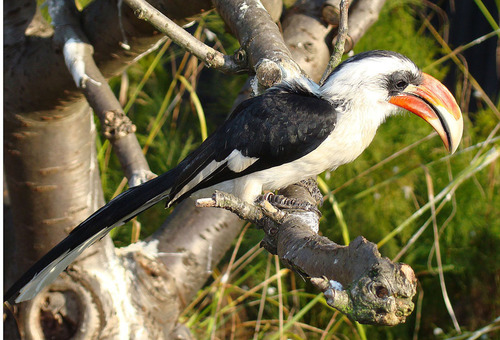
Same Family (c) Dick Culbert, some rights reserved (CC BY) · cc-by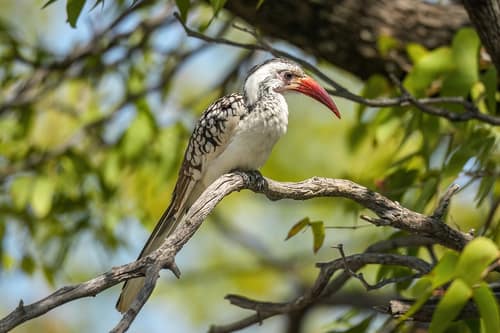
Same Family Giles Laurent / CC BY-SA 4.0 · cc-by-sa
Help improve the field guideSomething wrong?
Checking your Fauna account…Report a name, category, or profile issue for review.