
Insect · GBIF taxon 8107175
Organ-pipe Mud-dauber Wasp
Trypoxylon politumAlso known as Organ Pipe Mud Dauber, Pipe Organ Wasp
Organ-pipe mud-dauber wasps build distinctive, parallel clay tubes attached to sheltered walls, eaves, and rock faces that resemble the pipes of a church organ. Uniquely among solitary wasps, males remain at the nest to guard the entrance against parasites while the female hunts orb-weaver spiders to provision their young. The female stuns spiders with a precision sting and packs dozens into each mud chamber before sealing a single egg inside.
Solitary WaspArchitecturalSpider Hunter
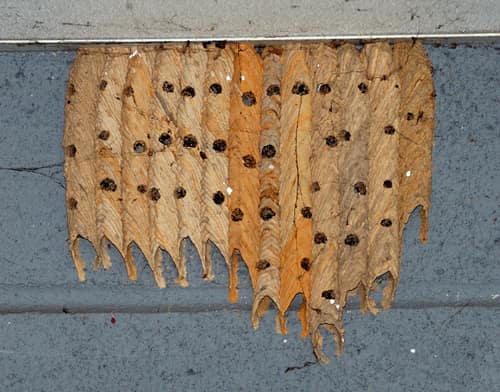
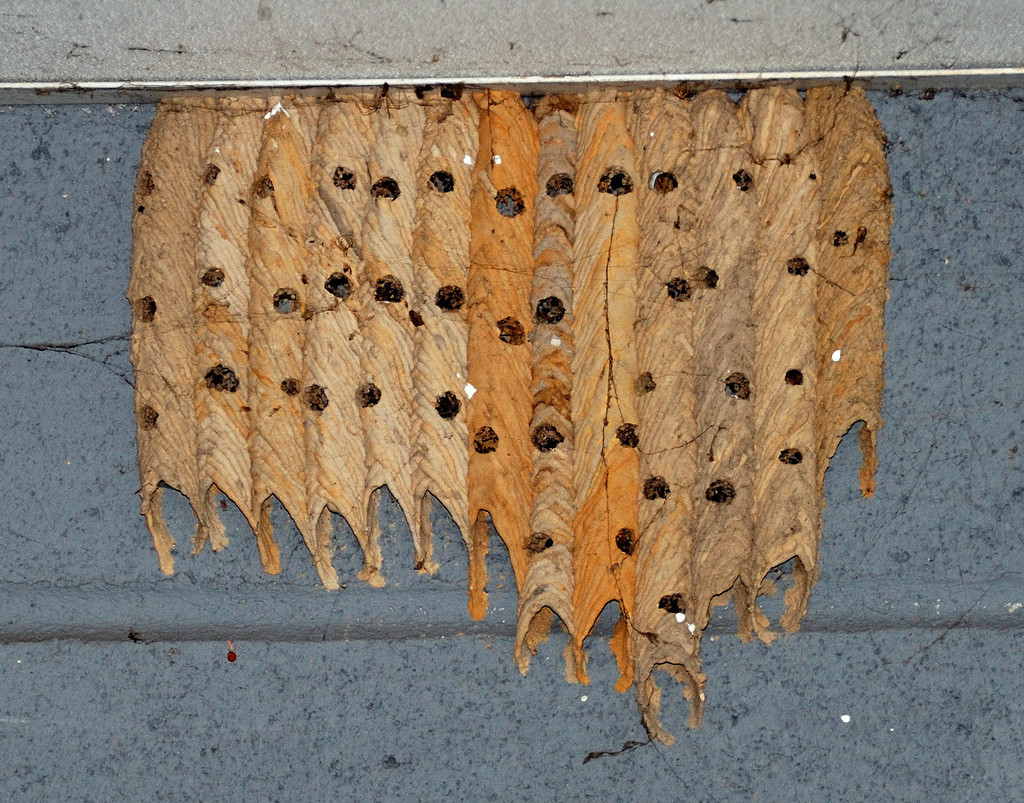
—observations
—countries
—peak records
Not EvaluatedConservation statusIUCN Red List categoriesLCNTVUENCREWEXNot Evaluated — not placed on the risk ladderRed List categories, explained →
Diet & prey
- Orb-weaver Spiders
- Jumping Spiders
- Crab Spiders
Predators
- Songbirds
- Lizards
- Cuckoo Wasps
ThreatsPesticide application, removal of mud nests from human structures
HabitatsDeciduous forests, barn rafters, porch overhangs, sheltered cliff faces
Life span1 year
Classification
- FamilyCrabronidae
- SpeciesTrypoxylon politum
Range data is not available yet.
Interaction riskLow
- Low
- Moderate
- High
- Very high
- Why interaction risk is low
- Extremely docile and rarely stings; leave nests undisturbed and observe safely from a short distance.
Responsible observation
- Watch Nest Building: Observe females carrying wet clay pellets to craft vertical parallel tubes on sheltered surfaces.
- Maintain Distance: Keep a distance of one meter when viewing active nests so guarding males remain calm.
- Preserve Mud Tunnels: Leave nests intact on structures to allow beneficial spider control in surrounding gardens.
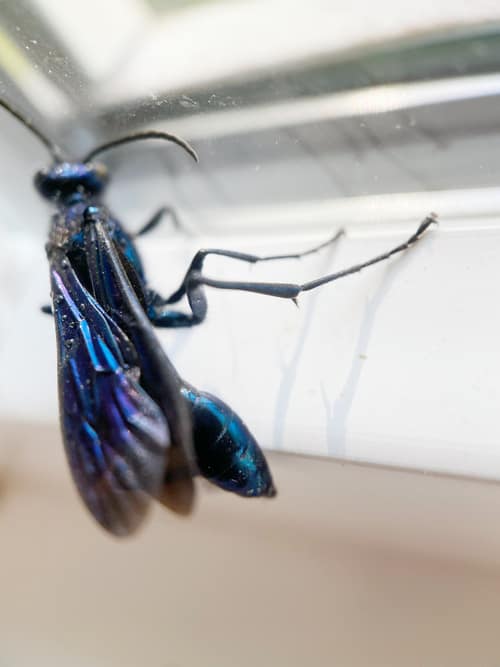
Nest Competitor (c) Nathan Odgers, some rights reserved (CC BY) · cc-by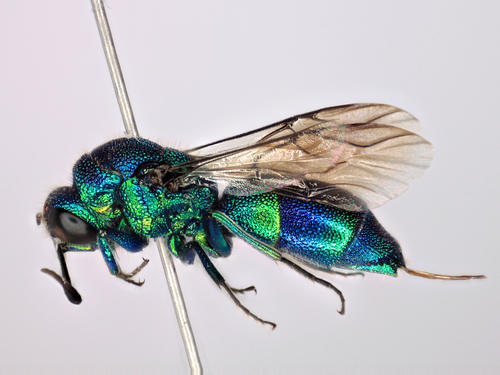
Nest Parasite (c) Chris Ratzlaff, some rights reserved (CC BY), uploaded by Chris Ratzlaff · cc-by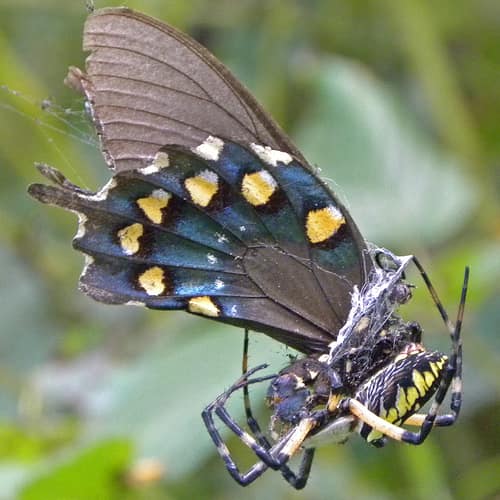
Prey (c) M. Whitson, some rights reserved (CC BY) · cc-by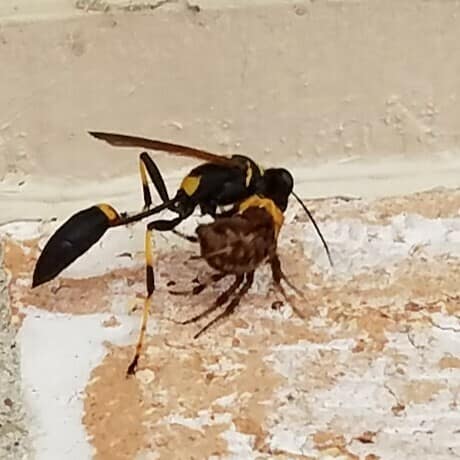
Close Relative (c) dhasdf, some rights reserved (CC BY) · cc-by
Help improve the field guideSomething wrong?
Checking your Fauna account…Report a name, category, or profile issue for review.