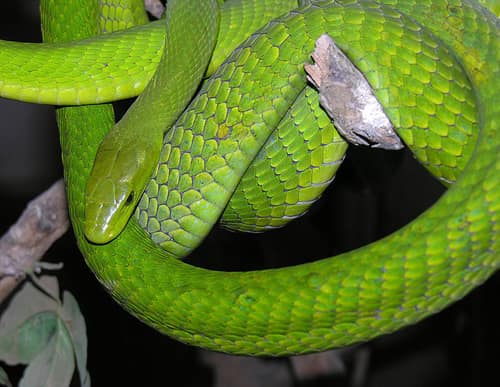
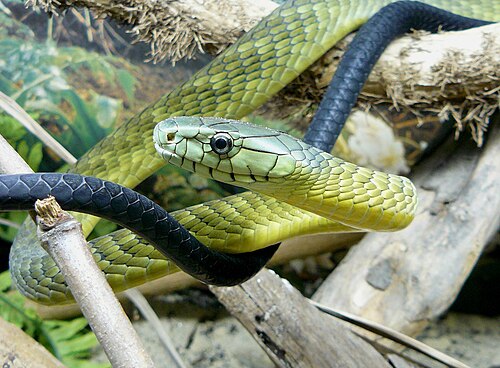
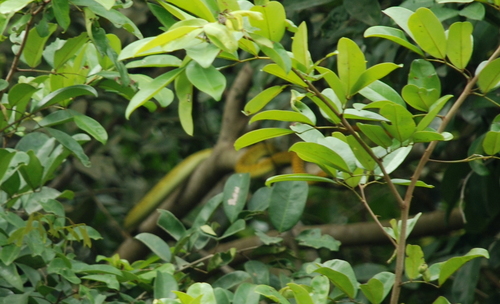
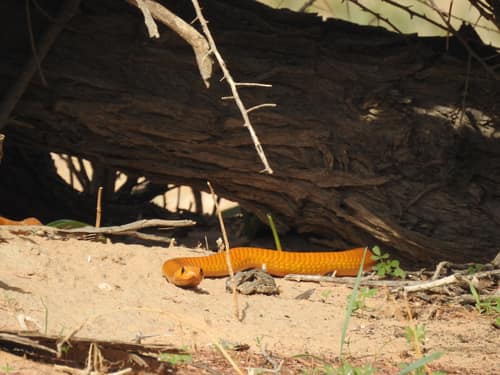
Black mambas are renowned for their exceptional speed, agility, and potent venom, navigating both rocky hillsides and tree canopies across sub-Saharan Africa. When cornered, an adult can raise up to a third of its body off the ground, spread a narrow neck flap, and hiss loudly while revealing an inky black buccal lining. Unlike strictly arboreal mamba relatives, this species spends considerable time hunting on the ground before retreating to permanent home dens in hollow logs or termite mounds.
ThreatsHabitat destruction, retaliatory persecution by humans, and road mortality.
HabitatsSavannas, rocky hills, deciduous woodlands, and open bush country across sub-Saharan Africa.
Life span11–15 years in the wild (up to 20 years in captivity)
Size / weightNot available
Classification
FamilyElapidae
SpeciesDendroaspis polylepis
Range & activity
Range data is not available yet.
Safe observation
Interaction riskVery high
Low
Moderate
High
Very high
Why interaction risk is very high
Possesses lethal neurotoxic and cardiotoxic venom; maintain a wide berth and never attempt to approach.
Why it is dangerous
Venom contains fast-acting dendrotoxins and cardiotoxins that disrupt nerve impulses, causing rapid paralysis and fatal respiratory failure without antivenom.
How to recognize a risky encounter
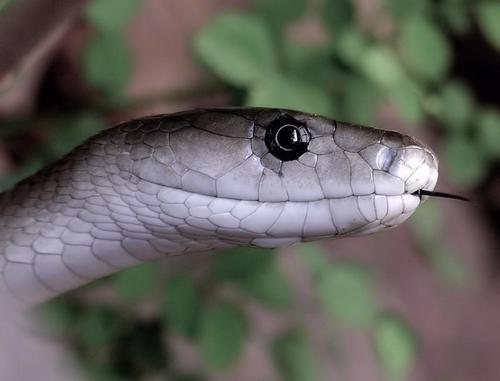
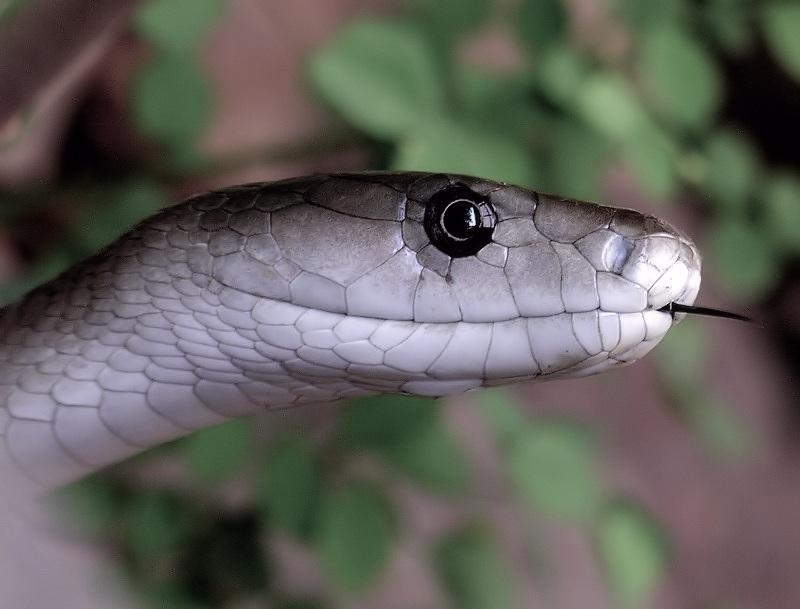
Look for a long, coffin-shaped head, olive-brown to slate-grey coloration, and an inky black mouth lining displayed during gaping threat postures.
What to do
Never attempt to catch, corner, or kill a black mamba; slowly back away facing the animal and call professional snake removal services if indoors.
Responsible observation
Observation distance: Keep at least 15 to 20 meters away at all times, as they can strike rapidly from several meters.
Encounter response: If surprised on a trail, freeze immediately and let the snake retreat into dense cover on its own.
Protective gear: Wear tall leather gaiters and sturdy boots when hiking through rocky savanna scrub or tall grass.

 1 / 5
1 / 5