
Mammal · GBIF taxon 5219080
Banded Mongoose
Mungos mungoAlso known as Zebra Mongoose
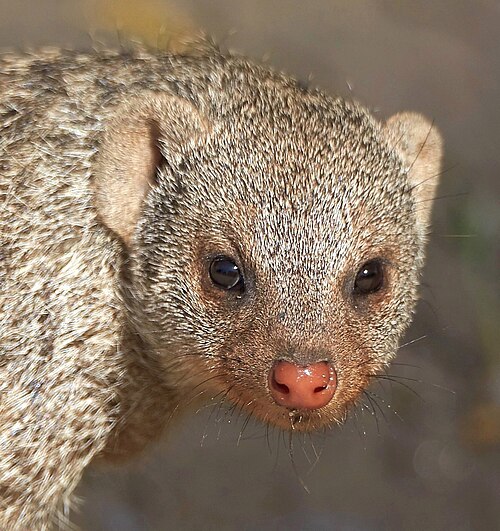
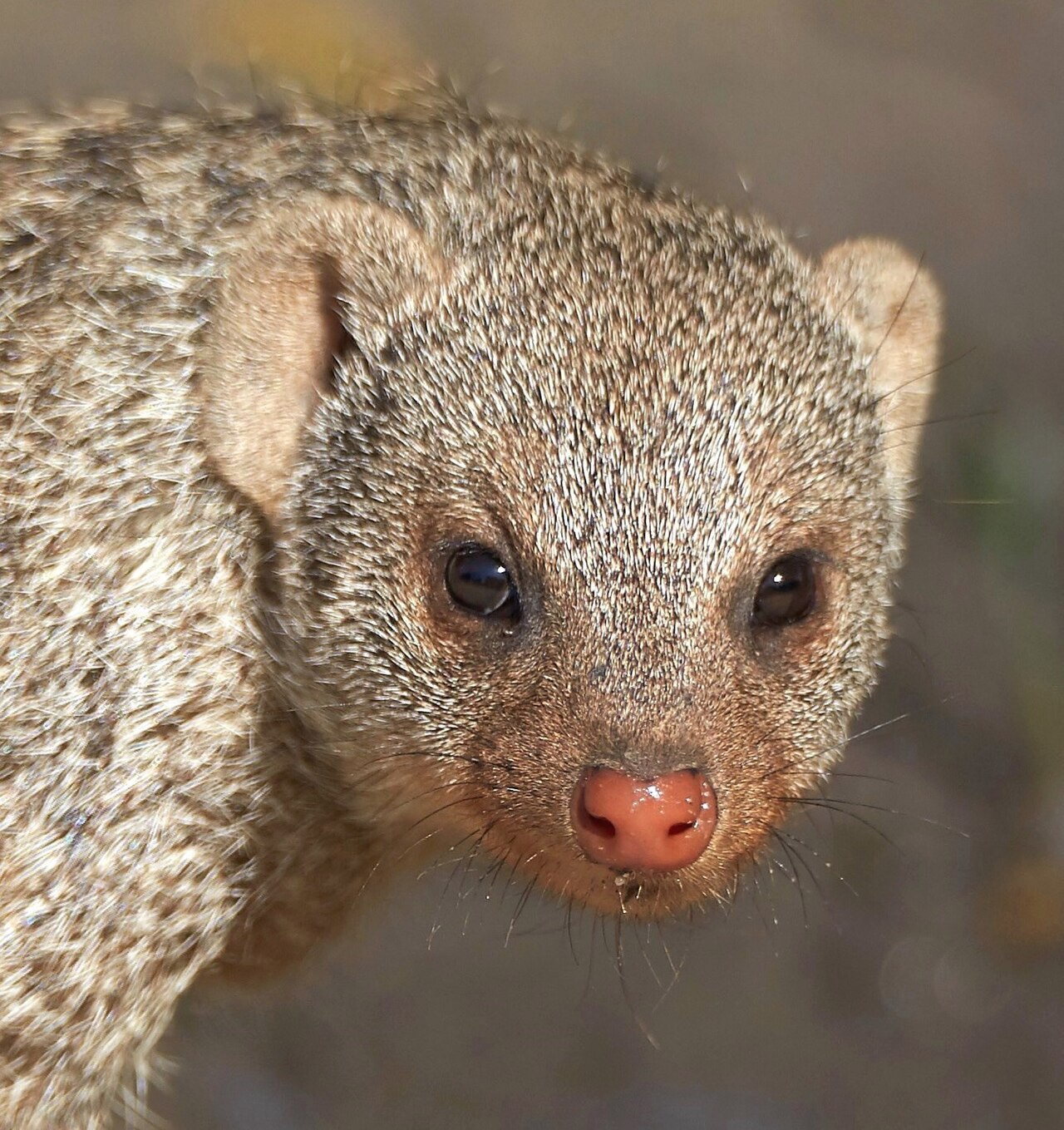
Banded mongooses live in tightly knit, cooperative packs of up to forty individuals that forage together and sleep in renovated termite mounds. Remarkably, pack females synchronize their reproductive cycles so precisely that all pregnant females typically give birth together on the very same night. While searching for beetles and millipedes in the soil, troop members maintain continuous acoustic contact through an intricate repertoire of bird-like chirps and twitters.
SocialSavannahDiurnal
—observations
—countries
—peak records
Least ConcernConservation statusIUCN Red List categoriesLCNTVUENCREWEXLeast ConcernRed List categories, explained →
Diet & prey
- Dung Beetles
- Millipedes
- Scorpions
Predators
- Martial Eagle
- Leopard
- African Rock Python
ThreatsHabitat loss, road mortality, and domestic dog predation
HabitatsSavannas, open woodlands, and grasslands
Life span8–11 years
Classification
- FamilyHerpestidae
- SpeciesMungos mungo
Range data is not available yet.
Interaction riskLow
- Low
- Moderate
- High
- Very high
- Why interaction risk is low
- Can deliver a painful defensive bite if cornered; observe foraging packs from a respectful distance.
- Why it is dangerous
- Possesses sharp teeth and strong jaws capable of delivering painful puncture wounds and secondary bacterial infections when cornered.
- How to recognize a risky encounter
- Look for coarse brownish-gray fur with distinct dark transverse stripes across the back and a slender tapering tail.
- What to do
- Do not attempt to touch or feed wild individuals, and allow moving troops plenty of room to pass.
Responsible observation
- Maintain Space: Watch foraging troops from several meters away to avoid triggering alarm calls.
- Listen for Vocalizations: Tune into their constant chirping contact calls as they comb leaf litter.
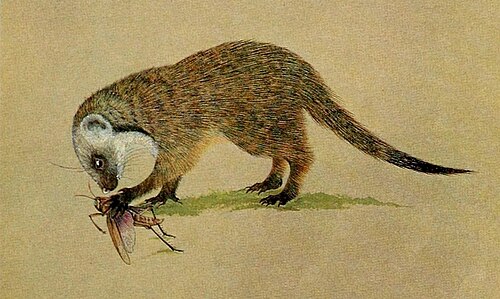
Same Genus British Museum (Natural History).; Rosevear, Donovan Reginald / Public domain · cc0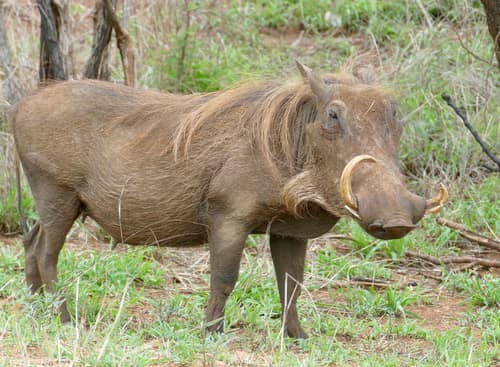
Symbiont (c) Bernard DUPONT, some rights reserved (CC BY-SA) · cc-by-sa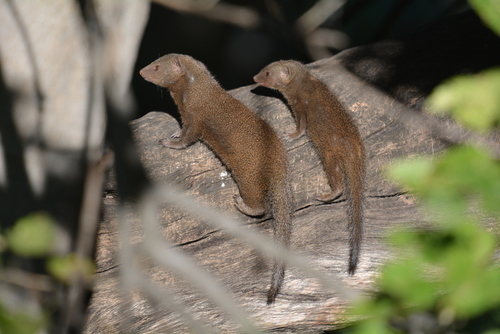
Same Family no rights reserved, uploaded by Simon Tonge · cc0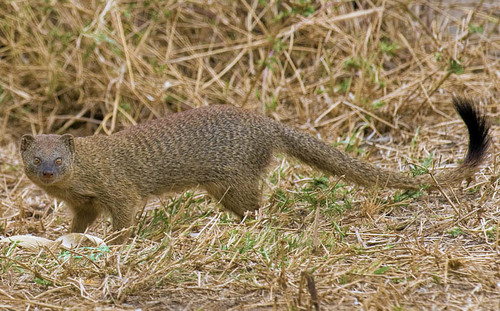
Same Family (c) Yathin S Krishnappa, some rights reserved (CC BY-SA) · cc-by-sa
Help improve the field guideSomething wrong?
Checking your Fauna account…Report a name, category, or profile issue for review.