
Reptile · GBIF taxon 8029174
Rwenzori Three-horned Chameleon
Trioceros johnstoniAlso known as Johnston's Chameleon, Johnston's Three-horned Chameleon, Ruwenzori Three-horned Chameleon
Rwenzori three-horned chameleons thrive in the cool, misty cloud forests of the Albertine Rift highlands. Adult males feature three prominent, forward-pointing horns used to push rival males off branches during territorial disputes, while females are completely hornless. These slow-moving lizards move through dense vegetation using zygodactylous feet and prehensile tails, snatching insects with explosive projectile tongues.
MontaneDimorphicReptile
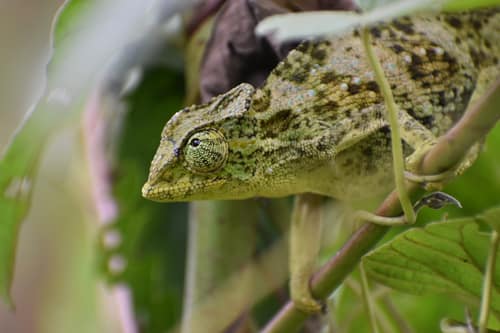
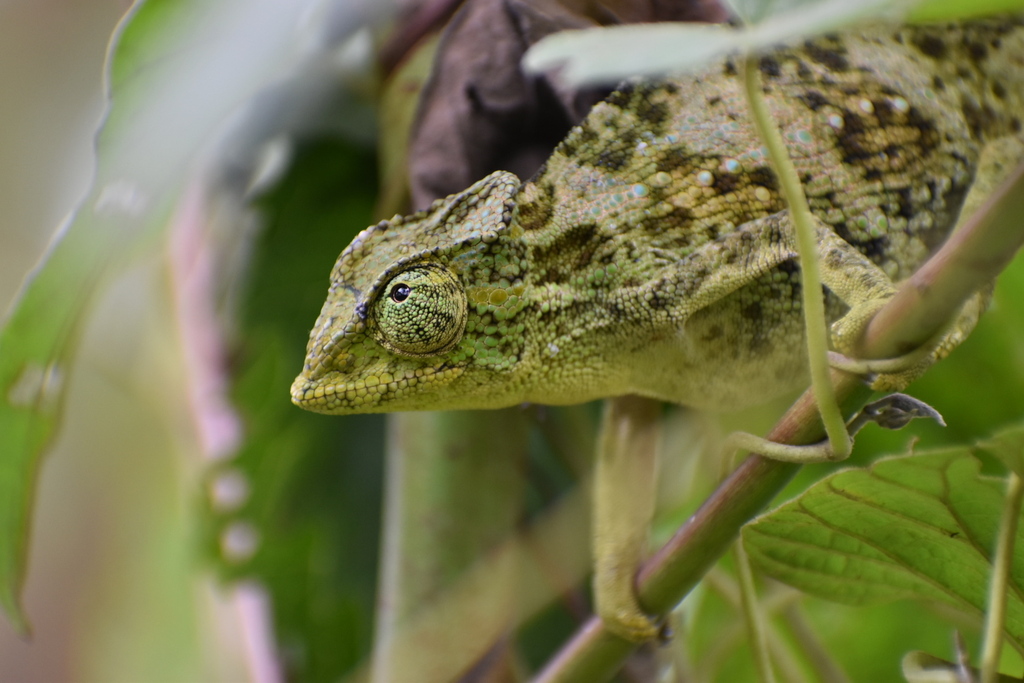
—observations
—countries
—peak records
Least ConcernConservation statusIUCN Red List categoriesLCNTVUENCREWEXLeast ConcernRed List categories, explained →
Diet & prey
- Grasshoppers
- Moths
- Spiders
Predators
- Birds of prey
- Tree snakes
- Small mammalian carnivores
ThreatsHabitat loss from deforestation, agriculture, climate change
HabitatsMontane cloud forests, bamboo zones, alpine scrub
Life span3–7 years
Size / weightNot available
Classification
- FamilyChamaeleonidae
- SpeciesTrioceros johnstoni
Range data is not available yet.
Interaction riskLow
- Low
- Moderate
- High
- Very high
- Why interaction risk is low
- Safe to observe at a normal distance.
- What to notice
- Look for males with three prominent head horns clinging to montane vegetation in Central African highlands.
- Support conservation
- Do not touch, capture, or disturb vegetation supporting these lizards.
Responsible observation
- Spotting: Scan mossy branches and shrubs along misty trails early in the morning.
- Distance: Maintain a gentle distance to avoid scaring them into dropping from perches.
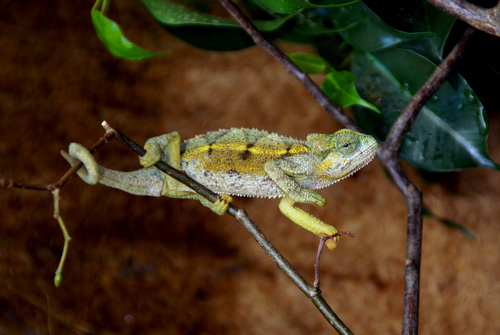
Co-Occurring Species (c) Acapella, some rights reserved (CC BY-SA) · cc-by-sa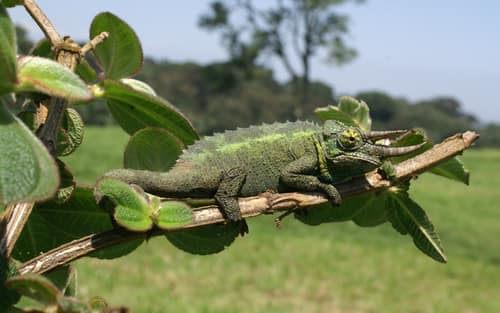
Close Relative Patrick Gijsbers / CC BY-SA 4.0 · cc-by-sa
Help improve the field guideSomething wrong?
Checking your Fauna account…Report a name, category, or profile issue for review.