
Arachnid · GBIF taxon 7908320
Wetland Giant Wolf Spider
Tigrosa helluoAlso known as Dark Wolf Spider, Wetland Wolf Spider
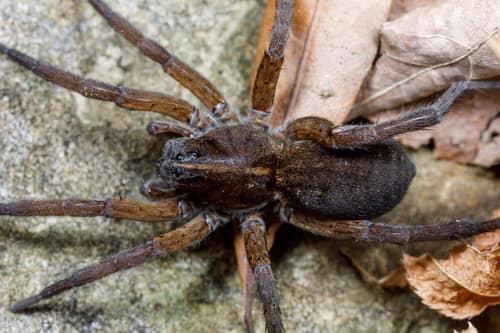
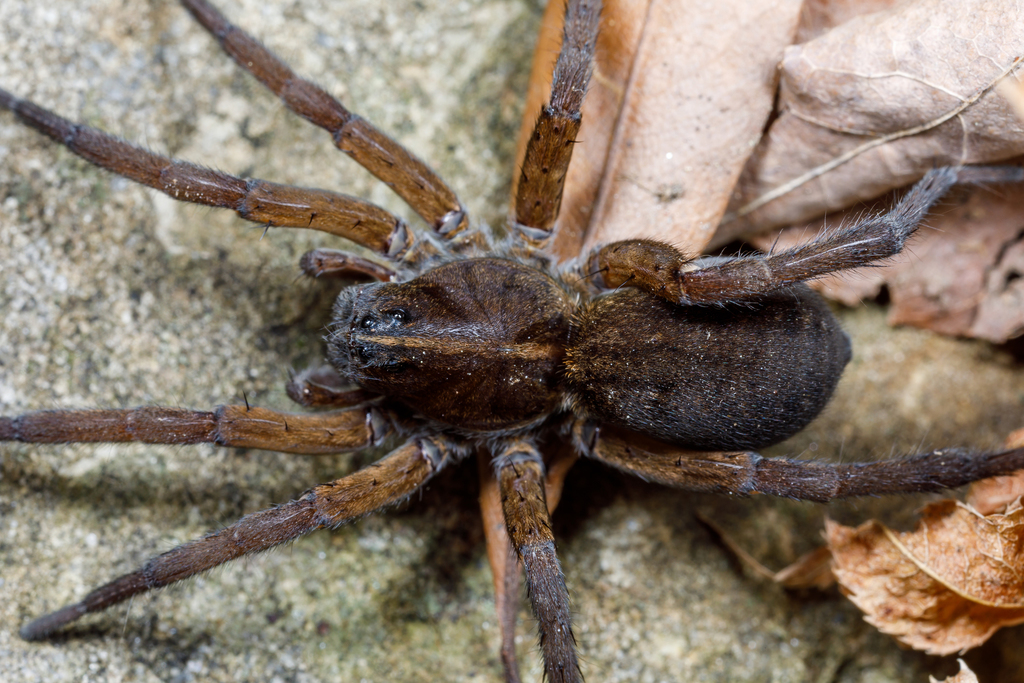
Wetland giant wolf spiders hunt actively across damp forest floors, marshes, and stream banks without building capture webs. Females carry their spherical egg sacs attached to their spinnerets and later bear dozens of newly hatched spiderlings on their backs. Their dark greenish-brown carapace features a distinct yellow midline stripe extending forward between large eyes adapted for night vision.
NocturnalArachnidPredator
 1 / 7
1 / 7—observations
—countries
—peak records
Not EvaluatedConservation statusIUCN Red List categoriesLCNTVUENCREWEXNot Evaluated — not placed on the risk ladderRed List categories, explained →
Diet & prey
- Crickets
- Beetles
- Caterpillars
Predators
- Spider Wasps
- Toads
- Birds
ThreatsPesticide application and loss of wetland habitat
HabitatsMarshes, riparian corridors, damp woods, and wet meadows
Life span1–2 years (males live about 1 year, females up to 2 years)
Size / weightNot available
Classification
- OrderAraneae
- FamilyLycosidae
- GenusTigrosa
- SpeciesTigrosa helluo
Range data is not available yet.
Interaction riskVery high
- Low
- Moderate
- High
- Very high
- Why interaction risk is very high
- Delivers a painful but medically mild bite if handled directly; observe from a short distance.
- Why it is dangerous
- Possesses mild venom that causes localized pain and slight swelling similar to a bee sting if squeezed or crushed.
- How to recognize a risky encounter
- Recognize them by their dark body and a yellow central stripe extending between the middle eyes.
- What to do
- Never pick up wolf spiders with bare hands; coax them gently into a container instead.
Responsible observation
- Night Spotting: Shine a flashlight at ground level near water to spot their reflective eye shine.
- Safe Observation: Watch them freely at ground level without handling or pressing on them.
- Relocation: Use a glass container and card to safely transport indoor strays outside.
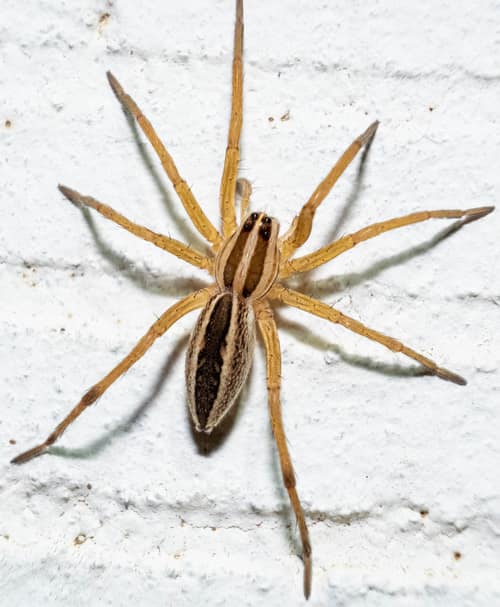
Co-occurring Lycosid no rights reserved, uploaded by Mirko Schoenitz · cc0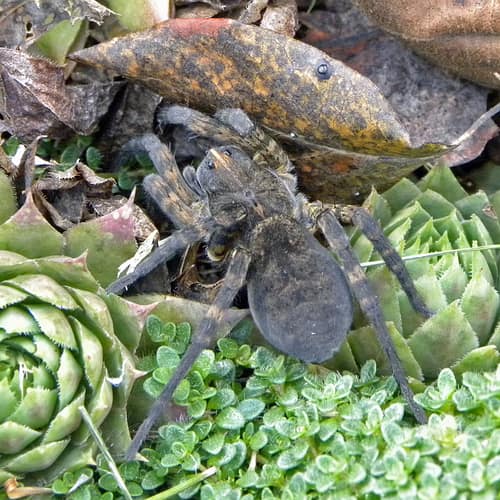
Close Relative (c) M. Whitson, some rights reserved (CC BY) · cc-by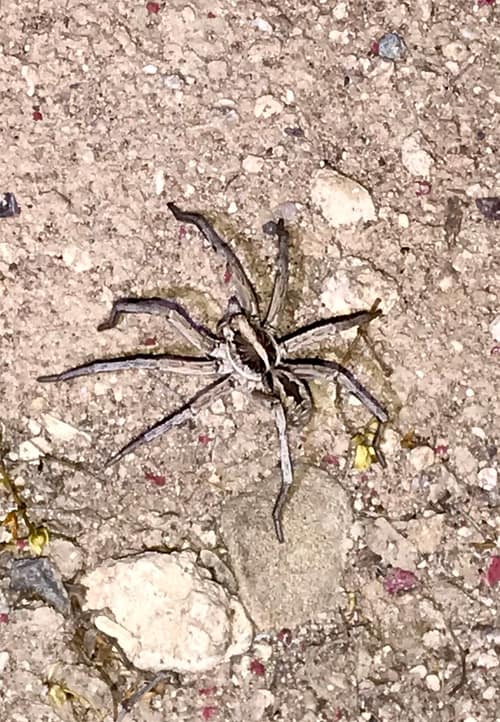
Family Member (c) CK2AZ, some rights reserved (CC BY), uploaded by CK2AZ · cc-by
Help improve the field guideSomething wrong?
Checking your Fauna account…Report a name, category, or profile issue for review.