
Plant
Giant False Sensitive Plant
Mimosa diplotrichaAlso known as Giant Sensitive Plant, Nila Grass, Creeping Sensitive Plant
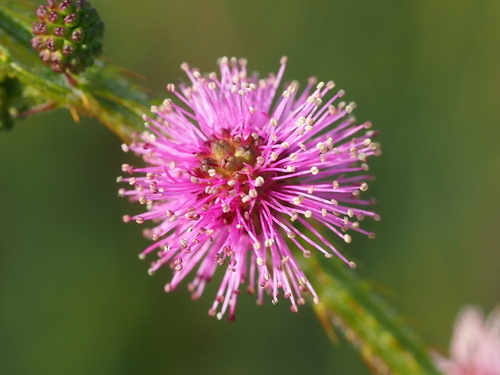
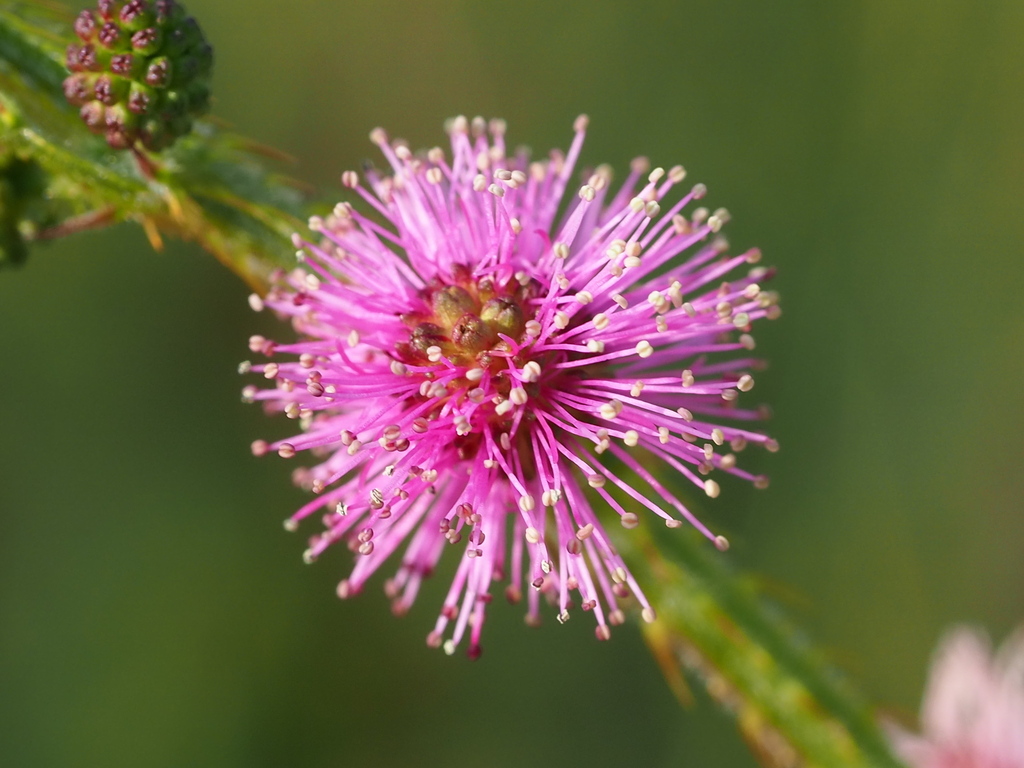
Scrambling vigorously over surrounding vegetation, this sprawling legume forms dense, impenetrable thickets armed with sharp, recurved prickles. Its bipinnate leaves fold up rapidly when touched or disturbed by rain, conserving moisture and deterring herbivores. Originally from tropical America, it thrives in disturbed ground, croplands, and roadsides, frequently outcompeting native flora and choking pastures across the tropics.
InvasiveThornyFast-Growing
—observations
—countries
—peak records
Least ConcernConservation statusIUCN Red List categoriesLCNTVUENCREWEXLeast ConcernRed List categories, explained →
Diet & preyAutotrophic (photosynthetic)
Predators
- Heteropsylla spinulosa
- Charidotis marginella
ThreatsHerbicidal control, mechanical clearing, and biological control agents like psyllid insects
HabitatsDisturbed areas, roadsides, pastures, plantations, riverbanks, and forest edges
Life span1–3 years
Classification
- FamilyFabaceae
- SpeciesMimosa diplotricha
Range data is not available yet.
Interaction riskHigh
- Low
- Moderate
- High
- Very high
- Why interaction risk is high
- Foliage contains mimosine, which is toxic to livestock; sharp stem prickles can easily scratch skin.
- Why it is dangerous
- Leaves and seeds contain mimosine, a non-protein amino acid that causes hair loss, thyroid enlargement, and fatal neurological distress in livestock.
- How to recognize a risky encounter
- Look for four-angled sprawling stems densely lined with recurved prickles, pink puffball flowers, and bristly clusters of flat seed pods.
- What to do
- Wear heavy puncture-resistant gloves and protective eyewear when clearing, and keep foraging livestock strictly away from infested pasture.
Responsible observation
- Leaf Movement: Lightly brush the feathery leaflets with a twig to observe their rapid defensive folding.
- Avoid Thickets: Wear durable long trousers and sturdy gloves, as the backward-curving prickles readily tear fabric and skin.
- Report Infestations: Notify local land management or biosecurity agencies if spotting new colonies outside known weed zones.
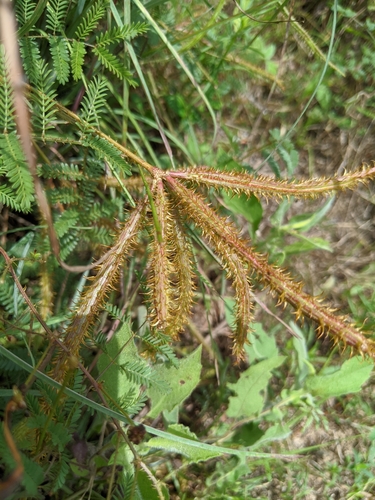
Same Genus (c) Alison Northup, some rights reserved (CC BY), uploaded by Alison Northup · cc-by Image unavailable
Predator 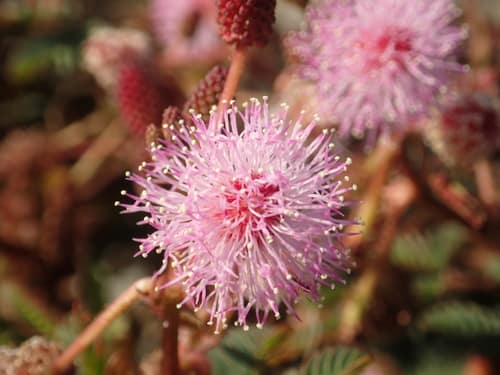
Close Relative no rights reserved, uploaded by 葉子 · cc0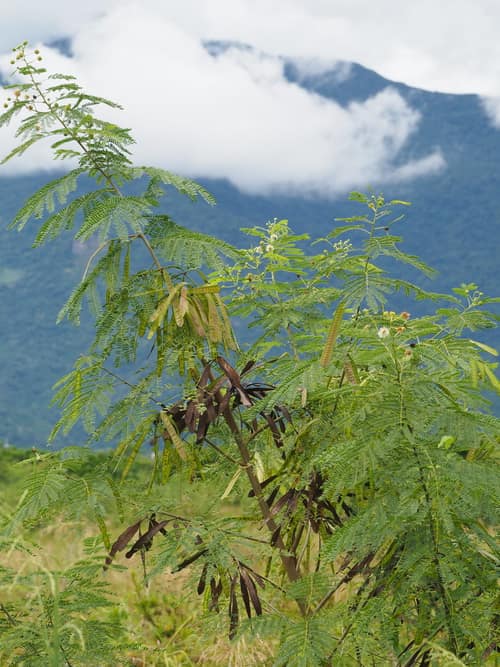
Same Family no rights reserved, uploaded by 葉子 · cc0
Help improve the field guideSomething wrong?
Checking your Fauna account…Report a name, category, or profile issue for review.