
Fungus · GBIF taxon 7761763
Texas Star
Chorioactis geasterAlso known as Devil's Cigar, Kirinomitake
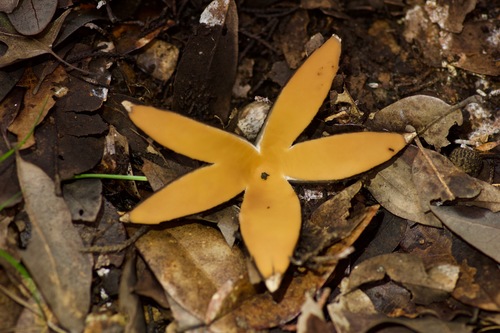
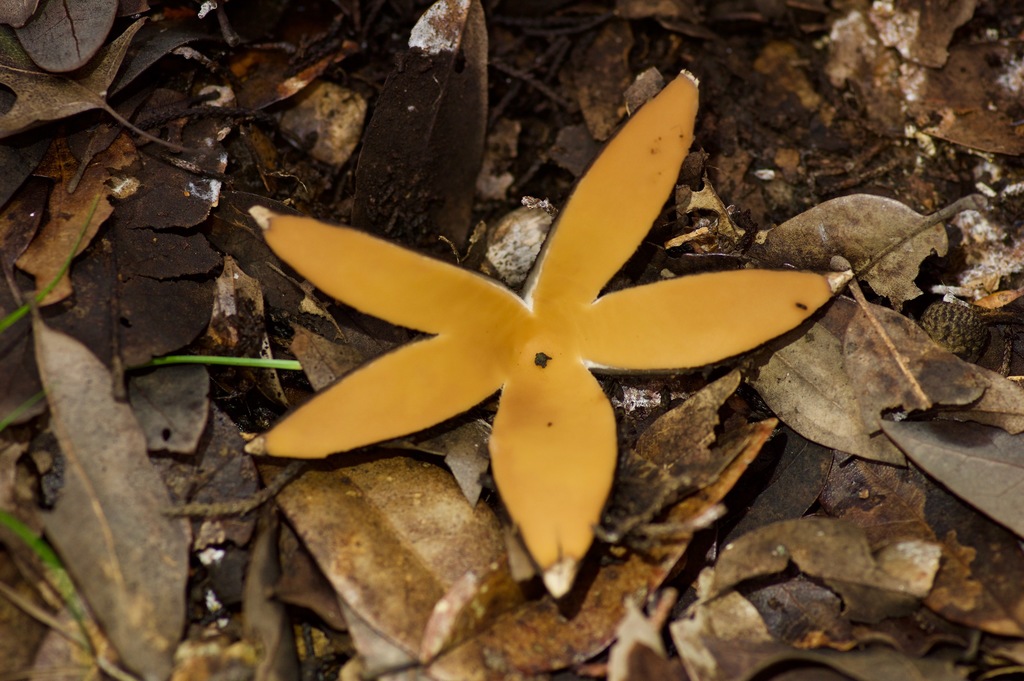
Texas star begins life as an unassuming, dark brown or velvety black cylinder resembling a slender cigar before splitting open under internal pressure. As the leathery capsule ruptures into a distinctive star of four to seven rays, it often produces an audible hiss and releases a visible puff of pale spores into the air. This striking fungus survives as a saprobe tethered strictly to decaying wood, notably the roots and stumps of cedar elms in North America and dead broadleaf trees in East Asia.
Wood-DecayingRareSaprobic
—observations
—countries
—peak records
Not EvaluatedConservation statusIUCN Red List categoriesLCNTVUENCREWEXNot Evaluated — not placed on the risk ladderRed List categories, explained →
Diet & prey
- Dead cedar elm wood
- Decaying oak roots
- Lignin and cellulose
Predators
- Fungus gnats
- Slugs
- Beetle larvae
ThreatsHabitat destruction, woodland clearing, and loss of mature host trees
HabitatsDeciduous river bottoms, limestone woodlands, and temperate montane forests
Life spanEphemeral fruit body lasting 1–3 weeks; underground mycelium persists for years
Classification
- FamilyChorioactidaceae
- SpeciesChorioactis geaster
Range data is not available yet.
Interaction riskLow
- Low
- Moderate
- High
- Very high
- Why interaction risk is low
- Many edible mushrooms have toxic look-alikes; never eat wild fungi based on app identification alone.
- What to notice
- Look for velvety brown or black cigar-shaped capsules that split into four to seven outward-curving rays showing light tan hymenium.
- Support conservation
- Photograph without disturbing the surrounding leaf litter or damaging decaying root structures.
Responsible observation
- Timing Searches: Look closely after sustained late-autumn or winter rainstorms when moisture triggers fruit body emergence.
- Inspect Hardwood Stumps: Focus beneath the leaf litter at the base of dead cedar elms or mature decaying oak roots.
- Do Not Disturb: Leave fruit bodies undisturbed in place so they can complete spore dispersal across their fragile range.
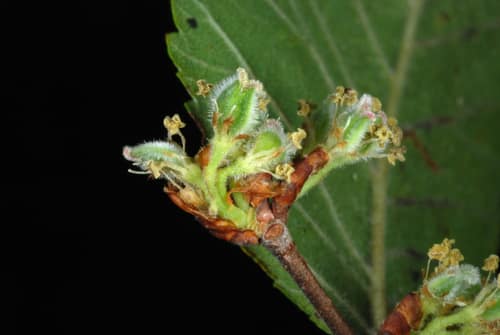
Host Plant (c) Douglas Goldman, some rights reserved (CC BY-SA), uploaded by Douglas Goldman · cc-by-sa Image unavailable
Neighbor 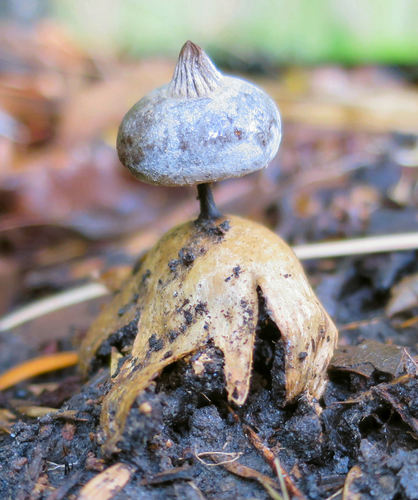
Look-alike (c) Alice Shanks, some rights reserved (CC BY) · cc-by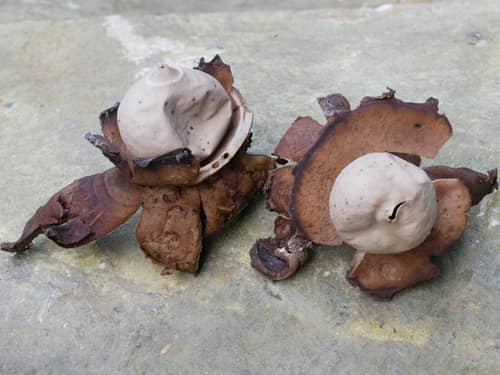
Look-alike no rights reserved, uploaded by Garrett Taylor · cc0
Help improve the field guideSomething wrong?
Checking your Fauna account…Report a name, category, or profile issue for review.