
Fungus
Collared Earthstar
Geastrum triplexAlso known as Saucered Earthstar, Triple Earthstar
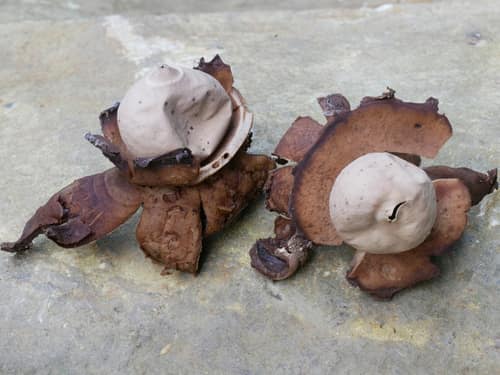
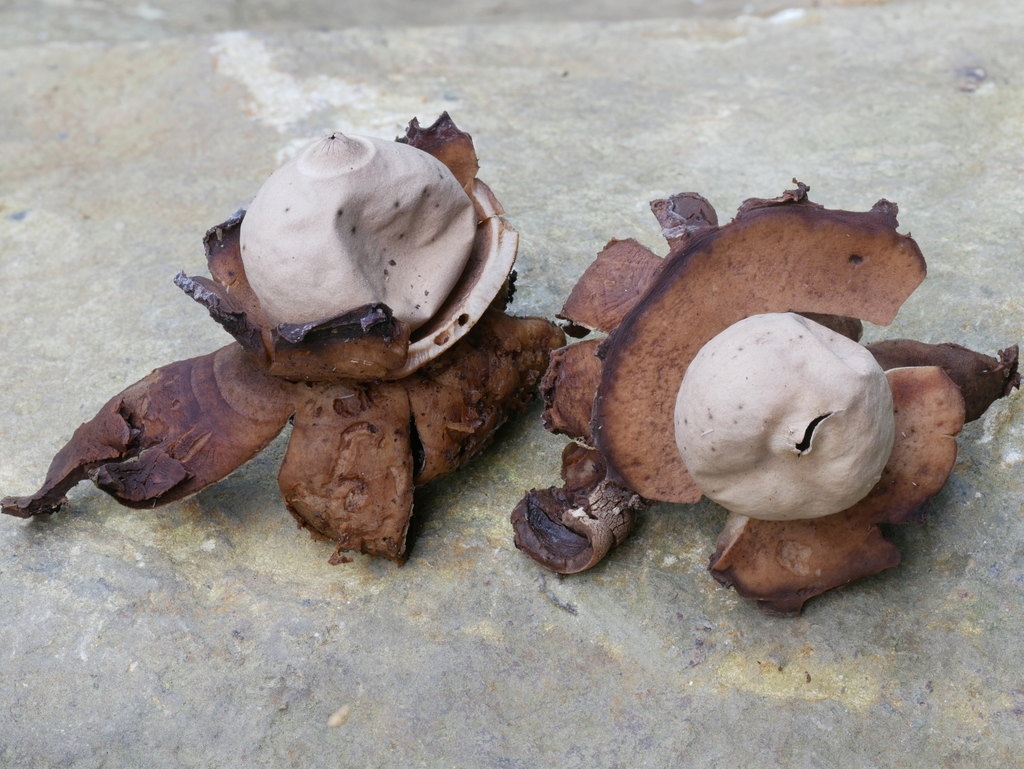
Collared earthstars emerge as subterranean onion-shaped structures before their outer layer splits into starlike rays that lift the central spore sac. A distinctive saucer-like collar often forms around the base of the spherical spore case as the inner layer tears away. When raindrops strike the flexible sac, cloudlike puffs of microscopic brown spores eject from the tiny central pore.
FungusSpore ShooterWoodland
—observations
—countries
—peak records
Not EvaluatedConservation statusIUCN Red List categoriesLCNTVUENCREWEXNot Evaluated — not placed on the risk ladderRed List categories, explained →
Diet & preySaprotrophic (decomposing leaf litter and woody debris)
Predators
- Slugs
- Fungus Beetles
- Rodents
ThreatsDeforestation and severe soil disturbance
HabitatsDeciduous forests, rich leaf mold, coniferous woods
Life spanFruiting body lasts several weeks; mycelium is perennial
Classification
- OrderGeastrales
- FamilyGeastraceae
- GenusGeastrum
- SpeciesGeastrum triplex
Range data is not available yet.
Interaction riskLow
- Low
- Moderate
- High
- Very high
- Why interaction risk is low
- Many wild fungi have toxic look-alikes; never ingest any wild mushroom based on mobile identification.
Responsible observation
- Observe spore release: Gently tap the central sac with a small twig to watch a fine plume of brown spores puff out.
- Look near hardwoods: Search damp leaf litter beneath mature deciduous trees during late summer and autumn.
- Check for the collar: Examine the base of the spore sac to spot the raised cup structure unique to mature specimens.
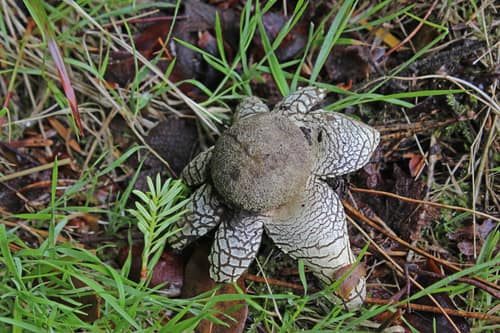
Look-alike (c) Davide Puddu, some rights reserved (CC BY), uploaded by Davide Puddu · cc-by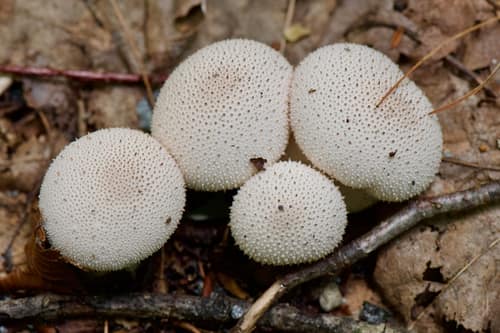
Ecological Cousin (c) Michael Nerrie, some rights reserved (CC BY), uploaded by Michael Nerrie · cc-by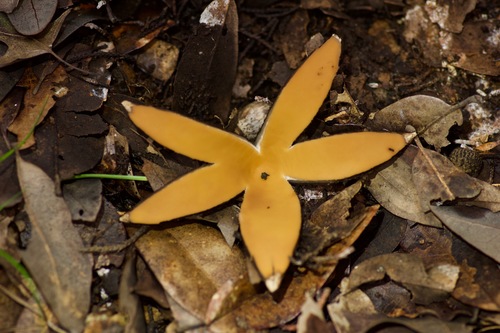
Look-alike (c) Michelle W. (鍾偉瑋), some rights reserved (CC BY) · cc-by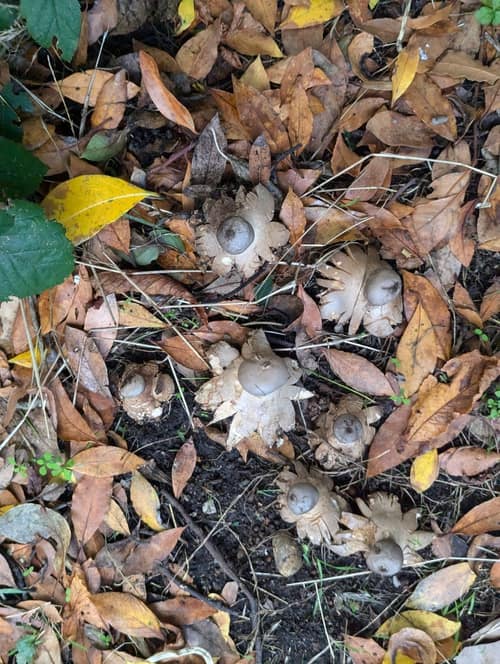
Close Relative no rights reserved · cc0
Help improve the field guideSomething wrong?
Checking your Fauna account…Report a name, category, or profile issue for review.