
Insect · GBIF taxon 7711888
Reddish-brown Stag Beetle
Lucanus capreolusAlso known as Pinching Beetle
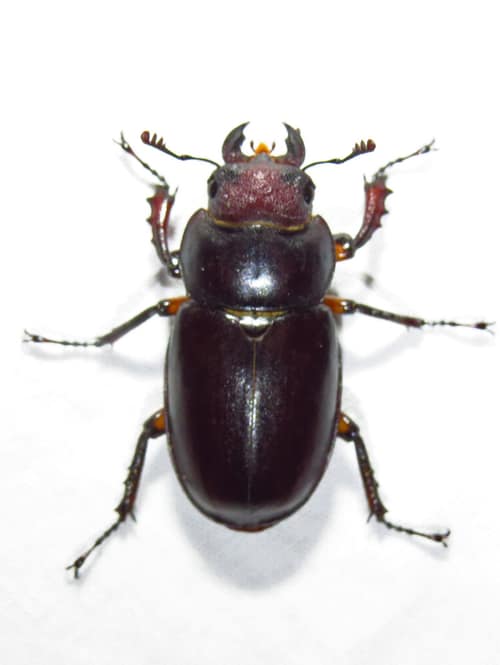
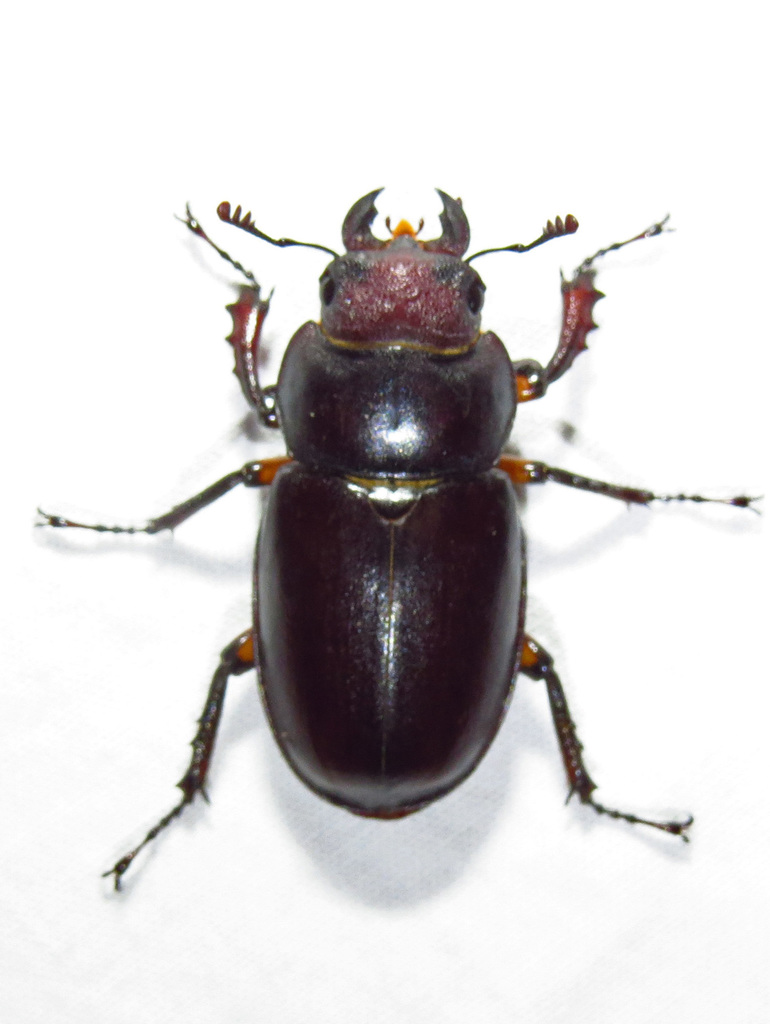
Reddish-brown stag beetles inhabit eastern North American hardwood forests, where their grubs break down decaying logs and stump roots over several years. Adult males feature prominent, antler-like mandibles with a single smooth tooth on the inner curve, using them to wrestle rival males for mating access. Attracted to porch lights on warm summer nights, adults spend their brief aerial lives feeding on oozing tree sap and fermenting fruit.
NocturnalWoodlandDecomposer
 1 / 7
1 / 7—observations
—countries
—peak records
Not EvaluatedConservation statusIUCN Red List categoriesLCNTVUENCREWEXNot Evaluated — not placed on the risk ladderRed List categories, explained →
Diet & prey
- Decaying oak wood
- Oozing tree sap
- Fermenting fruit
Predators
- Insectivorous birds
- Bats
- Raccoons and small mammals
ThreatsRemoval of decaying trees, habitat fragmentation, light pollution
HabitatsDeciduous forests, wooded parks, suburban yards
Life span1–2 years (larval stage 1–2 years, adults 1–2 months)
Size / weightNot available
Classification
- OrderColeoptera
- FamilyLucanidae
- GenusLucanus
- SpeciesLucanus capreolus
Range data is not available yet.
Interaction riskLow
- Low
- Moderate
- High
- Very high
- Why interaction risk is low
- Adults possess strong mandibles capable of pinching skin if squeezed; handle gently or observe from a close distance.
- Why it is dangerous
- Strong mandibles can deliver a painful pinch when the beetle feels threatened or squeezed.
- How to recognize a risky encounter
- Recognizable by its shiny reddish-brown exoskeleton and smooth, curved male mandibles with a single inner tooth.
- What to do
- Avoid placing fingers near the front mandibles; pick up gently by the outer margins of the wing covers if necessary.
Responsible observation
- Nighttime Spotting: Check around outdoor lights and white porch walls on warm midsummer evenings.
- Gentle Handling: Lift carefully by the sides of the elytra rather than near the head to avoid pinched fingers.
- Rotting Wood Care: Leave fallen oak and maple logs undisturbed to preserve essential larval nursery habitat.
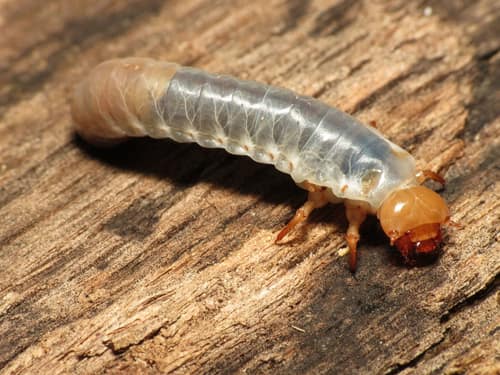
Forest Competitor (c) Katja Schulz, some rights reserved (CC BY) · cc-by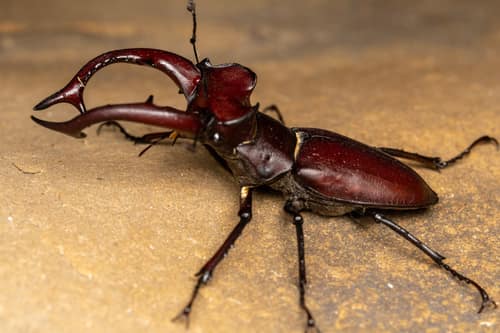
Close Relative (c) daksu, some rights reserved (CC BY) · cc-by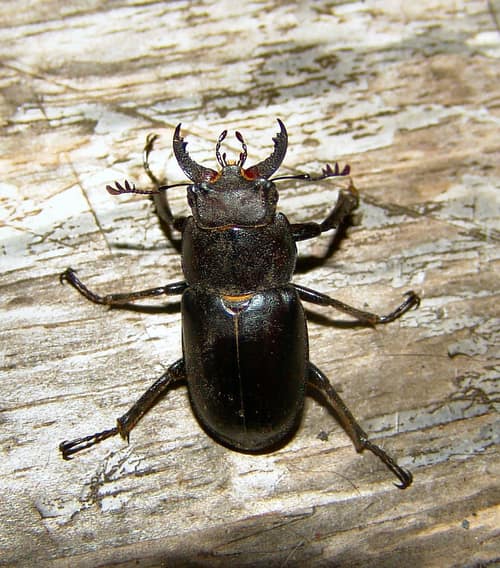
Close Relative (c) Gordon C. Snelling, some rights reserved (CC BY), uploaded by Gordon C. Snelling · cc-by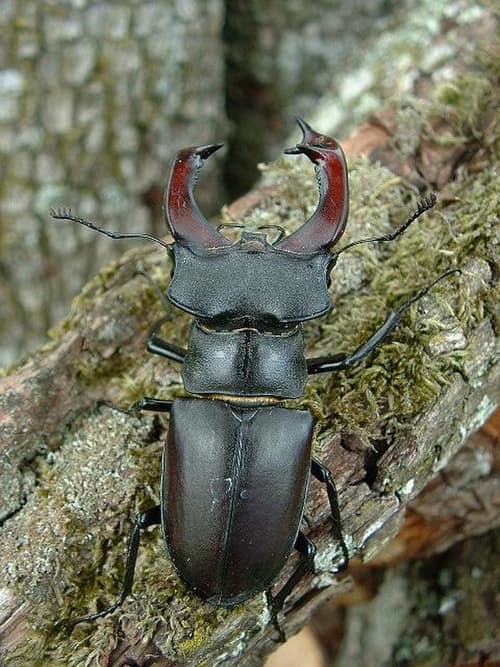
Close Relative J.F. Gaffard / CC BY-SA 3.0 · cc-by-sa
Help improve the field guideSomething wrong?
Checking your Fauna account…Report a name, category, or profile issue for review.