
Mammal
Tri-coloured Bat
Perimyotis subflavusAlso known as Tricolored Bat, Eastern Pipistrelle, American Perimyotis
As the smallest bat in eastern North America, the tri-coloured bat is readily distinguished by its distinctively banded fur, which blends dark bases, yellowish centers, and reddish tips. It displays a moth-like, fluttering flight while foraging along forest edges, streams, and ponds shortly after sunset. During winter, individuals hibernate singly in caves and abandoned mines, hanging motionless while draped in water droplets.
NocturnalMammalInsectivore
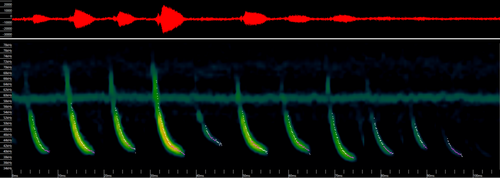
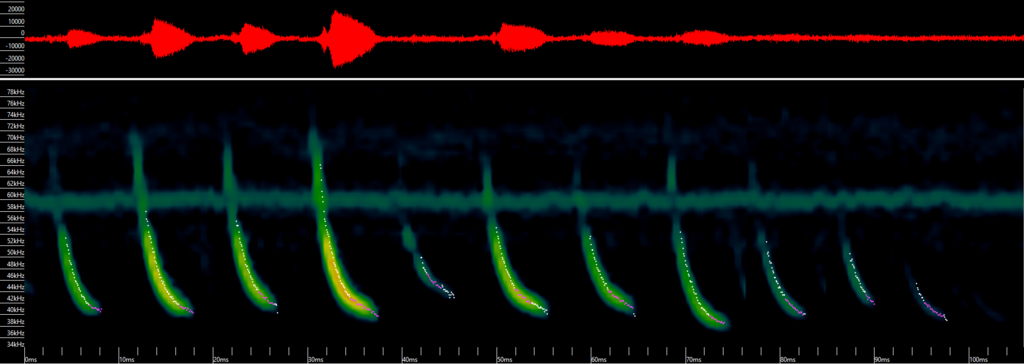
—observations
—countries
—peak records
VulnerableConservation statusIUCN Red List categoriesLCNTVUENCREWEXVulnerableRed List categories, explained →
Diet & preyMidges, Beetles, Moths
Predators
- Owls
- Raccoons
- Snakes
ThreatsWhite-nose syndrome, habitat loss, and wind turbine strikes
HabitatsDeciduous forests, river valleys, caves, mines, and roosting in tree foliage
Life spanUp to 15 years
Classification
- FamilyVespertilionidae
- SpeciesPerimyotis subflavus
Native
Interaction riskModerate
- Low
- Moderate
- High
- Very high
- Why interaction risk is moderate
- Can transmit rabies and bite if handled; observe roosts from a distance without touching.
- Why it is dangerous
- Carries potential rabies virus transmission risks and can inflict defensive bites if grounded or cornered.
- How to recognize a risky encounter
- Recognized by tiny size, pink forearms contrasting with dark wing membranes, and tricolored fur.
- What to do
- Never handle a bat directly; contact local animal control or wildlife rescue if one is injured.
- What to notice
- Distinct moth-like fluttering flight pattern along tree lines and waterways at twilight.
- Support conservation
- Keep clear of hibernacula from autumn to spring to avoid causing lethal arousal from torpor.
Responsible observation
- Hibernation Protection: Avoid entering caves and mines during winter to prevent disturbing roosting bats.
- Foliage Roosts: Watch forest edges at dusk where bats emerge from tree foliage and lichen clumps.
- Safe Distance: Enjoy watching their erratic foraging flight from below without attempting to touch or capture them.
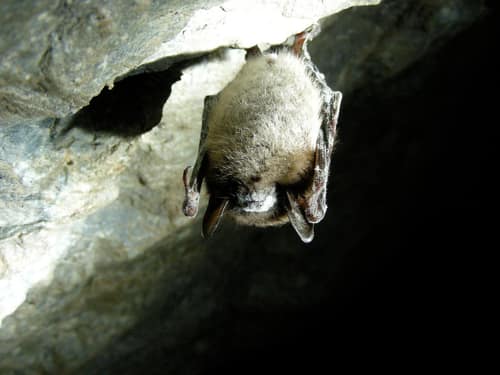
Cave Co-habitant "Little brown bat affected by White-nose Syndrome" by U. S. Fish and Wildlife Service - Northeast Region is marked with Public Domain Mark 1.0. To view the terms, visit https://creativecommons.org/publicdomain/mark/1.0/. · cc0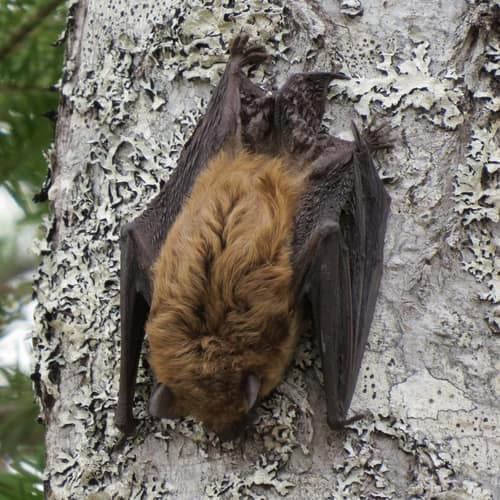
Frequent Companion (c) Fyn Kynd, some rights reserved (CC BY) · cc-by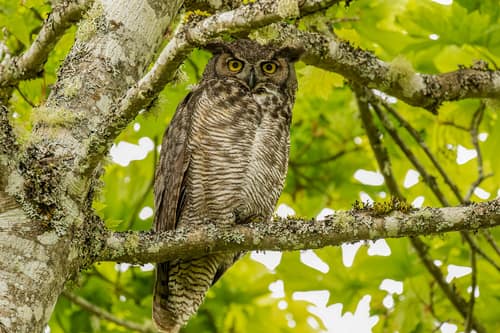
Predator "Great Horned Owl, the first I've seen in decent light this year. Didn't want to disturb it for too long so we continued along the trail" by island deborah- is licensed under CC BY-SA 2.0. To view a copy of this license, visit https://creativecommons.org/licenses/by-sa/2.0/. · cc-by-sa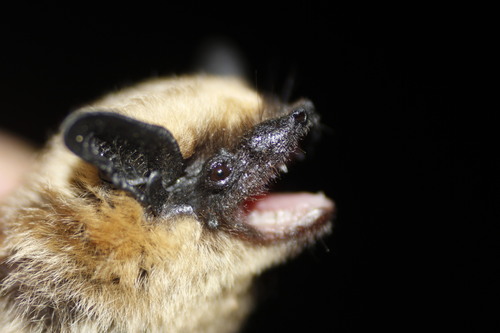
Close Relative (c) Juan Cruzado Cortés, some rights reserved (CC BY-SA), uploaded by Juan Cruzado Cortés · cc-by-sa
Help improve the field guideSomething wrong?
Checking your Fauna account…Report a name, category, or profile issue for review.