
Plant
American Lotus
Nelumbo luteaAlso known as Yellow Lotus, Water-Chinquapin, Volée, Sacred Bean
American lotus anchors deep in muddy sediment, sending up broad orbicular leaves that float on the water surface or stand erect above it. Its pale yellow flowers open during the morning and close by afternoon over a four-day bloom period, emitting a mild sweet fragrance that attracts native bees and beetles. The iconic showerhead-like seed pods dry out and tilt over in autumn, dropping hard nut-like seeds that can remain viable in lake beds for centuries.
AquaticFloweringNative
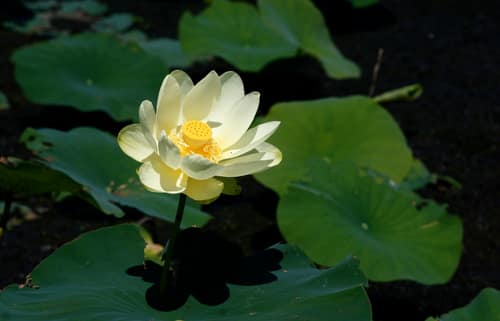
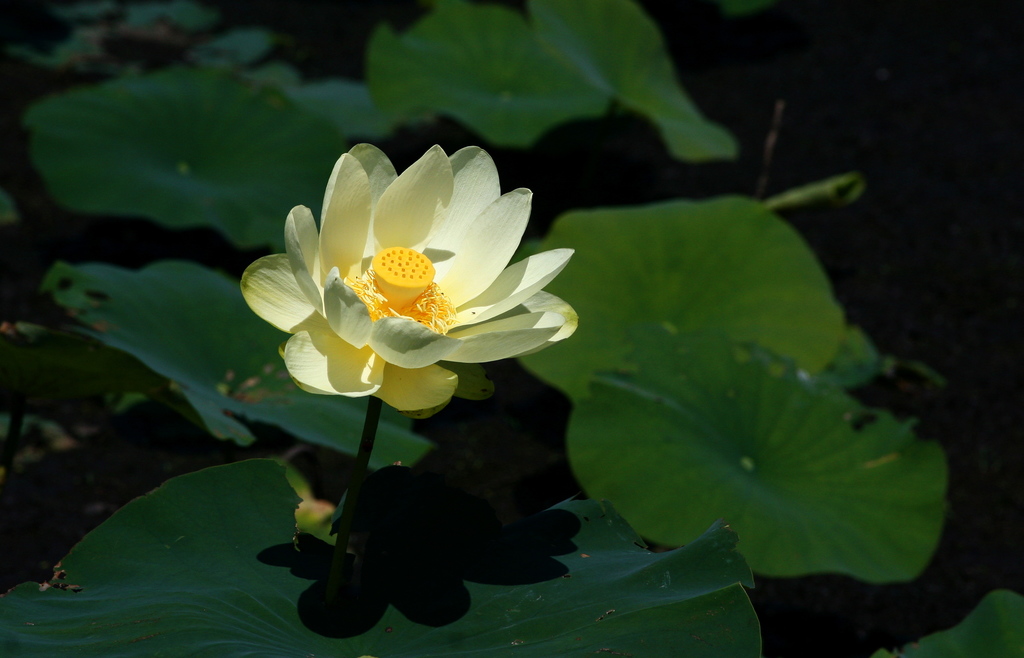
—observations
—countries
—peak records
Least ConcernConservation statusIUCN Red List categoriesLCNTVUENCREWEXLeast ConcernRed List categories, explained →
Diet & preyAutotrophic (Photosynthetic)
Predators
- Muskrats
- Beavers
- Waterfowl
ThreatsHabitat loss, water pollution, invasive aquatic weed competition
HabitatsPonds, lakes, slow-moving streams, marshes, and reservoirs
Life spanPerennial ( rhizomes can persist indefinitely)
Classification
- OrderProteales
- FamilyNelumbonaceae
- GenusNelumbo
- SpeciesNelumbo lutea
Range data is not available yet.
Interaction riskLow
- Low
- Moderate
- High
- Very high
- Why interaction risk is low
- Wild nuts and roots have toxic look-alikes; never eat based on app identification alone.
Responsible observation
- Observation Timing: Look for large pale yellow blossoms standing well above floating leaves during mid-summer mornings.
- Habitat Location: Search quiet ponds, backwaters, and shallow reservoir coves with rich muddy bottoms.
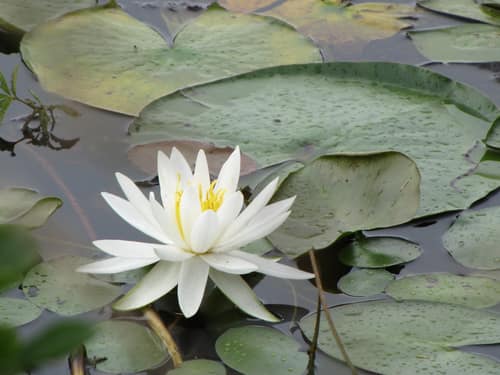
Ecological Neighbor "fragrant water lily" by USFWS Headquarters is licensed under CC BY 2.0. To view a copy of this license, visit https://creativecommons.org/licenses/by/2.0/. · cc-by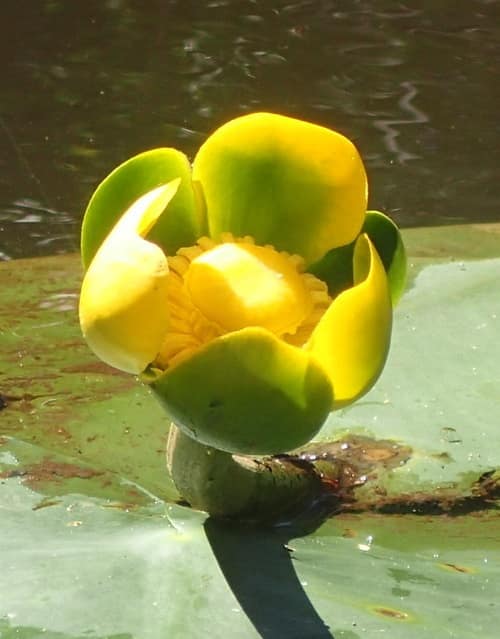
Ecological Neighbor (c) mfeaver, some rights reserved (CC BY), uploaded by mfeaver · cc-by
Close Relative (c) Surabhi Srivastava, some rights reserved (CC BY), uploaded by Surabhi Srivastava · cc-by
Help improve the field guideSomething wrong?
Checking your Fauna account…Report a name, category, or profile issue for review.