
Plant
Porcelain Berry
Ampelopsis glandulosaAlso known as Amur Peppervine, Creeper
Porcelain berry is an aggressive, deciduous woody vine that uses non-adhesive twining tendrils to blanket native shrubs and climb high into tree canopies. It produces spectacular clusters of small berries that shift through a pastel palette of creamy yellow, lilac, turquoise, and sky blue as they ripen in early autumn. Highly prized in ornamental gardens for its vibrant fruit, it escapes cultivation rapidly and smothers native vegetation across much of eastern North America.
InvasiveClimbingDeciduous
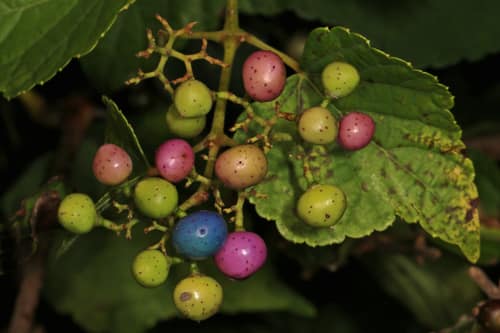
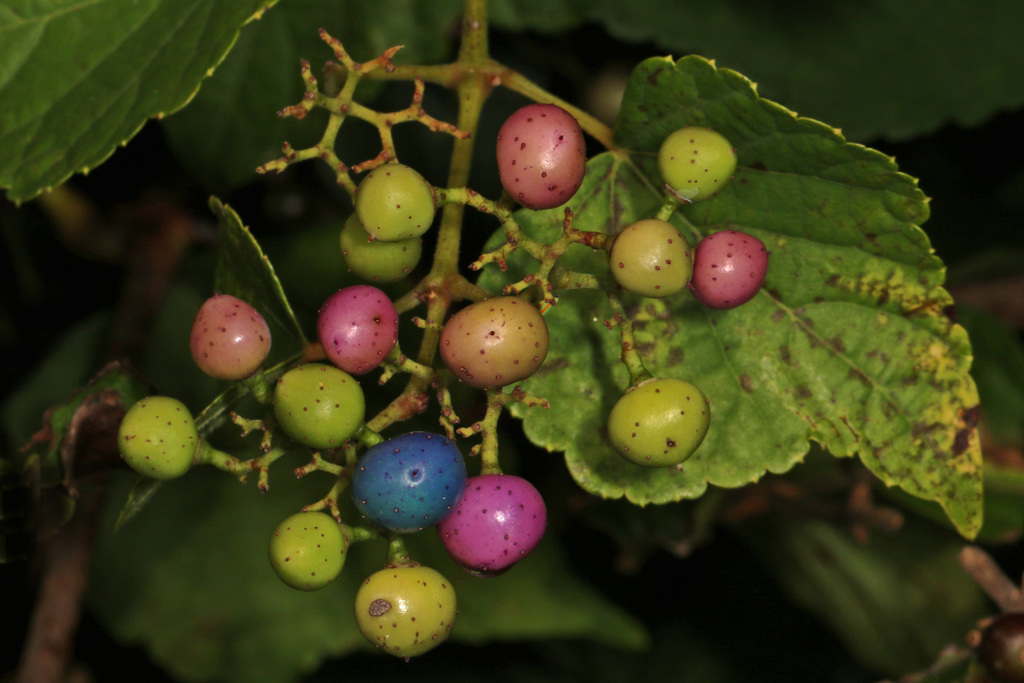
—observations
—countries
—peak records
Not EvaluatedConservation statusIUCN Red List categoriesLCNTVUENCREWEXNot Evaluated — not placed on the risk ladderRed List categories, explained →
Diet & preySunlight, Water, Soil nutrients
Predators
- Cedar Waxwing
- Northern Mockingbird
- White-tailed Deer
ThreatsMechanical cutting, targeted herbicide applications, and mechanical uprooting in managed areas
HabitatsForest edges, riparian corridors, disturbed thickets, roadsides, and urban woodlands
Life span15–30 years
Classification
- OrderVitales
- FamilyVitaceae
- GenusAmpelopsis
- SpeciesAmpelopsis glandulosa
Range data is not available yet.
Interaction riskLow
- Low
- Moderate
- High
- Very high
- Why interaction risk is low
- Wild berries have toxic look-alikes; never eat based on app identification alone.
Responsible observation
- Identifying Features: Cut a stem crosswise to confirm the white continuous pith, which separates it from native wild grapes.
- Management Practice: Bag and dispose of fruiting stems in the trash to prevent birds from spreading the seeds.
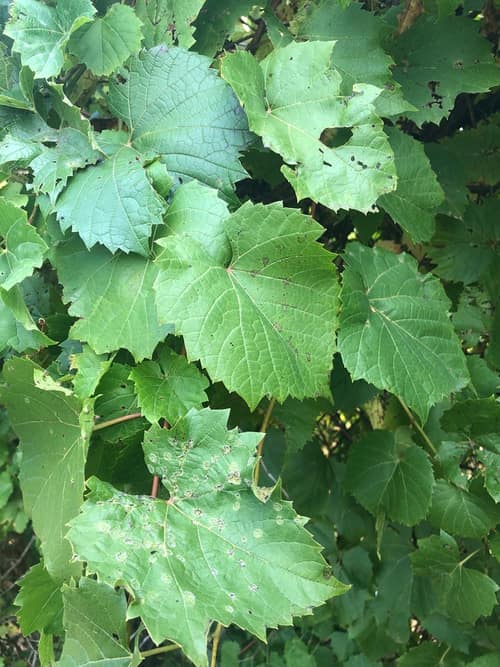
Look-alike (c) miquelon, some rights reserved (CC BY), uploaded by miquelon · cc-by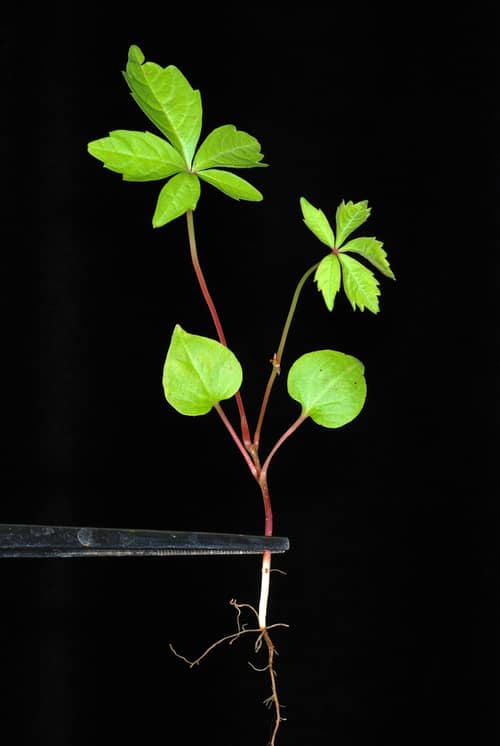
Competitor (c) Douglas Goldman, some rights reserved (CC BY-SA), uploaded by Douglas Goldman · cc-by-sa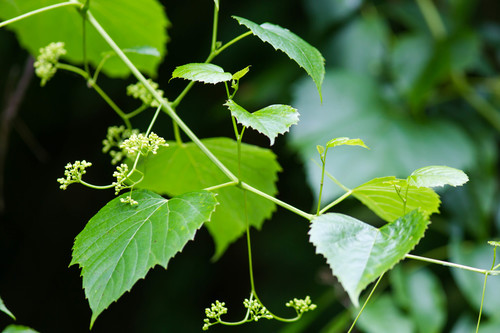
Close Relative (c) Melissa McMasters, some rights reserved (CC BY) · cc-by
Help improve the field guideSomething wrong?
Checking your Fauna account…Report a name, category, or profile issue for review.