
Mammal · GBIF taxon 7262034
Vervet Monkey
Chlorocebus pygerythrusAlso known as Vervet, Blouaap
Vervet monkeys live in social troops governed by linear dominance hierarchies, spending their days foraging between tree canopy branches and woodland ground. They possess a famous vocal language that includes acoustically distinct alarm calls for leopards, eagles, and pythons. Frequently thriving near human settlements, these adaptable primates readily raid crops and gardens when natural foraging options grow scarce.
SocialDiurnalArboreal
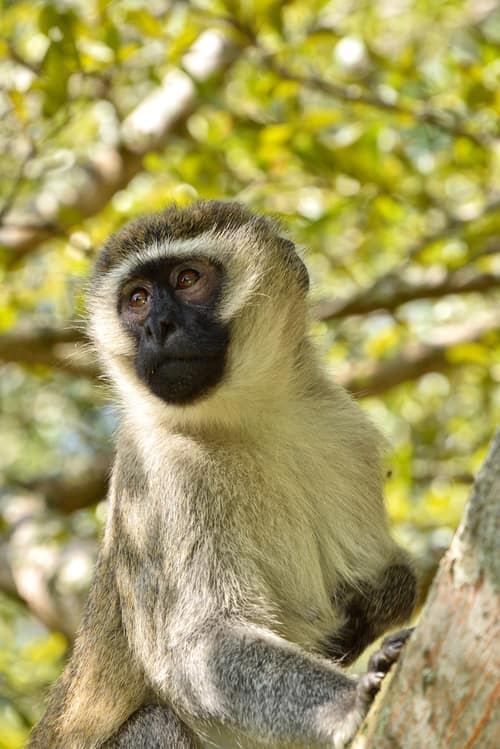
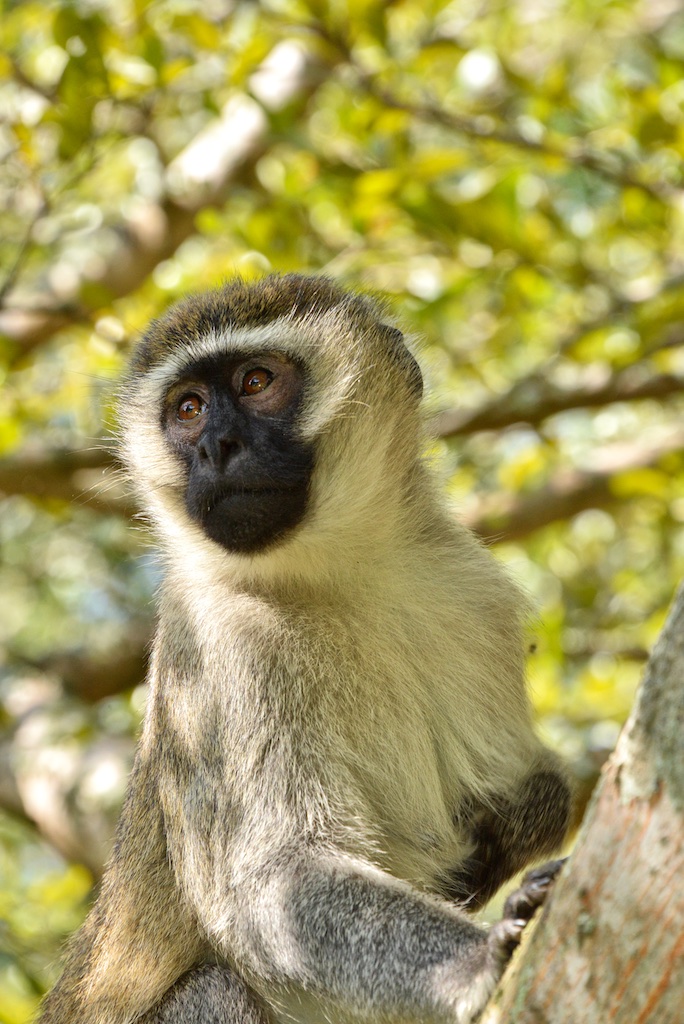
—observations
—countries
—peak records
Least ConcernConservation statusIUCN Red List categoriesLCNTVUENCREWEXLeast ConcernRed List categories, explained →
Diet & prey
- Wild Fruits
- Acacia Seeds
- Insects
Predators
- Leopard
- Martial Eagle
- African Rock Python
ThreatsHabitat loss, agricultural conflict, pet trade, and vehicle strikes
HabitatsSavannas, open woodlands, coastal forests, and riverine thickets
Life span15–20 years in the wild
Size / weightNot available
Classification
- OrderPrimates
- FamilyCercopithecidae
- GenusChlorocebus
- SpeciesChlorocebus pygerythrus
Native
Interaction riskModerate
- Low
- Moderate
- High
- Very high
- Why interaction risk is moderate
- Can bite or scratch defensively if cornered or fed; maintain a respectful distance.
- Why it is dangerous
- Equipped with sharp canine teeth and strong jaws, vervets can inflict deep bites and scratches if threatened, cornered, or defending their young.
- How to recognize a risky encounter
- Look for black skin on the face framed by white cheek whiskers, a olive-grey coat, and a bright blue scrotum on adult males.
- What to do
- Avoid eye contact and do not point or gesture rapidly; step back slowly if a monkey lunges or bares its teeth.
Responsible observation
- Distance: Keep at least 10 meters away to avoid triggering defensive aggression from troop members.
- Food Control: Never feed vervets, as human food habituation leads to dangerous property raiding.
- Pet Interactions: Keep domestic dogs on a leash, as vervets will aggressively defend infants against pets.
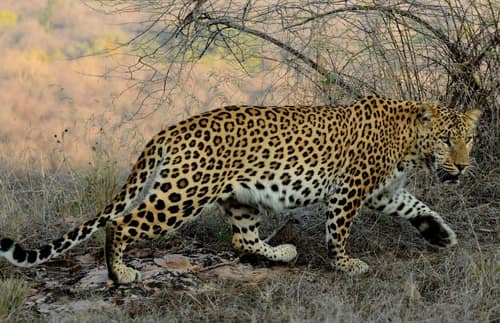
Predator (c) Raja bandi, some rights reserved (CC BY), uploaded by Raja bandi · cc-by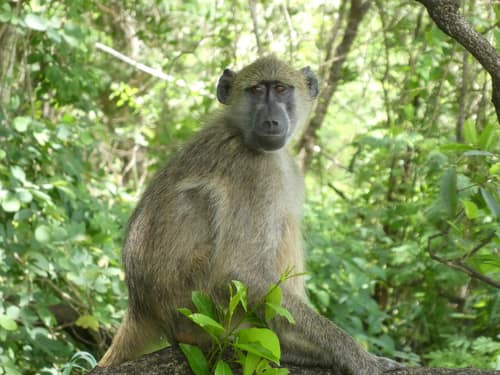
Competitor (c) datadan, some rights reserved (CC BY), uploaded by datadan · cc-by Image unavailable
Close Relative 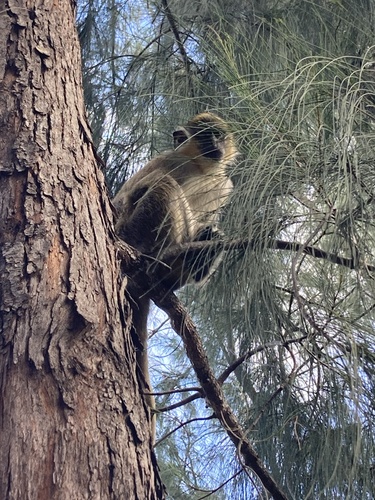
Genus Relative no rights reserved · cc0
Keep collecting in Fauna
Found in Collections
Species set Pro
Emerald Kingdom
Vervet Monkey is found in this collection. Identify it in Fauna to fill this slot and continue your progress.
Unlock to track progress
Help improve the field guideSomething wrong?
Checking your Fauna account…Report a name, category, or profile issue for review.