
Fungus
Brain Puffball
Calvatia craniiformisAlso known as Skull-Shaped Puffball, Brain-Shaped Puffball
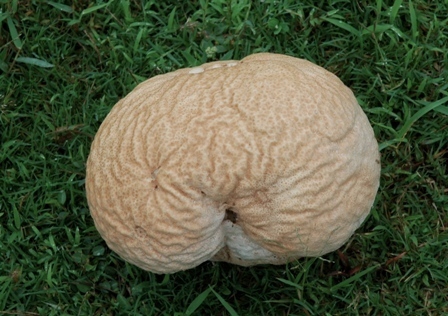
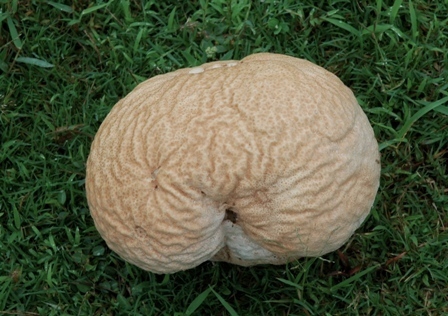
Brain puffballs feature striking, deeply convoluted fruit bodies that resemble a human brain or skull perched on forest soil. Young specimens start firm and smooth with a solid white interior, gradually developing deep folds as the outer skin matures, turns tan, and flakes away. Eventually, the wrinkled shell disintegrates entirely to release millions of powdery, yellow-brown spores into passing breezes.
FungusDecomposerSpore-Disperser
—observations
—countries
—peak records
Not EvaluatedConservation statusIUCN Red List categoriesLCNTVUENCREWEXNot Evaluated — not placed on the risk ladderRed List categories, explained →
Diet & preyDecaying leaf litter, Organic matter, Dead plant material
Predators
- Insects
- Slugs
- Rodents
ThreatsHabitat clearance, intensive lawn chemical application
HabitatsOpen hardwood forests, woodland edges, grassy clearings
Life spanFruiting body lasts 1–2 weeks
Classification
- OrderAgaricales
- FamilyLycoperdaceae
- GenusCalvatia
- SpeciesCalvatia craniiformis
Range data is not available yet.
Interaction riskLow
- Low
- Moderate
- High
- Very high
- Why interaction risk is low
- Many wild mushrooms have toxic look-alikes; never eat wild fungi based on app identification alone.
Responsible observation
- Observe the texture: Touch the soft, wrinkled surface of mature specimens to feel the brain-like folds.
- Check the substrate: Look along forest edges and grassy openings where rich organic debris accumulates.
- Watch spore dust: Tap dried, mature specimens gently to watch spore clouds puff out into the breeze.
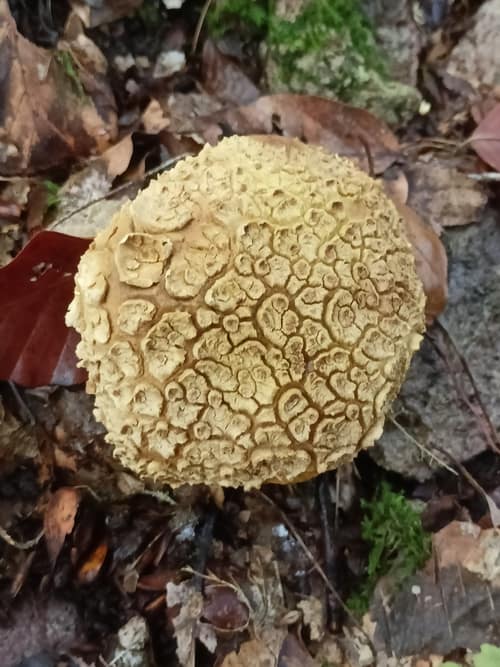
Toxic Look-Alike (c) Malte Krömer, some rights reserved (CC BY), uploaded by Malte Krömer · cc-by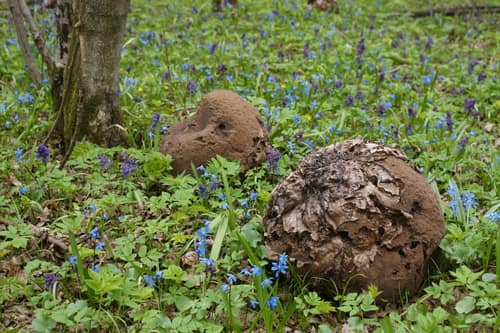
Close Relative no rights reserved, uploaded by Yehor Yatsiuk · cc0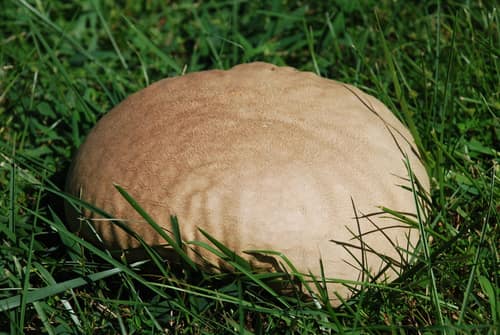
Close Relative (c) Douglas Goldman, some rights reserved (CC BY-SA), uploaded by Douglas Goldman · cc-by-sa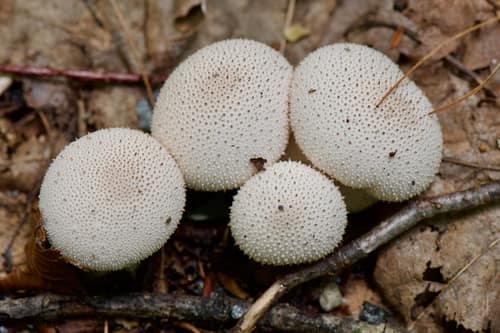
Family Member (c) Michael Nerrie, some rights reserved (CC BY), uploaded by Michael Nerrie · cc-by
Keep collecting in Fauna
Found in Collections
Species set Pro
Fungi Forager
Brain Puffball is found in this collection. Identify it in Fauna to fill this slot and continue your progress.
Unlock to track progress
Help improve the field guideSomething wrong?
Checking your Fauna account…Report a name, category, or profile issue for review.