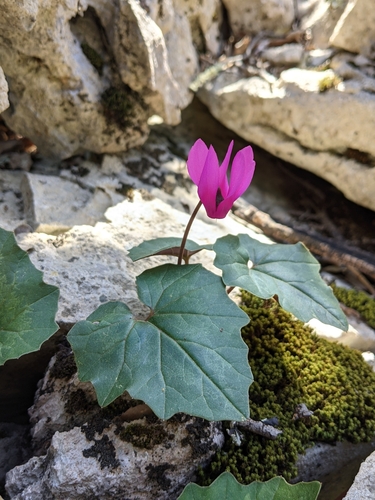
Also known as Sowbread, Ivy-Leaved Sowbread, Neapolitan Cyclamen
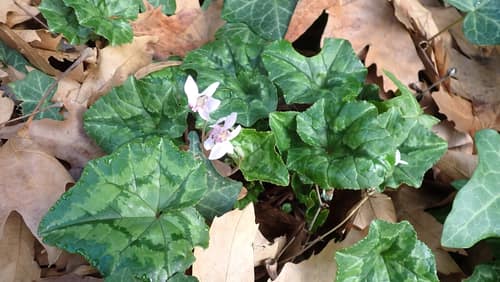
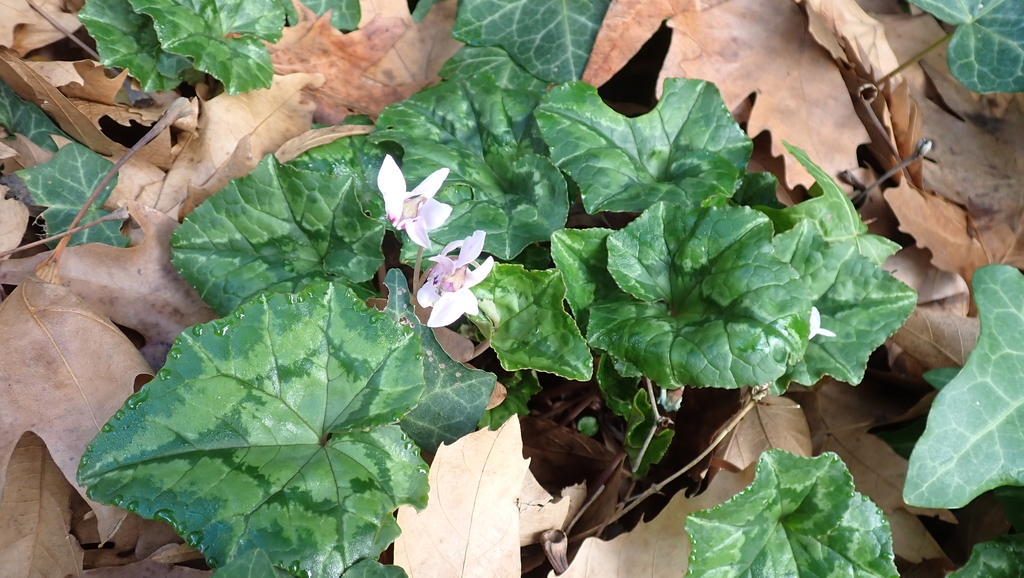
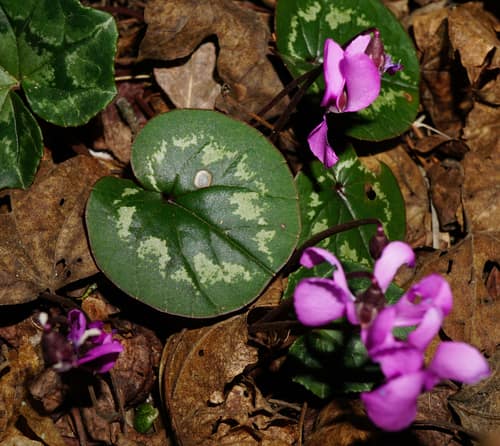
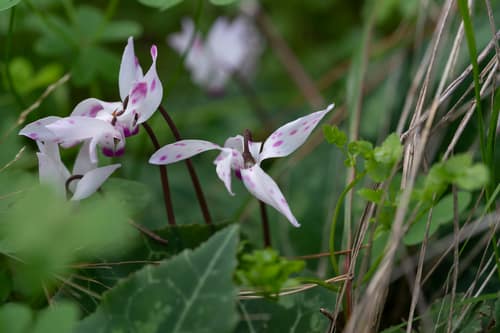
Ivy-leaved cyclamen lights up autumn woodland floors with masses of nodding pink or white flowers that often burst forth before the foliage appears. As the blooms fade, spiraling flower stalks pull seed pods down toward the soil where ants carry off the sugar-rich seeds. The striking ivy-shaped leaves emerge soon after, displaying intricate silver-and-green patterns that remain vibrant throughout winter.
Tubers contain toxic saponins; do not ingest and keep away from pets.
Why it is dangerous
Contains cyclamin, a toxic triterpenoid saponin concentrated in the tubers that causes severe gastrointestinal upset and potential heart arrhythmia if consumed.
How to recognize a risky encounter
Look for nodding pink or white flowers rising from flattened subterranean tubers in autumn, followed by ivy-shaped silver-patterned foliage.
What to do
Wear garden gloves when dividing or planting tubers, and ensure domestic pets cannot dig up or chew rootstocks.
Responsible observation
Observation: Look for the delicate pink or white nodding flowers on bare soil in early autumn.
Gardening: Plant tubers in dry shade under deciduous trees where they naturalize easily.
Identification: Examine the foliage for distinctive ivy-like shapes with silver patterning.