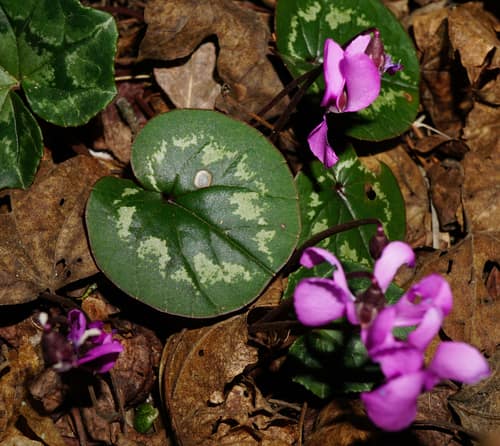
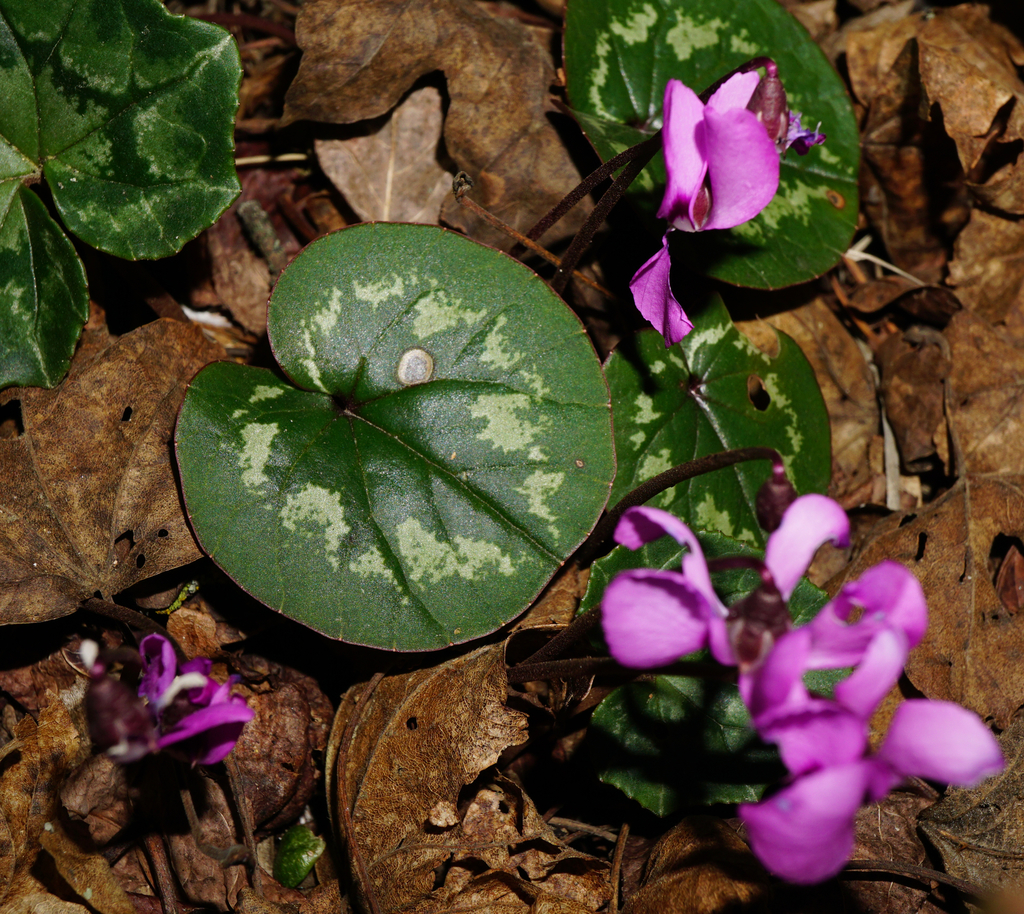
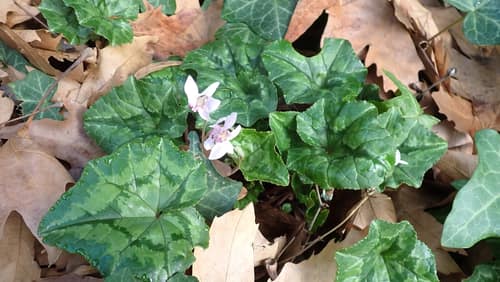
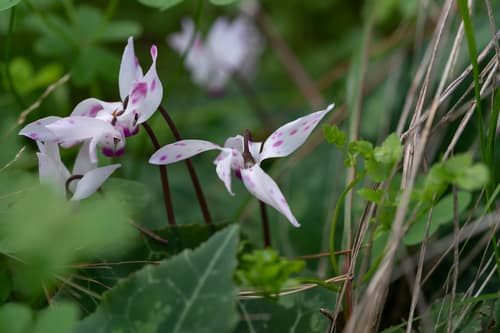
Eastern sowbread pushes nodding pink and magenta blossoms through late-winter leaf litter long before most woodland perennials wake from dormancy. Its rounded, dark green leaves often feature intricate silver patterning that persists through cold months before the plant retreats underground for summer. Ants play a crucial role in its lifecycle by carrying seed capsules away to consume the nutrient-rich coat, dispersing the seeds across forest floors.
Tubers contain toxic saponins; avoid ingestion and keep pets from digging up underground roots.
Why it is dangerous
Contains triterpenoid saponins known as cyclamin, concentrated in the tuberous roots, which cause severe vomiting, diarrhea, and heart arrhythmia if ingested.
How to recognize a risky encounter
Look for small rounded heart-shaped leaves with silver patterning alongside pink to magenta nodding flowers blooming in late winter.
What to do
Enjoy winter blooms from above without digging up tubers or attempting to harvest any plant parts.
Responsible observation
Garden Placement: Plant under deciduous trees where winter light reaches the soil before canopy leaf-out.
Winter Observation: Inspect the underside of petals to spot distinctive dark magenta spots near the throat.