
Arachnid · GBIF taxon 6894171
Iranian Fat-tailed Scorpion
Androctonus crassicaudaAlso known as Arabian Fat-tailed Scorpion, Black Fat-tailed Scorpion
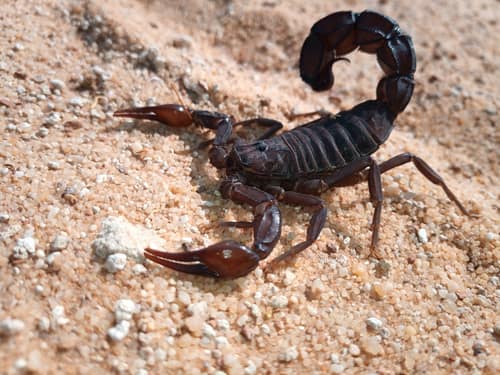
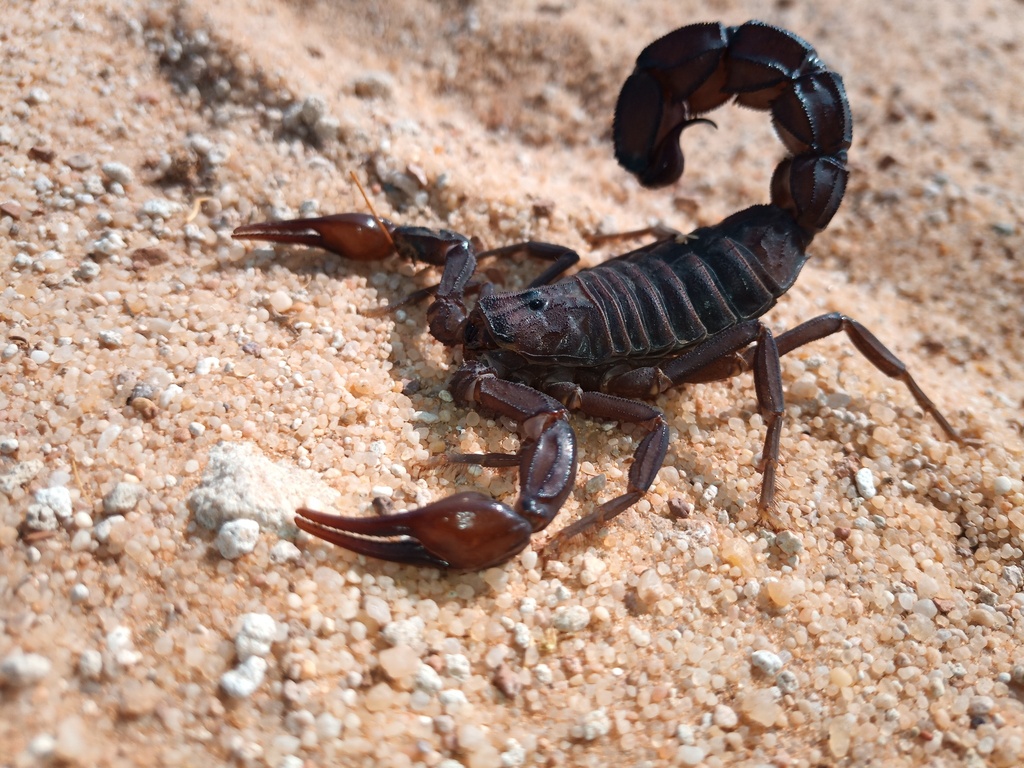
Iranian fat-tailed scorpions are heavily armored nocturnal predators equipped with a remarkably thick, powerful metasoma ending in a potent sting. By day, they take refuge beneath heavy stones, inside deep rocky fissures, or within abandoned animal burrows to escape the extreme heat of arid environments. After sunset, they emerge to stalk prey, relying on delicate tactile hairs on their pincers to detect minute air currents and ground vibrations.
VenomousNocturnalArid Habitat
 1 / 7
1 / 7—observations
—countries
—peak records
Not EvaluatedConservation statusIUCN Red List categoriesLCNTVUENCREWEXNot Evaluated — not placed on the risk ladderRed List categories, explained →
Diet & prey
- Insects
- Spiders
- Small Lizards
Predators
- Owls
- Hedgehogs
- Lizards
ThreatsHabitat disruption, pest eradication, and localized collecting
HabitatsDeserts, arid scrublands, semi-deserts, and rocky slopes
Life span4–8 years
Size / weightNot available
Classification
- FamilyButhidae
- SpeciesAndroctonus crassicauda
Range data is not available yet.
Interaction riskVery high
- Low
- Moderate
- High
- Very high
- Why interaction risk is very high
- Possesses medically significant venom that can be fatal; maintain a strict safe distance.
- Why it is dangerous
- Produces a potent neurotoxin that can cause severe respiratory failure, cardiac complications, and potentially fatal envenomation.
- How to recognize a risky encounter
- Recognized by its exceptionally broad, heavy tail segments and uniformly dark brown to jet-black color.
- What to do
- Maintain a distance of several meters and never attempt to touch, corner, or handle wild individuals.
Responsible observation
- Nighttime observation: Use a UV flashlight at night, which causes their exoskeleton to fluoresce bright green under ultraviolet light.
- Keep distance: Observe from several meters away and avoid flipping rocks or reaching into unlit crevices in arid regions.
- Check footwear: In endemic areas, shake out boots and sleeping bags before use to prevent accidental stings.
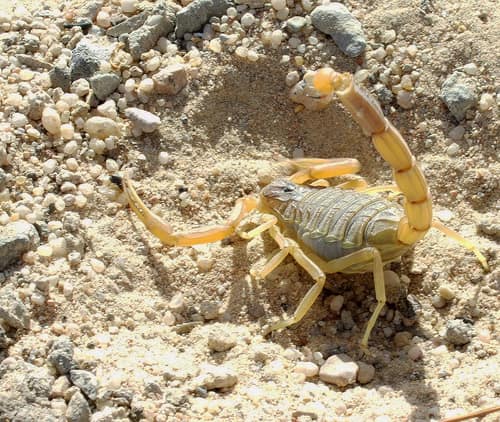
Family Relative no rights reserved, uploaded by Arne Holgersson · cc0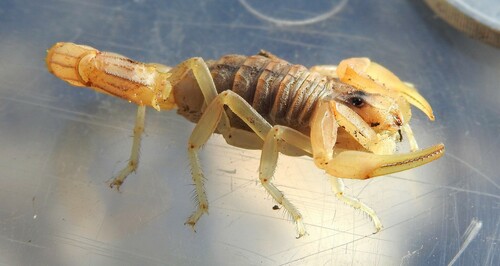
Family Relative (c) Lucas Benaiche, some rights reserved (CC BY-SA) · cc-by-sa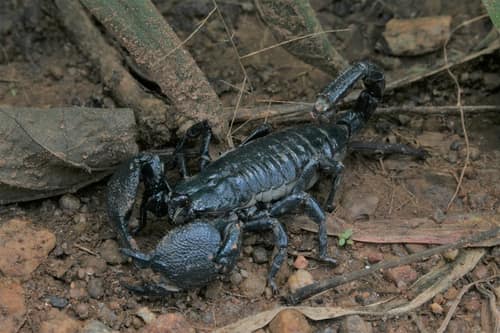
Distant Relative (c) Fábio Olmos, some rights reserved (CC BY), uploaded by Fábio Olmos · cc-by
Help improve the field guideSomething wrong?
Checking your Fauna account…Report a name, category, or profile issue for review.