
Arachnid · GBIF taxon 6894611
Common Emperor Scorpion
Pandinus imperatorAlso known as Emperor Scorpion, Imperial Scorpion, West African Emperor Scorpion
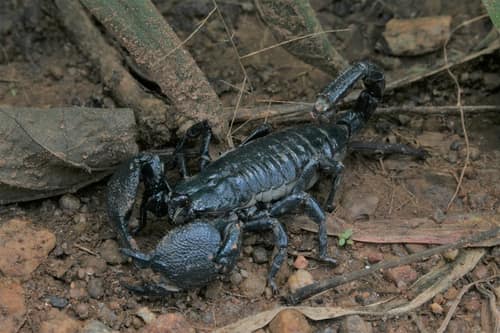
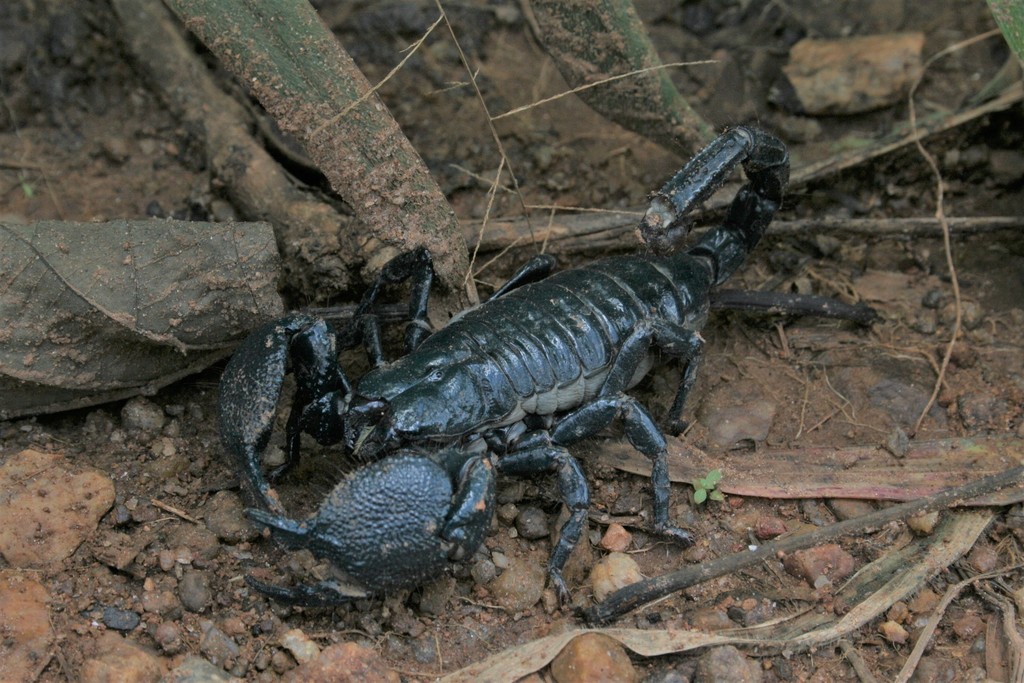
Emperor scorpions emerge at night from deep subterranean burrows to hunt insects, small rodents, and lizards using their massive, heavy claws rather than relying primarily on their sting. Mothers show surprisingly complex parental care, carrying newborn scorplings on their backs for weeks until their first molt is complete. Despite their formidable size and jet-black exoskeleton, they produce a relatively mild venom and react defensively only when severely provoked.
NocturnalFluorescentBurrowing
 1 / 5
1 / 5—observations
—countries
—peak records
Not EvaluatedConservation statusIUCN Red List categoriesLCNTVUENCREWEXNot Evaluated — not placed on the risk ladderRed List categories, explained →
Diet & prey
- Crickets
- Cockroaches
- Small lizards
Predators
- Birds of prey
- Small mammals
- Monitors
ThreatsHabitat destruction and over-collection for the exotic pet trade
HabitatsTropical rainforests and open savannas
Life span6–8 years
Size / weightNot available
Classification
- FamilyScorpionidae
- SpeciesPandinus imperator
Range data is not available yet.
Interaction riskVery high
- Low
- Moderate
- High
- Very high
- Why interaction risk is very high
- Delivers a mild sting comparable to a bee sting when threatened; observe from a safe distance.
- Why it is dangerous
- Equipped with massive pedipalps capable of inflicting a painful pinch and a sting that delivers mild venom causing localized pain and swelling.
- How to recognize a risky encounter
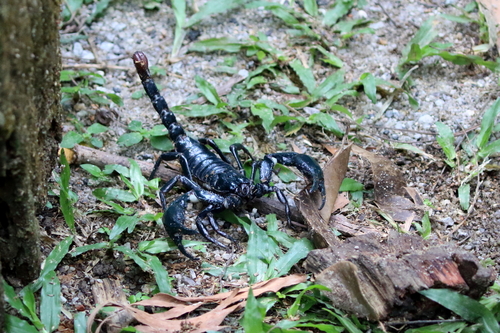
- Look for a massive, heavy-bodied scorpion up to 20 cm long with shiny dark brown to black coloration and textured, broad claws.
- What to do
- Never reach into burrows or handle wild individuals; use ultraviolet light to spot them safely from a distance at night.
- What to notice
- Identifiable by its dark body, massive size, and vibrant blue-green glow when illuminated by ultraviolet light.
- Support conservation
- Observe wild individuals without disturbing their habitat and avoid purchasing wild-caught specimens.
Responsible observation
- UV Lighting: Use a 395nm blacklight flashlight at night to spot their brilliant turquoise fluorescence in leaf litter.
- Respect Burrows: Avoid digging up subterranean burrows or disturbing fallen logs where adults shelter during the day.
- Safe Viewing: Observe active foragers from at least a meter away without blocking their path or using bright white flashlights.
Look-alike no rights reserved · cc0 Image unavailable
Close Relative
Help improve the field guideSomething wrong?
Checking your Fauna account…Report a name, category, or profile issue for review.