
Invertebrate
Red Sea Urchin
Mesocentrotus franciscanusAlso known as Giant Red Sea Urchin
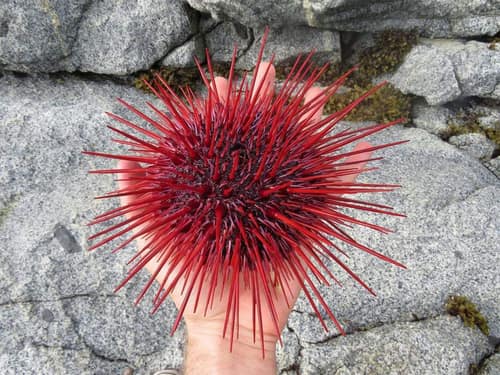
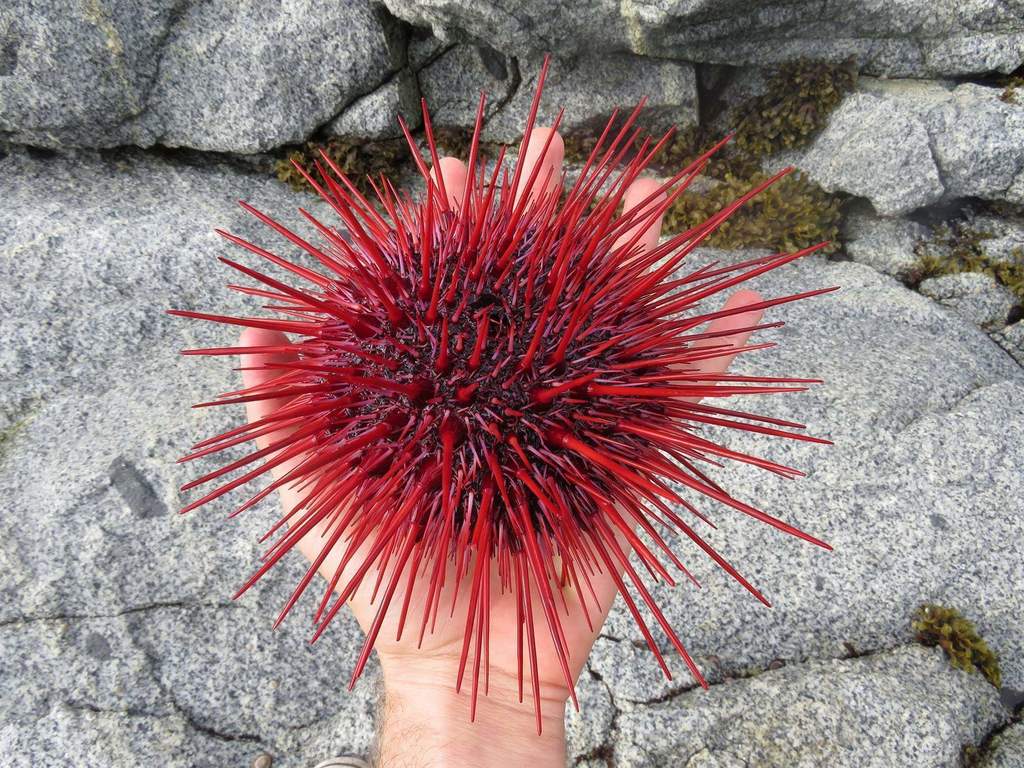
Red sea urchins are formidable marine invertebrates covered in sharp, stiff spines that can grow up to eight centimeters long. They play a critical role in temperate kelp forest ecosystems, grazing on giant kelp and sometimes creating barren areas when their populations swell. These slow-growing creatures are among the longest-lived animals on Earth, with some individuals estimated to exceed two centuries in age.
MarineInvertebrateLong-Lived
—observations
—countries
—peak records
Not EvaluatedConservation statusIUCN Red List categoriesLCNTVUENCREWEXNot Evaluated — not placed on the risk ladderRed List categories, explained →
Diet & preyGiant kelp, Bull kelp, Encrusting algae
Predators
- Sea otters
- Sunflower sea stars
- California sheephead
ThreatsOcean acidification, sea otter predation, and commercial harvesting
HabitatsRocky reefs, kelp forests, and sheltered coastal waters
Life spanUp to 100 to 200 years
Classification
- FamilyStrongylocentrotidae
- SpeciesMesocentrotus franciscanus
Range data is not available yet.
Interaction riskLow
- Low
- Moderate
- High
- Very high
- Why interaction risk is low
- Sharp spines can easily puncture skin and break off; handle with extreme care or avoid touching.
- Why it is dangerous
- Sharp, brittle spines can easily puncture human skin and break off deep inside the tissue, leading to painful inflammation or infection.
- How to recognize a risky encounter
- Distinguished by its large size, uniform red to dark burgundy color, and long, thick spines.
- What to do
- Do not attempt to pick up or step on them; wear thick-soled water shoes when exploring rocky intertidal zones.
Responsible observation
- Observe in tide pools: Look for them in deep, protected crevices during very low tides without disturbing them.
- Avoid touching: Their long spines are brittle and can easily puncture skin, breaking off to cause painful infections.
- Watch for movement: Look closely to see their tube feet and spines slowly shifting as they navigate the rock face.
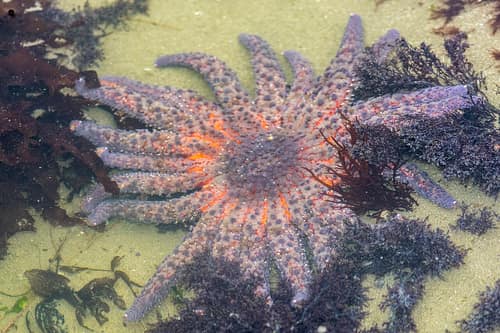
Predator Jerry Kirkhart from Los Osos, Calif. / CC BY 2.0 · cc-by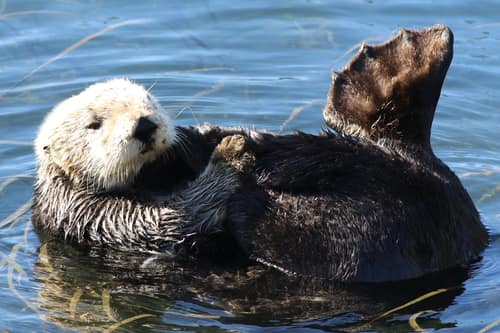
Predator (c) Cricket Raspet, some rights reserved (CC BY), uploaded by Cricket Raspet · cc-by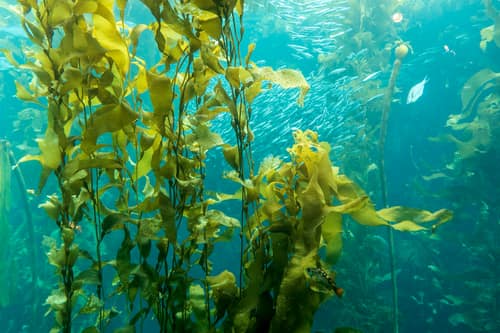
Primary Food Source "Giant kelp (Macrocystis pyrifera), Monterey Bay aquarium, California" by LT&C is licensed under CC BY 2.0. To view a copy of this license, visit https://creativecommons.org/licenses/by/2.0/. · cc-by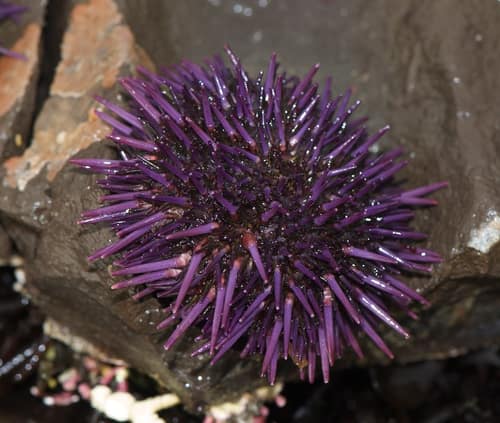
Close Relative (c) Jerry Kirkhart, some rights reserved (CC BY) · cc-by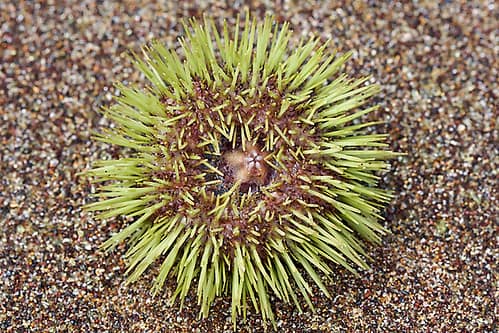
Close Relative "Green sea urchin" by lightmatter is licensed under CC BY 2.0. To view a copy of this license, visit https://creativecommons.org/licenses/by/2.0/. · cc-by
Help improve the field guideSomething wrong?
Checking your Fauna account…Report a name, category, or profile issue for review.