
Plant
Brazil Raintree
Brunfelsia paucifloraAlso known as Yesterday-Today-and-Tomorrow, Morning-Noon-and-Night, Kiss-Me-Quick
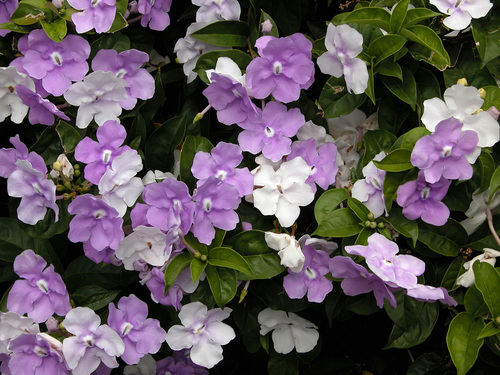
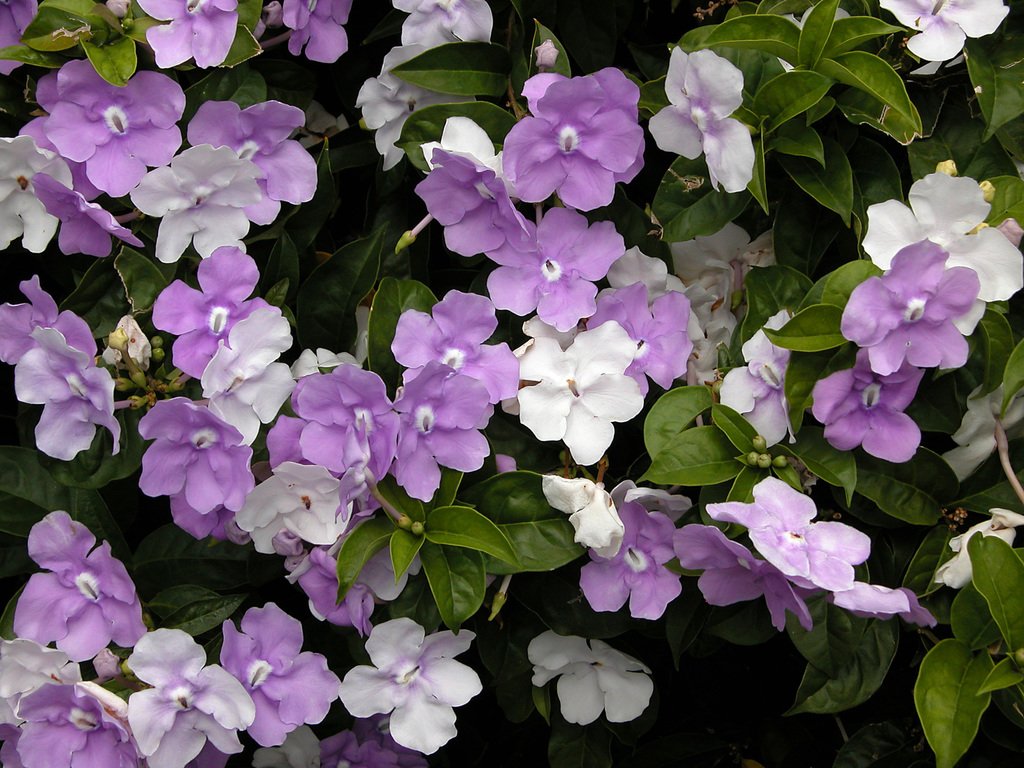
Brazil raintree is famous for its floral transformation, opening deep violet-purple blossoms that fade to lavender the second day and finish pure white by the third. Native to the moist understory of Brazil's Atlantic Forest, it flourishes in dappled shade with leathery, glossy green leaves. All stages of bloom appear simultaneously on the branches, creating a multicolored display that draws butterflies and hawk moths.
FloweringEvergreenAromatic
—observations
—countries
—peak records
Not EvaluatedConservation statusIUCN Red List categoriesLCNTVUENCREWEXNot Evaluated — not placed on the risk ladderRed List categories, explained →
Diet & preyAutotrophic
Predators
- Aphids
- Mealybugs
- Spider mites
ThreatsAtlantic Forest deforestation and habitat fragmentation
HabitatsTropical moist forest understory, coastal woodland edges, and cultivated gardens
Life span15–30 years
Classification
- OrderSolanales
- FamilySolanaceae
- GenusBrunfelsia
- SpeciesBrunfelsia pauciflora
Range data is not available yet.
Interaction riskHigh
- Low
- Moderate
- High
- Very high
- Why interaction risk is high
- All parts contain neurotoxic alkaloids that cause severe poisoning in dogs, cats, and humans if ingested.
- Why it is dangerous
- Contains brunfelsamidine and hopeanine, neurotoxins that trigger strychnine-like seizures, tremors, and fatal respiratory failure in pets and humans.
- How to recognize a risky encounter
- Look for a woody shrub displaying purple, lavender, and white five-lobed flowers blooming simultaneously on deep green foliage.
- What to do
- Wear gloves when pruning, dispose of cuttings in sealed trash bins, and immediately prevent dogs from chewing fallen plant debris.
Responsible observation
- Garden Placement: Plant outside areas accessible to pets because dogs readily chew the toxic stems and berries.
- Pruning Schedule: Trim immediately following the main bloom cycle to encourage dense lateral growth.
- Light Requirements: Provide rich, well-draining acidic soil and dappled sunlight to mirror its native rainforest floor.
 Image unavailable
Close Relative 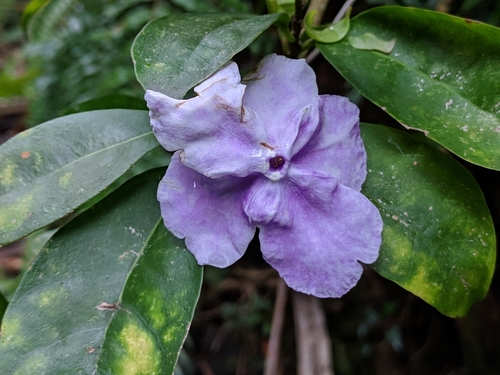
Close Relative no rights reserved, uploaded by Pieter Huybrechts · cc0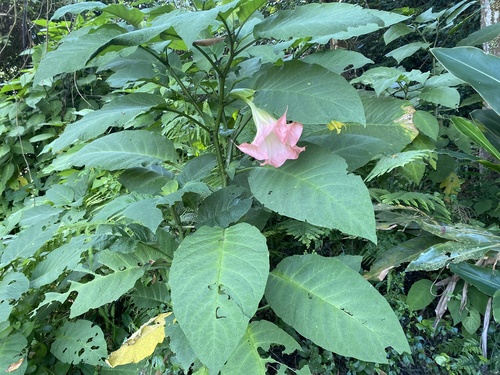
Same Family no rights reserved, uploaded by 古淑玲 · cc0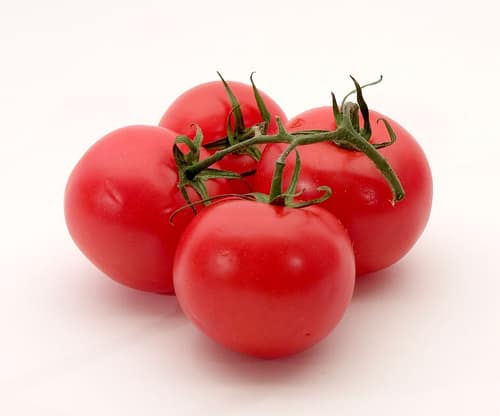
Same Family Softeis / CC BY-SA 3.0 · cc-by-sa
Help improve the field guideSomething wrong?
Checking your Fauna account…Report a name, category, or profile issue for review.