
Bird · GBIF taxon 6176043
Northern Spotted Owl
Strix occidentalis caurinaAlso known as Spotted Owl
Northern spotted owls depend on old-growth coniferous forests of the Pacific Northwest, relying on dense multi-layered canopies and large hollow trees for nesting. Active predominantly at night, these territorial predators navigate dark forest understories to hunt small arboreal mammals. Declines driven by historic old-growth timber harvest and aggressive competition from invading barred owls make them a key focus of regional conservation efforts.
NocturnalPredatorOld-Growth Forest
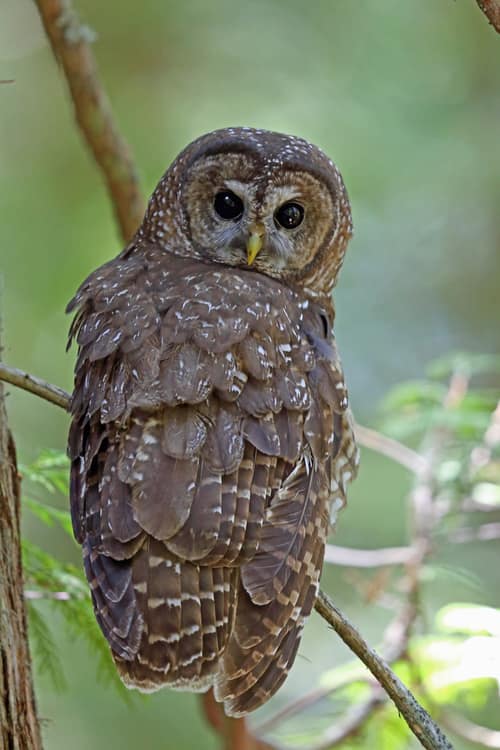

Licensed reference(c) Nigel Voaden, some rights reserved (CC BY) · cc-by
—observations
—countries
—peak records
Near ThreatenedConservation statusIUCN Red List categoriesLCNTVUENCREWEXNear ThreatenedRed List categories, explained →
Diet & prey
- Northern Flying Squirrel
- Dusky-footed Woodrat
- Red Tree Vole
Predators
- Great Horned Owl
- Northern Goshawk
ThreatsHabitat destruction, timber harvesting, competition with barred owls, wildfire
HabitatsMature and old-growth coniferous forests, temperate rainforests
Life span10–15 years in the wild
Size / weightNot available
Classification
- FamilyStrigidae
- SpeciesStrix occidentalis caurina
Range data is not available yet.
Interaction riskLow
- Low
- Moderate
- High
- Very high
- Why interaction risk is low
- Wild raptors possess sharp talons and beaks; keep a respectful distance and avoid nesting sites.
- What to notice
- Medium-sized dark brown owl covered in white spots, featuring large dark eyes, pale facial discs, and no ear tufts.
- Support conservation
- Observe from a distance, stay on established public trails, and never share exact location coordinates on public wildlife platforms.
Responsible observation
- Observation Distance: Stay on designated forest trails to avoid disturbing roosting or nesting owls.
- Listening Cue: Listen for their distinctive four-note barking call during calm, clear nights in mature forests.
- Playback Avoidance: Never use recorded owl calls, as this causes severe stress and disrupts breeding behaviors.
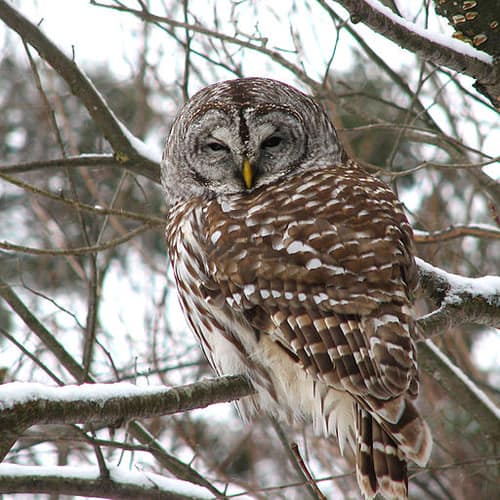
Competitor U.S. Fish and Wildlife Service Headquarters / Public domain · cc0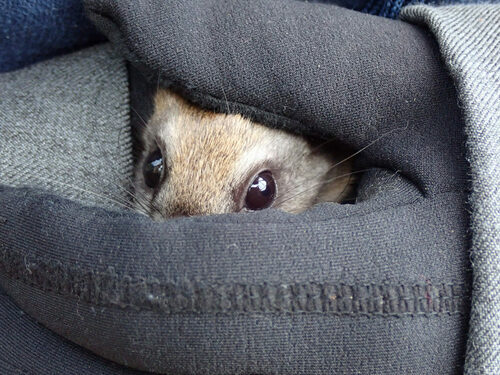
Prey (c) Evan M. Raskin, some rights reserved (CC BY) · cc-by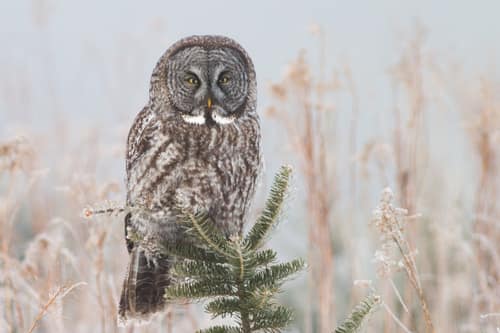
Close Relative (c) Fyn Kynd, some rights reserved (CC BY-SA), uploaded by Fyn Kynd · cc-by-sa
Help improve the field guideSomething wrong?
Checking your Fauna account…Report a name, category, or profile issue for review.