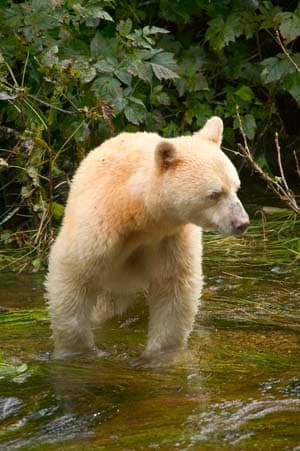
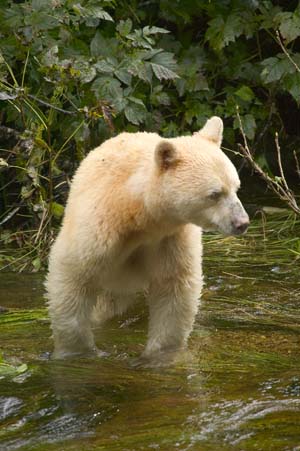
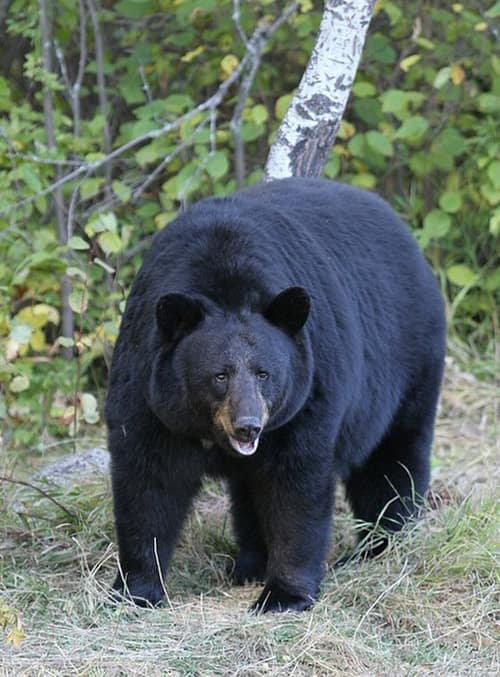
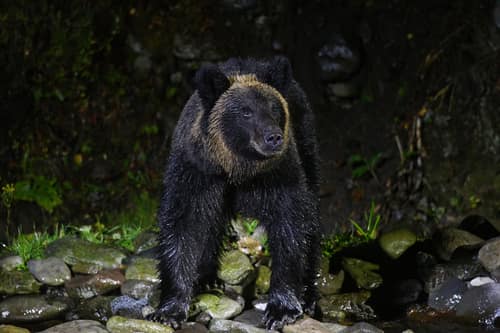
Kermode bears are a unique subspecies of the American black bear native to the coastal rainforests of British Columbia. While most members of this subspecies have black coats, a recessive genetic mutation causes roughly ten to twenty percent of individuals on certain islands to be born with cream-colored or white fur. These distinctive bears are extraordinarily skilled fishers, using their pale coats to blend in against bright skies while hunting salmon in clear coastal streams.
HabitatsTemperate rainforests, coastal river valleys, estuaries
Life span20–25 years in the wild
Size / weightNot available
Classification
FamilyUrsidae
SpeciesUrsus americanus kermodei
Range & activity
Range data is not available yet.
Safe observation
Interaction riskHigh
Low
Moderate
High
Very high
Why interaction risk is high
Large predator capable of serious harm; maintain a distance of at least 100 meters and carry bear spray.
Why it is dangerous
Can inflict severe or fatal injuries using powerful jaws, sharp claws, and rapid charging speed when surprised, defending young, or protecting food sources.
How to recognize a risky encounter
Recognizable as a black bear with either jet-black or distinct pale cream-to-white fur, lacking a prominent shoulder hump.
What to do
Never approach or feed bears; carry accessible bear spray and back away slowly without running if encountered.
What to notice
Distinguished by white or cream-colored fur within old-growth coastal rainforest along British Columbia central coast.
Support conservation
Respect quiet viewing protocols, stay with licensed indigenous guides, and avoid revealing sensitive denning or fishing site coordinates.
Responsible observation
Observe from afar: Keep at least 100 meters away and use binoculars or a telephoto lens.
Travel safely: Make noise in groups on trail corridors to avoid surprising feeding bears.
Store food properly: Use bear-proof containers and keep all attractants secured in coastal camps.