
Reptile · GBIF taxon 6160608
San Diego Alligator Lizard
Elgaria multicarinata webbiiAlso known as Webb's Alligator Lizard, Southern Alligator Lizard
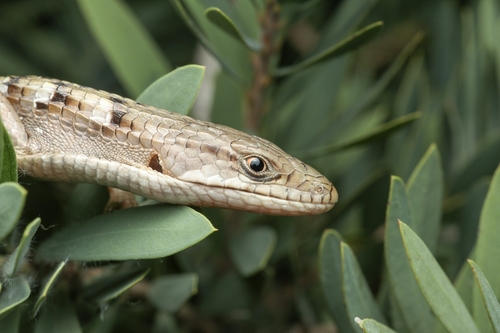
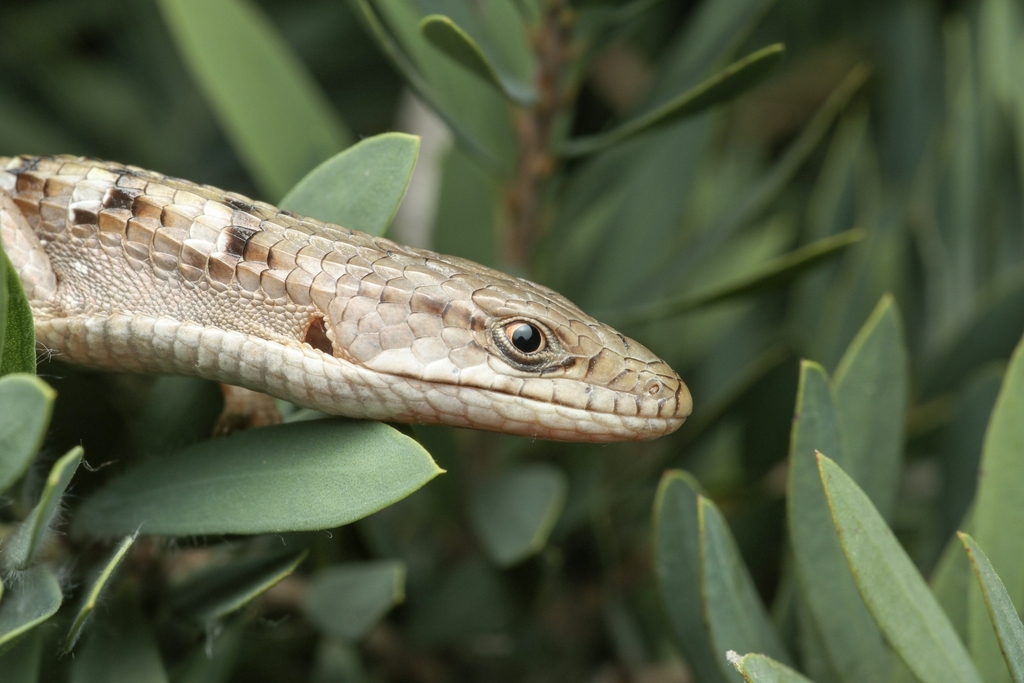
San Diego alligator lizards are agile, heavy-bodied reptiles known for their sturdy, keeled scales and exceptionally long prehensile tails that can exceed twice their body length. They spend their days hunting through leaf litter and dense chaparral brush, using powerful jaws to overpower tough insects, spiders, and small vertebrates. When cornered or handled, they readily defend themselves with a tenacious bite while smearing a pungent musk to escape.
DiurnalReptilePrehensile Tail
—observations
—countries
—peak records
Least ConcernConservation statusIUCN Red List categoriesLCNTVUENCREWEXLeast ConcernRed List categories, explained →
Diet & prey
- Beetles
- Snails
- Grasshoppers
Predators
- California Kingsnake
- Red-tailed Hawk
- Domestic Cat
ThreatsHabitat fragmentation, suburban road mortality, domestic cat predation
HabitatsChaparral, coastal sage scrub, oak woodlands, suburban gardens
Life span10–15 years
Classification
- FamilyAnguidae
- SpeciesElgaria multicarinata webbii
Range data is not available yet.
Interaction riskLow
- Low
- Moderate
- High
- Very high
- Why interaction risk is low
- Delivers a strong, persistent bite if handled; observe from a respectful distance without grabbing.
- Why it is dangerous
- Possesses unusually strong jaw muscles that deliver a painful, clamping bite, and excretes a pungent musk when threatened.
- How to recognize a risky encounter
- Look for a heavy-bodied lizard with reddish-brown upper parts, dark crossbands, keeled dorsal scales, and yellow-tinged eyes.
- What to do
- Do not attempt to catch or grab; if bitten, do not pull away forcefully to avoid tearing skin or harming the lizard.
Responsible observation
- Look under cover: Search beneath fallen logs, garden boards, and thick leaf litter during warm mornings.
- Keep your distance: Avoid grabbing them, as they bite firmly and release a pungent defensive musk.
- Check garden edges: Watch for individuals foraging near stone walls and compost piles where snails gather.
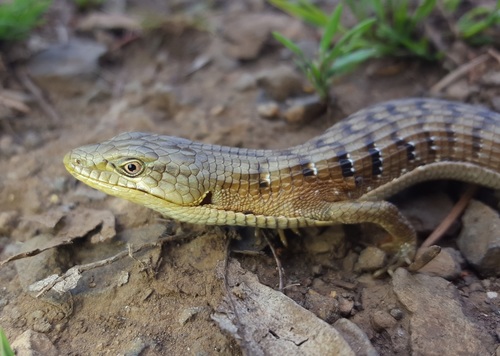
Parent Species (c) Alex Abair, some rights reserved (CC BY), uploaded by Alex Abair · cc-by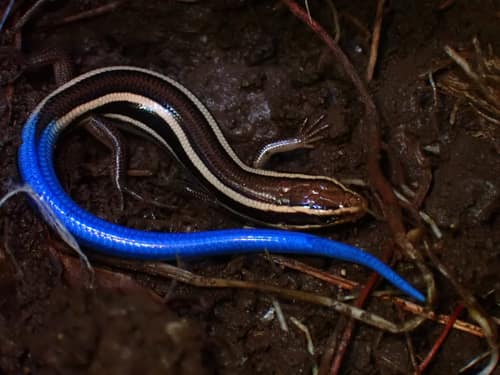
Competitor (c) Cricket Raspet, some rights reserved (CC BY), uploaded by Cricket Raspet · cc-by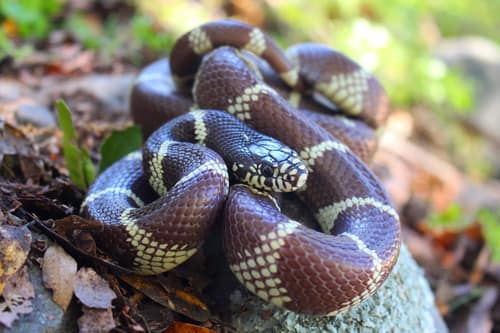
Predator (c) Connor Long, some rights reserved (CC BY-SA) · cc-by-sa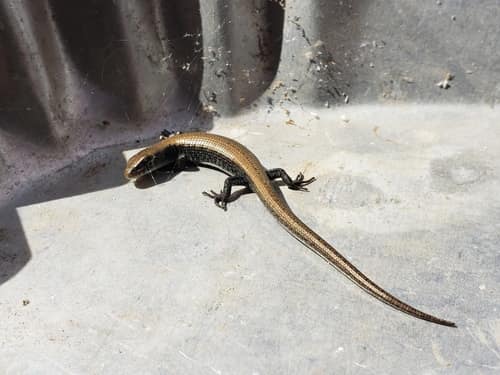
Close Relative (c) Gavin Slater, some rights reserved (CC BY) · cc-by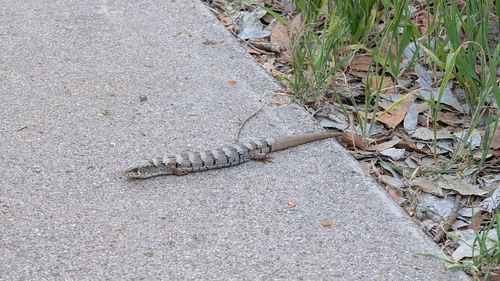
Close Relative (c) L. Reid, some rights reserved (CC BY) · cc-by
Help improve the field guideSomething wrong?
Checking your Fauna account…Report a name, category, or profile issue for review.